
Tech
Alibaba Expands European Data Centres and Unveils New AI Chip


Alibaba is expanding its global cloud infrastructure with plans to establish new data centre regions in Europe, while also developing larger artificial intelligence models and a new AI chip aimed at strengthening its position in the fast-growing technology market.
The Chinese technology group announced on Wednesday that Alibaba Cloud will establish its first cloud regions in Finland, the Netherlands and Turkey. The company also plans to expand its data centre presence in Germany, France, the UAE, Malaysia and Hong Kong over the next 12 months.
Eddie Wu, CEO of Alibaba Group, said machine-based reasoning currently represents less than 3 per cent of total human thinking capacity but could eventually reach levels far beyond current capabilities.
“With this in mind, our target is that by 2032, the global data centre capacity operated by Alibaba Cloud will surpass 20GW, fueling the industry’s exponentially rising demand for AI,” Wu said.
The planned expansion is expected to increase Alibaba Cloud’s computing capacity as businesses and governments accelerate investment in AI systems that require greater processing power and data storage.
Alibaba is also expanding the capabilities of its Qwen family of AI models. Wu said on Tuesday that future versions could contain between five trillion and 10 trillion parameters, potentially making them several times larger than the biggest Chinese models currently available.
The Qwen models have become prominent in China’s AI sector and are among the most widely downloaded Chinese-developed AI models globally.
The company also introduced a new AI chip at its annual conference. Wu described the Zhenwu V900 as “the most powerful AI chip in China today”.
The chip is being developed as China faces continued restrictions on access to advanced semiconductors from the United States. The Zhenwu V900 is widely reported to offer roughly twice the performance of Nvidia’s H20 chip, which was designed for the Chinese market.
US export controls have restricted Chinese companies’ access to some advanced AI processors, encouraging Beijing and domestic technology firms to accelerate development of locally produced alternatives.
Alibaba’s announcement comes as China seeks to expand its domestic AI infrastructure while competing with technology companies in the United States and other major markets.
The company said the overseas data centre expansion would help provide additional computing resources for customers in several regions and support growing demand for cloud and AI services.
The announcement also comes ahead of an expected meeting between US President Donald Trump and Chinese President Xi Jinping in Washington this week. Trade, semiconductor restrictions and concerns over the national security implications of artificial intelligence are expected to be among the issues discussed.
Alibaba’s investment plans highlight the growing connection between cloud infrastructure, advanced chips and AI model development as technology companies compete to build increasingly powerful systems.










Belgium has inaugurated what is set to become the European Union’s largest satellite manufacturing facility, marking a major step in Europe’s efforts to strengthen its space industry and reduce reliance on foreign technology.
King Philippe officially opened the facility on Tuesday in Charleroi, southern Belgium. Operated by Belgian space technology company Aerospacelab, the factory is expected to begin producing satellites for the European Union’s Iris2 communications constellation by the end of 2028.
The Iris2 project is designed to provide Europe with an independent satellite communications network and compete with services such as Starlink, owned by Elon Musk’s SpaceX. The initiative is part of broader European efforts to secure communications infrastructure and strengthen the bloc’s strategic autonomy.
The 20,000-square-metre facility has an annual production capacity of approximately 500 satellites. However, the large oval-shaped factory is not yet operational, with staff expected to move into the building in January before manufacturing activities begin.
Aerospacelab chief executive Benoit Deper said the company had expanded far beyond its original expectations since its establishment in 2018.
“We’ve grown even faster than our own ambitions,” Deper said, describing the business’s transformation from a small startup into a major industrial project supporting Europe’s space sovereignty.
The company secured a €2.4 billion contract in September with its partners to manufacture 264 of the 348 satellites planned for the Iris2 constellation. The agreement represents a significant role for the Belgian manufacturer in one of Europe’s most ambitious space infrastructure programmes.
Charleroi, traditionally associated with its low-cost airport and the remains of Belgium’s industrial manufacturing sector, is now positioning itself as an important centre for the country’s growing space industry.
Europe has been increasing investment in satellite technology and space infrastructure as commercial opportunities beyond Earth expand. Governments and businesses are also seeking greater control over critical communications systems, particularly amid concerns about the reliability of dependence on US-based technology providers.
Starlink’s expanding global network has highlighted the strategic importance of satellite communications, providing internet connectivity to consumers, businesses and governments across numerous countries.
Through Iris2, the EU aims to establish a secure communications system serving government institutions and other users while improving Europe’s ability to operate independently in space.
Aerospacelab’s new factory is expected to support these ambitions by providing large-scale manufacturing capacity within Europe. Once operational, it will strengthen the region’s industrial capabilities and help meet rising demand for satellites as competition in the global space sector intensifies.

United Nations Secretary-General António Guterres has urged countries to establish a globally inclusive framework for managing artificial intelligence risks within the next year, warning that stronger international cooperation is needed to ensure humanity remains in control of the rapidly advancing technology.
Speaking on Monday at the Bridgetown Special Summit on AI Safety in Barbados, Guterres called on UN member states to coordinate their efforts and agree on common principles for overseeing AI development.
“Today I call for member states to coordinate efforts and to develop within the next year a globally inclusive and principles-based multilateral framework for AI risk management, backed by independent and credible oversight,” he said.
Guterres argued that international cooperation should focus on shared safety standards, testing procedures and independent monitoring to address the potential dangers associated with increasingly powerful AI systems.
His comments come as governments and technology companies remain divided over how quickly artificial intelligence should advance and how much regulation should be introduced. The United States and China, the world’s two leading AI powers, are competing to secure advantages in research, development and commercial applications, making agreement on international rules increasingly difficult.
Debate over AI safety has also divided major technology executives. In September, Anthropic chief executive Dario Amodei, OpenAI chief executive Sam Altman and SpaceX chief executive Elon Musk called for a slowdown in AI development. However, Nvidia chief executive Jensen Huang and Meta chief executive Mark Zuckerberg have supported continued rapid development of the technology.
The United States, where AI development has progressed particularly quickly, has shown limited appetite for strict federal intervention. In September, President Donald Trump hosted a group of American technology executives who agreed to follow a voluntary code of conduct on AI safety.
Guterres said existing international institutions were struggling to reflect the realities of the modern world and needed reforms to address emerging global challenges.
“When one looks at different other institutions of global governance … they correspond to the reality of the world in 1945,” he said.
Responding to a question from AFP, he said the United Nations, international financial institutions and the global trade system all needed to adapt to changing economic and political conditions.
The secretary-general has increasingly highlighted the dangers of artificial intelligence, including the possibility of autonomous weapons and other systems operating beyond meaningful human control.
As his term at the head of the United Nations approaches its end, Guterres said he would advise his successor, who is expected to take office in the new year, to make AI governance a priority.
He stressed that effective international safeguards would be essential for humanity to maintain control over the technology and prevent its development from creating risks that governments cannot manage.
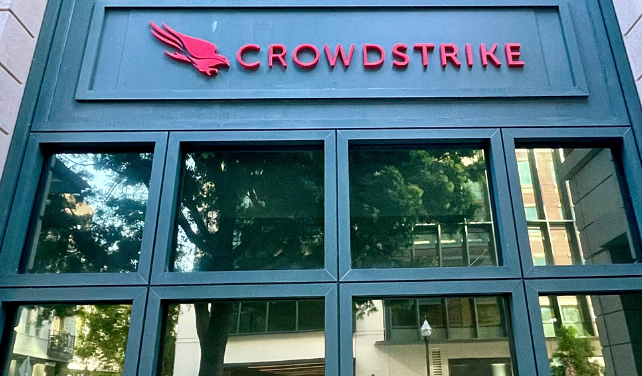
US cybersecurity company CrowdStrike has agreed to acquire rival Zscaler in an all-stock transaction valued at $43.9 billion (€40.4 billion), marking the largest deal in the history of the cybersecurity industry.
Announced on Monday, the merger will bring together two major cloud security providers, combining their technologies to offer businesses a more comprehensive platform for protecting devices, networks, applications and artificial intelligence systems.
CrowdStrike specialises in protecting computers and other devices from cyber threats, while Zscaler focuses on securing network traffic and controlling access to applications. The companies have an established working relationship, with both operating in the cloud cybersecurity market.
The acquisition comes as cyberattacks and technology disruptions continue to affect businesses, governments and critical infrastructure around the world.
Recent incidents have included attacks targeting internet-connected supermarket refrigerators in Europe, a cyber breach involving cryptocurrency exchange Binance attributed to North Korean hackers, and outages affecting Google Cloud and Microsoft services. Financial services companies, including Revolut, have also experienced disruption following technology failures.
CrowdStrike itself faced a major global technology crisis in 2024 after a faulty software update caused approximately 8.5 million Microsoft Windows devices to crash. The incident disrupted airports, hospitals, banks and businesses across multiple countries.
The growing use of artificial intelligence has added another layer of complexity to cybersecurity. AI tools have exposed vulnerabilities in widely used software and programming languages, including PHP and Java, increasing the need for stronger protection across digital systems.
AI security at the centre of the deal
Zscaler’s artificial intelligence security capabilities were among the key factors behind the acquisition. Its Zero Trust Exchange platform is designed to secure enterprise AI usage, protect sensitive information processed through AI workflows and manage applications and autonomous AI agents in real time.
CrowdStrike founder and chief executive George Kurtz said the merger would help establish a unified security platform for an increasingly AI-driven digital environment.
“The network used to connect people to places. Now it connects agents to data. With Zscaler, we’re building cybersecurity’s operating system: a single control plane to deploy AI, control AI, and enable any agentic application to run safely,” Kurtz said.
The companies expect the combination to create opportunities to cross-sell services to their existing customers, expand into new markets and bring device and network security under one platform.
Kurtz said the combined business could become the world’s largest AI safety and security company.
The transaction is expected to expand the companies’ total addressable market by more than $185 billion (€168.7 billion). CrowdStrike will gain access to approximately 8,000 Zscaler customers, while the combined business is projected to generate an additional $10 billion (€9.1 billion) in annual recurring revenue.
Under the agreement, CrowdStrike will acquire Zscaler entirely through a share exchange, based on CrowdStrike’s share price on Friday, November 20, 2026.
The companies expect the transaction to close in 2028, subject to approval from Zscaler shareholders. Zscaler chief executive Jay Chaudhry is expected to remain in charge of the business and join CrowdStrike’s board.

Asian Stocks Rebound as Technology Shares Recover from Heavy Selling

Greece to Open 20 New Day Centres for People with Dementia

UniCredit Secures Final Regulatory Approval for Commerzbank Takeover

BYD in Exclusive Talks to Acquire Ineos Automotive Plant in France

Belgium Opens Europe’s Largest Satellite Factory to Boost Space Independence

UK Households Face £443 Annual Energy Bill Increase as EU Market Talks Continue

Jensen Huang’s Remarkable Rise at Nvidia Overshadowed by Controversial CEO Comeback

Guterres Urges Nations to Agree Global AI Safety Framework Within a Year

Hungary Records 31 Foetal and Newborn Deaths as Syphilis Cases Surge

Trump Calls on Nvidia Board to Reinstate Jensen Huang as CEO

China’s Historic Olympic Victory Sparks National Pride Amid Controversy

Meta Acquires Tilda Swinton VR Doc ‘Impulse: Playing With Reality’

Saudi Arabia’s Model for Sustainable Aviation Practices

Recent Developments in Small Business Taxes

Effective Drain Cleaning: A Key to a Healthy Plumbing System

Who was Ebrahim Raisi and his status in Iranian Politics?

Keely Hodgkinson Wins Britain’s First Athletics Gold at Paris Olympics in 800m

Carrectly: Revolutionizing Car Care in Chicago

Nobel Laureate Muhammad Yunus Proposed as Head of Bangladesh’s Interim Government Following Hasina’s Resignation

Chinese Hackers Infiltrate Major U.S. Telecom Firms in Possible National Security Breach

Sony WF-10XM4: Headphones Are Our Absolute Favorite

10 Places You Can’t Miss If It’s Your First Time in European

New Census Data Will Shake Up Alabama Politics

16 Top of Our Favorite Outdoor Clothing Brands

Fashionable Summer Accessories to Dress Up Your Travel Look

How Sleeping Less than 7 Hours a Night Can Lead to Weight Gain
-
 Sports2 years ago
China’s Historic Olympic Victory Sparks National Pride Amid Controversy
-
 Entertainment2 years ago
Meta Acquires Tilda Swinton VR Doc ‘Impulse: Playing With Reality’
-
 Business3 years ago
Saudi Arabia’s Model for Sustainable Aviation Practices
-
 Business3 years ago
Recent Developments in Small Business Taxes
-
 Home Improvement2 years ago
Effective Drain Cleaning: A Key to a Healthy Plumbing System
-
 Politics3 years ago
Who was Ebrahim Raisi and his status in Iranian Politics?
-
 Sports2 years ago
Keely Hodgkinson Wins Britain’s First Athletics Gold at Paris Olympics in 800m
-
 Business2 years ago
Carrectly: Revolutionizing Car Care in Chicago