
Business
Volvo Cars Names Škoda Chief Klaus Zellmer as Next CEO

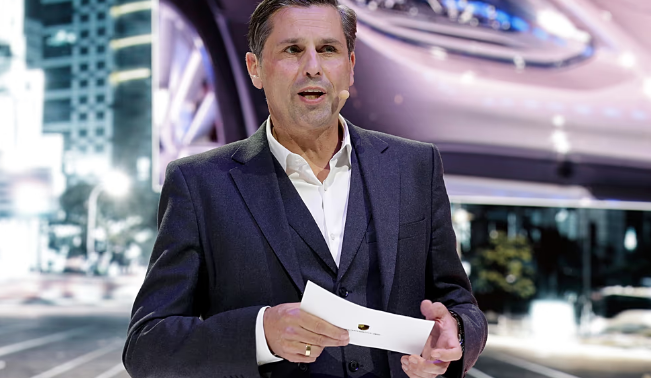
Volvo Cars has appointed Klaus Zellmer, chief executive of Volkswagen-owned Škoda, as its next president and chief executive, placing him in charge of a major restructuring at the Swedish automaker after its shares fell about 40% this year.
Zellmer will take over no later than October 1, 2027, with current chief executive Håkan Samuelsson remaining in the role until then to manage the transition, Volvo said on Sunday.
The appointment brings an executive with more than 30 years of automotive industry experience to a company facing pressure from weaker global sales, changing consumer demand and rising trade costs.
Zellmer has led Škoda since 2022, overseeing record results last year and record electric vehicle deliveries during the first half of 2026. Before joining Škoda, he served on the management board of Volkswagen’s passenger car division and spent more than two decades at Porsche.
His Porsche career included leadership roles in Germany and North America, giving him experience across both premium and mass-market segments.
Volvo Chairman Eric Li said Zellmer had extensive automotive knowledge and international leadership experience, along with a record of managing companies through periods of transformation and changing market conditions.
Zellmer said Volvo’s history of repeatedly reinventing itself represented both a significant achievement and a continuing challenge.
He will inherit a transformation programme already launched by Samuelsson, who returned as Volvo’s chief executive in April 2025 for a second term. The company had been hit by US tariffs, particularly because many vehicles sold in the American market are manufactured in Europe.
Samuelsson responded with an 18 billion Swedish krona (€1.6 billion) cost and cash-saving programme, which included about 3,000 job cuts. He also abandoned Volvo’s previous target of becoming fully electric by 2030.
At an investor event in Stockholm last week, Samuelsson outlined the next phase of the company’s strategy. Volvo is targeting an operating margin of more than 8%, compared with 3.5% in 2025.
The company plans to introduce a 13-model electrified vehicle range, with seven models aimed at Western markets and six for China. It also plans to rely more heavily on majority owner Geely for parts and suppliers.
Samuelsson said Volvo could no longer depend on producing one global vehicle model and making only limited changes for different markets.
The company’s global sales have continued to weaken, increasing the importance of the leadership transition. Samuelsson had previously indicated that his successor should have extensive automotive experience and an understanding of Swedish business culture.
Zellmer’s background across Porsche and Volkswagen, combining premium and high-volume automotive operations, was cited by Li as an important reason for his appointment.





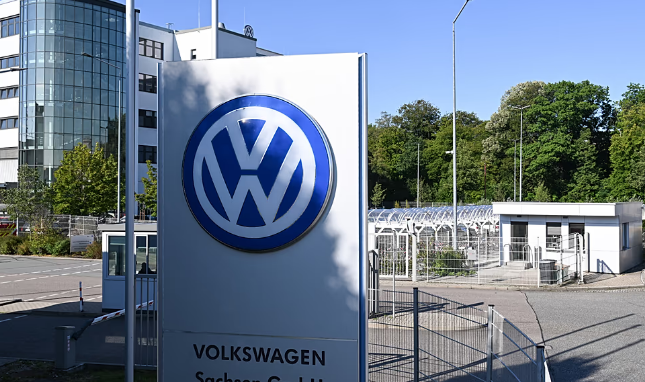
Volkswagen has been removed from the Euro Stoxx 50, the benchmark index of major companies listed in the eurozone, adding pressure on Europe’s biggest carmaker just days after it issued a major profit warning.
The change took effect when European markets opened on Monday following an annual review by index provider Stoxx. Volkswagen was replaced by Finnish telecoms group Nokia, while French utility Engie joined the index. Dutch information services company Wolters Kluwer was also removed.
Volkswagen’s departure from the index was based on its falling free-float market value rather than a specific assessment of its business performance. The Euro Stoxx 50 is weighted according to the market value of shares available for public trading, meaning Volkswagen no longer met the required threshold.
The move could still affect the company’s shares because investment funds that track the index are required to adjust their portfolios. That can result in additional selling pressure on stocks removed from the benchmark.
Volkswagen shares have fallen almost 30% since the beginning of the year and were down more than 6% from last Monday’s opening. The shares were trading at around €76.
The index change came shortly after Volkswagen issued a warning about its financial outlook. On Friday, the company said one-off charges of about €10 billion would significantly reduce its 2026 earnings.
Volkswagen lowered its operating margin forecast to no more than 1%, compared with its previous guidance of between 4% and 5.5%. Analysts had been expecting a margin of about 4.1%.
More than €6 billion of the charges are linked to a writedown at Porsche, in which Volkswagen owns a 75.4% stake. Porsche has faced weaker demand in China and the impact of US tariffs on its business. Its operating margin was only 1.1% last year.
Volkswagen also expects more than €2 billion in charges related to expanded early retirement programmes, impairments in China and the planned sale of its Osnabrück manufacturing subsidiary.
The company cited a worsening market environment, particularly in China, as well as a faster shift in consumer demand toward battery-electric vehicles.
The warning followed a restructuring agreement announced two weeks earlier that would double planned job reductions to 100,000 and reduce Volkswagen’s model range by half.
Volkswagen said its underlying operating margin, excluding the one-off charges, was around 4%. It also maintained its forecasts for cash flow and liquidity.
Deutsche Bank said the headline figures overstated the deterioration in Volkswagen’s underlying business, although it expects the restructuring process to remain costly and complex.
Volkswagen is due to report its third-quarter results on October 29, when investors will receive a fuller picture of the company’s financial performance and restructuring plans.
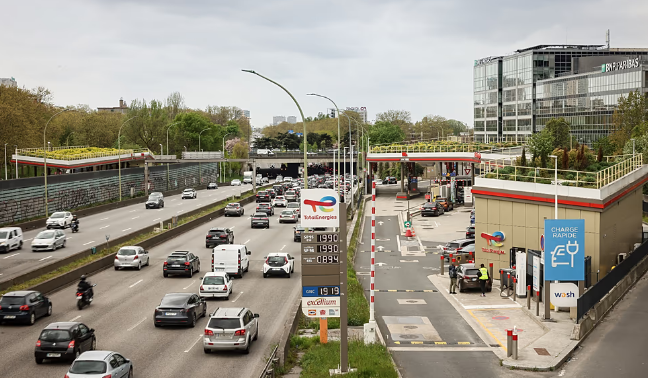
Diesel prices in France have reached a record €2.41 per litre as disruptions to global oil supplies and higher refining costs push fuel prices across Europe to unprecedented levels.
The French diesel price reached a new high on Sunday, according to an AFP analysis based on prices displayed by more than 8,700 petrol stations on the French economy ministry’s website. The figure surpassed the previous record set just one day earlier.
Fuel prices have risen sharply since the United States and Israel launched their war with Iran in February. Renewed fighting in Yemen and attacks on Saudi Arabia’s energy infrastructure have added pressure to global supplies in recent days.
France’s most widely sold petrol, SP95-E10, was priced at more than €2.17 per litre on Sunday morning, based on information from more than 6,700 stations. The price has remained above its previous 2022 peak for more than 10 days.
SP98 petrol also reached an average of more than €2.28 per litre, according to prices reported by more than 6,800 stations.
France was already among the European Union’s most expensive fuel markets last week. On September 14, the average French diesel price stood at €2.29 per litre, according to the European Commission’s weekly data.
Germany, the Netherlands, Denmark and Finland recorded higher fuel prices at that time for both petrol and diesel.
Across the EU, the weighted average petrol price reached €2.063 per litre on September 14, while diesel stood at €2.159. Both figures were the highest recorded in the European Commission’s data series, which dates back to 2005.
The increase has raised concerns about further pressure on households and businesses and has contributed to social tensions in several European countries. In France, the government is particularly wary of a repeat of the yellow vest protests that began in 2018 following fuel price increases.
International crude prices have also risen sharply. Oil prices increased by about a fifth during September before easing over the past three days, although Brent crude remains above $100 a barrel.
Higher crude prices are not the only factor driving pump prices. European refining margins, which measure the difference between crude costs and the wholesale value of refined fuels, have also remained elevated.
According to European Central Bank experts cited by Euronews, diesel refining margins are expected to rise further and reach their highest point in October, based on refined diesel futures data from LSEG on September 16. Petrol refining margins, by comparison, were expected to have peaked in August.
The ECB experts said a reduction in fuel prices would depend heavily on an end to the Middle East conflict and the restoration of disrupted energy supplies and refining operations.
For European consumers, the combination of expensive crude oil and high refining costs means fuel prices could remain under pressure even if international oil prices continue to ease.

The cost of basic baby essentials varies widely across Europe, with parents in some countries facing bills that can exceed €6,000 during their child’s first year, according to research by Remitly.
The study, based on prices recorded in July 2026, examined the estimated annual cost of 14 essential items across six categories: nappies and related products, bottles, baby formula, sleeping equipment, transport and clothing.
Across 38 European countries, the estimated cost ranged from €2,813 in the UK to €6,294 in Spain, with an average of €4,727.
Spain was followed by the Netherlands at €6,140, Finland at €6,066, Sweden at €6,025 and Switzerland at €6,018. Costs were between €5,000 and €6,000 in Luxembourg, Italy, Lithuania, Albania, Serbia, Montenegro, Portugal, Slovakia, Norway and Iceland.
Among Europe’s five largest economies, Spain recorded the highest estimated cost, while the UK had the lowest. Germany stood at €4,701 and France at €4,393.
Several countries recorded costs below €4,000. Czechia had an estimated total of €3,211, followed by Romania at €3,385, Latvia at €3,392, Croatia at €3,661, Bulgaria at €3,804 and Bosnia and Herzegovina at €3,844.
Clothing, formula and nappies represented the largest portions of spending. Across the countries studied, clothing accounted for an average of 30.3% of total costs, followed by formula at 25.7% and nappies at 24.5%. Together, the three categories represented about 81% of estimated first-year spending.
Parents spent an average of €1,465 on clothing, €1,187 on formula and €1,152 on nappies.
The composition of spending differed considerably between countries. Clothing represented 52.5% of the estimated total in Sweden, compared with 16% in Denmark. Formula accounted for 41.3% in Latvia but only 10.8% in Sweden. Nappies represented more than 36% of costs in Switzerland and Belgium, compared with 12.4% in Turkey.
Income levels also changed the picture. Remitly compared baby-related costs with average monthly employee earnings reported by the International Labour Organization, adjusted for inflation. Across 36 countries, baby essentials represented an average of 20.9% of annual wages.
The proportion ranged from 5.4% in Belgium to 88.8% in Moldova. Albania recorded 66%, followed by Turkey at 45.1%, Montenegro at 45%, Serbia at 41.4% and Bosnia and Herzegovina at 36.1%.
In contrast, baby essentials represented less than 10% of average annual wages in Luxembourg, Denmark, the UK, Norway, Ireland, Switzerland, Germany, Austria, France, Malta and the Netherlands.
The research did not include nursery or crèche costs, which can add substantially to household expenses. OECD figures show that gross childcare fees for two children in 2023 reached €64,211 in Switzerland and €39,229 in the Netherlands, while Germany recorded €552. Government support can reduce the amount families ultimately pay in some countries.

Volkswagen Removed From Euro Stoxx 50 After Profit Warning

French Diesel Prices Hit Record as Middle East War Drives EU Fuel Costs Higher

Volvo Cars Names Škoda Chief Klaus Zellmer as Next CEO


US Embassies Warn Americans of Rapidly Escalating Middle East Conflict

Baby Essentials Cost Thousands of Euros Across Europe, Study Finds

Global Survey Finds Growing Concern Over AI-Driven Job Losses

Trump Signs Sweeping Russia Sanctions Bill Into Law

AI Chatbots Make Faster, Less Nuanced Kidney Transplant Decisions Than Doctors

Europe Accelerates Approvals for Autonomous Vehicles and Driverless Transport

Meta Acquires Tilda Swinton VR Doc ‘Impulse: Playing With Reality’

China’s Historic Olympic Victory Sparks National Pride Amid Controversy

Saudi Arabia’s Model for Sustainable Aviation Practices

Recent Developments in Small Business Taxes

Effective Drain Cleaning: A Key to a Healthy Plumbing System

Who was Ebrahim Raisi and his status in Iranian Politics?

Keely Hodgkinson Wins Britain’s First Athletics Gold at Paris Olympics in 800m

Carrectly: Revolutionizing Car Care in Chicago

Nobel Laureate Muhammad Yunus Proposed as Head of Bangladesh’s Interim Government Following Hasina’s Resignation

Chinese Hackers Infiltrate Major U.S. Telecom Firms in Possible National Security Breach

Sony WF-10XM4: Headphones Are Our Absolute Favorite

10 Places You Can’t Miss If It’s Your First Time in European

New Census Data Will Shake Up Alabama Politics

16 Top of Our Favorite Outdoor Clothing Brands

Fashionable Summer Accessories to Dress Up Your Travel Look

How Sleeping Less than 7 Hours a Night Can Lead to Weight Gain
-
 Entertainment2 years ago
Meta Acquires Tilda Swinton VR Doc ‘Impulse: Playing With Reality’
-
 Sports2 years ago
China’s Historic Olympic Victory Sparks National Pride Amid Controversy
-
 Business2 years ago
Saudi Arabia’s Model for Sustainable Aviation Practices
-
 Business2 years ago
Recent Developments in Small Business Taxes
-
 Home Improvement2 years ago
Effective Drain Cleaning: A Key to a Healthy Plumbing System
-
 Politics2 years ago
Who was Ebrahim Raisi and his status in Iranian Politics?
-
 Sports2 years ago
Keely Hodgkinson Wins Britain’s First Athletics Gold at Paris Olympics in 800m
-
 Business2 years ago
Carrectly: Revolutionizing Car Care in Chicago
You must be logged in to post a comment Login