
Travel
Major New Airports Set to Transform Global Air Travel by 2030s


From Poland to Ethiopia, several new transport hubs are set to open over the next decade, promising to reshape international air travel. While airports such as London Heathrow, Istanbul, and Dubai International currently handle millions of passengers annually, a new wave of mega airports is expected to challenge their dominance.
In Poland, Port Polska, previously known as Centralny Port Komunikacyjny (CPK), is planned between Warsaw and Łódź and is scheduled to open in 2032. The hub will feature two runways and is expected to accommodate around 40 million passengers each year, making it one of Europe’s largest airports. Plans also include a railway station connecting the airport to Kraków, Gdańsk, and Wrocław via high-speed rail. Construction is set to begin this year, with the British architectural firm Foster + Partners leading the design.
In the United Arab Emirates, Dubai International Airport, currently the world’s second busiest airport, will gradually transition operations to Dubai World Central Al Maktoum International Airport. The new facility, which currently handles just over a million passengers annually, is set to expand into the world’s busiest airport with five runways and a projected capacity of 150 million passengers per year. Dubai Airports CEO Paul Griffiths announced at the Dubai Airshow in 2025 that the transition is expected to be complete by 2032.
Saudi Arabia is also planning an ambitious expansion with King Salman International Airport, which will replace the existing King Fahd International Airport in Riyadh. Covering 780 square kilometres, King Fahd served 12.8 million passengers in 2024, but authorities aim to increase that figure to 120 million by 2030. Once completed, King Salman International Airport will feature six parallel runways and is projected to handle 185 million passengers annually by 2050.
In Africa, Bishoftu International Airport in Ethiopia is under construction about 40 kilometres south of Addis Ababa. Designed by Zaha Hadid Architects, the first phase will allow the airport to manage 60 million passengers each year, with plans to expand to 110 million in the future, making it the continent’s largest airport. High-speed rail links are planned to connect Bishoftu International to Addis Ababa and the existing Bole International Airport.
“These upcoming transport hubs will not only increase passenger capacity but also improve connectivity through integrated rail networks,” said an aviation industry analyst. “They represent a significant shift in how global air travel will operate over the next decade.”
These new airports highlight the rapid growth of international aviation infrastructure in the coming years, with Europe, the Middle East, and Africa positioning themselves as central nodes in the global air transport network. As projects like Port Polska, Dubai World Central, King Salman International, and Bishoftu International come online, travelers can expect larger, faster, and more connected hubs to accommodate increasing passenger demand worldwide.




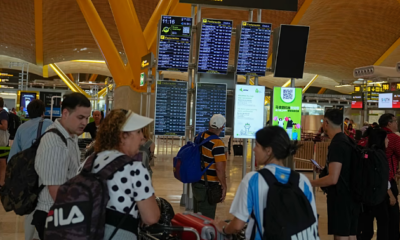



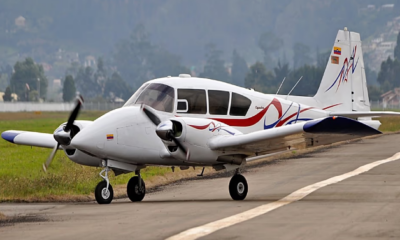

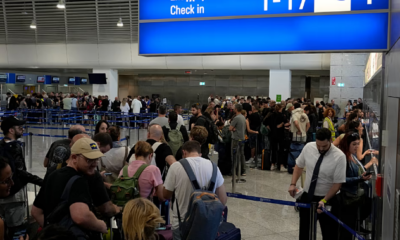


Wizz Air has been ranked the least expensive airline in Europe, while British Airways was identified as the costliest major national carrier, according to research comparing passenger revenue generated across 23 European airlines.
The analysis by flight and baggage compensation company AirAdvisor used revenue per available seat kilometre, or RASK, to compare how much airlines earn from passengers for each kilometre flown per available seat.
RASK provides an indication of how much travellers pay relative to distance and available capacity. The measure also reflects additional passenger charges, including fees for baggage and seat selection, rather than relying only on advertised ticket prices.
AirAdvisor said smaller airlines often have higher costs because they operate fewer routes, smaller fleets and services to remote or lower-demand destinations. With fewer seats available and less competition on some routes, fares can be higher.
However, the company said the pattern does not apply universally and travellers should compare prices for individual routes before booking.
The research also found that airline costs generally fell between 2024 and 2025. Among the 14 carriers for which AirAdvisor had year-on-year RASK figures, only five recorded increases, while nine saw their RASK decline.
Norway’s Widerøe topped the overall cost ranking with a RASK of €0.32. The regional airline operates many routes connecting smaller Norwegian airports with larger centres and also serves destinations including Aberdeen, Hamburg and London Southend.
Among major airlines, British Airways ranked as Europe’s most expensive national carrier, with a 2025 RASK of €0.0888. Its figure increased by €0.0038 from the previous year.
Air France and Austrian Airlines shared the next position among the most expensive major carriers, both recording a RASK of €0.0850.
At the other end of the ranking, Hungary-based Wizz Air had the lowest RASK at €0.0433, making it the least expensive airline in AirAdvisor’s comparison.
The company estimated that choosing Wizz Air instead of Air France could save travellers up to €50 on an average European flight distance, although actual savings depend on the route and additional fees.
easyJet ranked second among the least expensive airlines, with its RASK falling from €0.0770 in 2024 to €0.0521 in 2025.
Ryanair took third place, with RASK declining from €0.0843 to €0.0556 over the same period.
Among the 11 major national airlines included in the study, Finnair was ranked the least expensive.
The findings suggest that airline pricing can vary significantly even among national carriers, while the cost differences between airlines become more noticeable when viewed across typical travel distances.
AirAdvisor advised passengers to use such comparisons as a guide rather than a guarantee of the final fare, as route-specific pricing, luggage charges, seat fees and other extras can significantly affect the total cost of a journey.

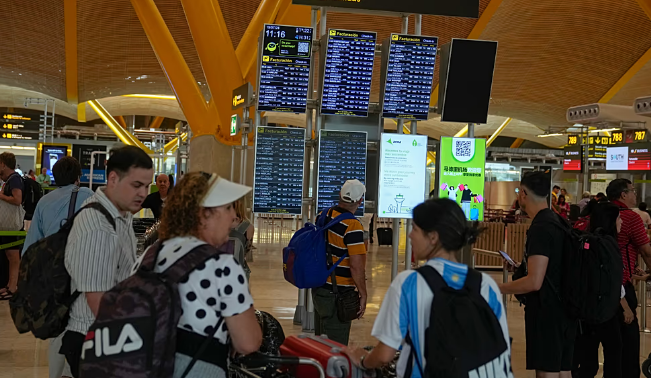
Spain has introduced temporary border checks on travellers arriving from Italy, escalating a dispute between Madrid and Rome over controls imposed during the recent Ceuta migrant crisis.
The measures came into effect from Saturday, August 8, after Italy refused to comply with a Spanish demand to remove its own border checks on travellers arriving from Spain. Madrid said its controls would remain in place until September 7, while Rome confirmed on Friday that its suspension of normal Schengen arrangements would continue at least until August 15.
The dispute comes during the peak summer travel season, when thousands of people are expected to travel between the two countries. Spanish officials have criticised the Italian measures, saying Spanish citizens have already faced additional checks when entering Italy.
Under Spain’s new arrangements, travellers arriving from Italy by air, sea or land may be required to present identification documents. EU citizens must show a valid identity document, while travellers from outside the bloc may also need to provide a visa or residence permit.
Italian nationals can use either a passport or a national identity card valid for international travel. However, Spain’s requirements come shortly after Italy stopped recognising paper identity cards as travel documents from August 3. Travellers using Italian identity cards must therefore have the electronic CIE version.
The additional checks could cause delays at major airports, ports and land crossings, particularly during one of the busiest periods of the European holiday season.
At airports, Spanish authorities may conduct checks at arrival gates or during boarding. Travellers arriving by ferry or other maritime services could be checked either before departure or after reaching Spain.
People travelling by road from Italy will generally pass through France before reaching Spain. They may therefore be stopped at the French-Spanish border and asked to present their identification documents.
Families travelling with children have also been advised to ensure that every minor carries the necessary travel documents. Italian regulations provide identity documents with different validity periods depending on a child’s age. Documents are valid for three years for children under three and five years for those aged between three and 18.
Children under 14 are not permitted to travel alone, adding another consideration for families planning journeys between the two countries.
Travellers bringing pets into Spain must also meet EU requirements. Animals need an EU pet passport issued by a veterinarian, along with a microchip and valid vaccination against rabies.
The dispute has created additional uncertainty for travellers who arranged their summer journeys before the measures were announced. Madrid and Rome now face pressure to resolve the disagreement while avoiding further disruption to movement between two EU member states normally connected by the Schengen free-travel area.

John Ternus Takes Over as Apple CEO After 15-Year Tim Cook Era

Taiwan’s AI Stock Boom Fuels Borrowing Frenzy as Investors Chase Big Gains

Wegovy Weight-Loss Pill Hits German Pharmacies at Up to €280

Shein Shares Slide on Hong Kong Debut as Tariffs Hit Fast-Fashion Business

Eurozone Inflation Jumps to 3.3% as Energy Costs Surge

White House Details Major Venezuela Oil Deal as US Secures Stake in Reserves

Google Maps Renames Lake Ontario ‘Lake America’ for US Users Amid Canada Trade Tensions

Trump Hails Major Venezuela Oil Deal as Questions Grow Over Terms

Oil Prices Rise as US-Iran Tensions Return and Rate Hike Bets Grow

Zurich Leads Europe as City-Centre Home Prices Soar Above €22,000 per Square Metre

Meta Acquires Tilda Swinton VR Doc ‘Impulse: Playing With Reality’

China’s Historic Olympic Victory Sparks National Pride Amid Controversy

Saudi Arabia’s Model for Sustainable Aviation Practices

Recent Developments in Small Business Taxes

Effective Drain Cleaning: A Key to a Healthy Plumbing System

Who was Ebrahim Raisi and his status in Iranian Politics?

Keely Hodgkinson Wins Britain’s First Athletics Gold at Paris Olympics in 800m

Carrectly: Revolutionizing Car Care in Chicago

Nobel Laureate Muhammad Yunus Proposed as Head of Bangladesh’s Interim Government Following Hasina’s Resignation

Chinese Hackers Infiltrate Major U.S. Telecom Firms in Possible National Security Breach

Sony WF-10XM4: Headphones Are Our Absolute Favorite

10 Places You Can’t Miss If It’s Your First Time in European

New Census Data Will Shake Up Alabama Politics

16 Top of Our Favorite Outdoor Clothing Brands

Fashionable Summer Accessories to Dress Up Your Travel Look

How Sleeping Less than 7 Hours a Night Can Lead to Weight Gain
-
 Entertainment2 years ago
Meta Acquires Tilda Swinton VR Doc ‘Impulse: Playing With Reality’
-
 Sports2 years ago
China’s Historic Olympic Victory Sparks National Pride Amid Controversy
-
 Business2 years ago
Saudi Arabia’s Model for Sustainable Aviation Practices
-
 Business2 years ago
Recent Developments in Small Business Taxes
-
 Home Improvement2 years ago
Effective Drain Cleaning: A Key to a Healthy Plumbing System
-
 Politics2 years ago
Who was Ebrahim Raisi and his status in Iranian Politics?
-
 Sports2 years ago
Keely Hodgkinson Wins Britain’s First Athletics Gold at Paris Olympics in 800m
-
 Business2 years ago
Carrectly: Revolutionizing Car Care in Chicago