
News
New Tool Reveals Hidden Environmental Cost of Internet Use


Scientists have developed a tool that shows how everyday internet activity impacts nature, revealing surprising environmental costs behind routine website visits. The internet is responsible for 3.7 percent of global carbon emissions, surpassing air travel. If the internet were a country, it would rank as the fourth-largest polluter in the world.
The tool, called Digital Impact for Species, was created by climate experts at the University of Exeter in partnership with Madeby.studio. It allows users to enter any website URL and see its hidden environmental footprint, including CO2 emissions, energy use, and water consumption.
“When we visit a website, we rarely think about the environmental impact,” said Dr. Marcos Oliveira Jr, project lead for Exeter’s nature and climate impact team. “But there is a high cost, from the energy consumed as the information travels from the data centre to your device, to the water used to cool servers.”
The tool translates environmental metrics into relatable natural comparisons. For example, YouTube.com, which processes billions of searches each month, is rated C, indicating room for improvement. Each page view generates 0.249 grams of CO2, consumes 0.0011 litres of water, and uses 0.62 watt-hours of energy. For every 9,000 monthly visits, the site requires 10 litres of water—enough to sustain a capuchin monkey for 77 days. CO2 emissions from that traffic would take a single Amazon rainforest tree 41 days to absorb, while the energy used is equivalent to 1,000 Anna’s hummingbirds’ daily energy consumption for 332 days.
The tool calculates these impacts using Google PageSpeed Insights to measure the size of resources loaded on a page, such as images, text, and video. It also checks whether the site is hosted on servers powered by renewable energy or fossil fuels, and applies the Sustainable Web Design Model to convert technical data into ecological terms.
Researchers said the tool is intended to raise awareness rather than criticize specific websites. Dr. Oliveira Jr explained that it encourages discussion on how to create a more sustainable internet.
Experts suggest that website operators can reduce environmental impacts by simplifying pages, using fewer images, limiting fonts, avoiding unnecessary videos, and optimizing code. Hosting sites on renewable-energy servers also lowers the ecological footprint.
Consumers can contribute by minimizing unnecessary searches, but the responsibility largely lies with website hosts and developers. By making these changes, experts say it is possible to lower the internet’s environmental impact while maintaining accessibility and usability.
Digital Impact for Species is available online, offering a way for users to better understand the hidden cost of their digital habits and prompting both individuals and organizations to consider sustainability in online activity.
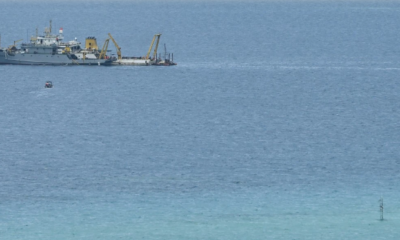

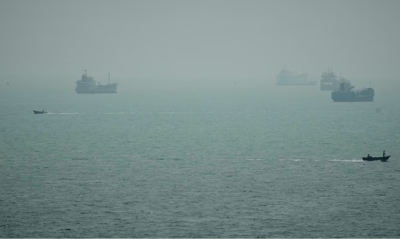



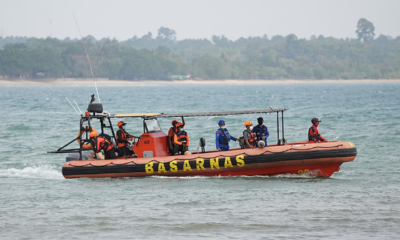

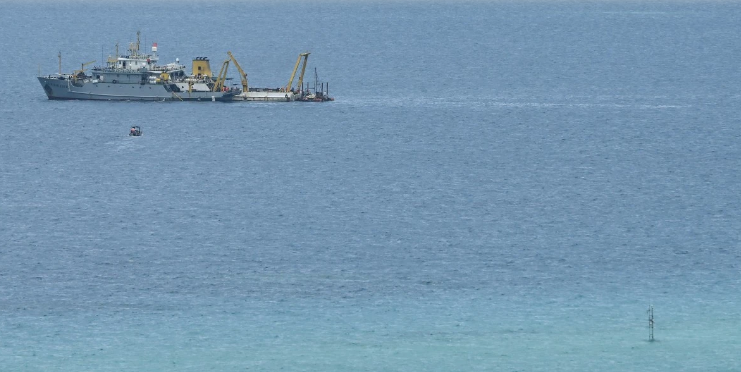
The Philippines has accused a China Coast Guard vessel of ramming a government fisheries boat in disputed waters of the South China Sea, in the latest maritime confrontation between the two countries.
The Philippine Coast Guard said the incident occurred on Friday while the Bureau of Fisheries and Aquatic Resources vessel BRP Datu Magat Salamat was carrying out a patrol and delivering fuel assistance to Filipino fishermen. The vessel was operating about 54 nautical miles from the coast of Palawan.
Philippine Coast Guard spokesman Jay Tarriela said the Chinese vessel, identified as CCG-21585, crossed behind the Philippine boat at about 11:04 a.m., passing within roughly 10 metres.
About nine minutes later, the Chinese vessel repeated the manoeuvre and made contact with the BFAR vessel, according to the Philippine Coast Guard. The collision damaged railings and metal support structures on the Philippine vessel and displaced equipment on its deck. No injuries were reported.
Video released by the Philippine Coast Guard showed the Chinese vessel close to the stern of the Philippine boat, with crew members reacting to the approaching vessel. Photographs released after the incident showed damaged railings and other parts of the deck.
The China Coast Guard disputed Manila’s account and said the Philippine vessel was responsible for the collision. Chinese coast guard spokesman Jiang Lue said the Philippine ship ignored repeated warnings, changed course and accelerated across the path of the Chinese vessel.
He said the actions of the Philippine side had threatened the safety of Chinese personnel and vessels, and called on Manila to stop what Beijing described as provocative activities. China said its vessel had acted professionally during the encounter.
The confrontation occurred near a shoal in the Spratly Islands, an area that has been a recurring source of tension between China and the Philippines. Beijing claims sovereignty over most of the South China Sea, including areas claimed by several Southeast Asian countries.
An international arbitration tribunal ruled in 2016 that China’s expansive claims had no legal basis under international law. China rejected the ruling and has continued to maintain its claims.
Tensions between Manila and Beijing have increased again in recent months following a period of relative calm. In July, the Philippines accused Chinese vessels of using water cannon against government ships near Scarborough Shoal and reported another confrontation involving Philippine personnel near Second Thomas Shoal.
The latest incident adds to a series of encounters involving coast guard and fisheries vessels as both countries continue to assert competing maritime claims in the strategically important South China Sea.
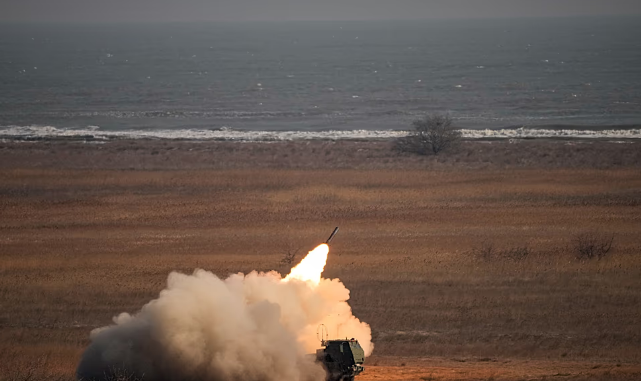
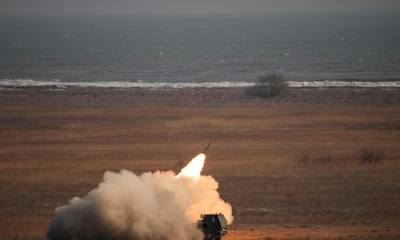
The US military is facing shortages of ammunition and advanced weapons following its war with Iran, according to a report by the Defence Department’s inspector general, highlighting the pressure placed on American weapons stockpiles and defence production.
The report, submitted to Congress, said the scale of weapons used during the conflict created “strategic inventory shortfalls” and revealed bottlenecks in the US defence industry’s ability to replenish critical supplies.
The conflict, known as “Operation Epic Fury”, began on February 28. Between the start of the war and June 30, the operation cost an estimated $33.4 billion (€29 billion), with about $22.3 billion spent on munitions.
Defence experts have estimated that rebuilding stocks of advanced missiles and defensive interceptors to levels seen before the conflict could take about three years.
The report also detailed significant losses of US military equipment during the fighting. Four F-15 fighter jets were destroyed and one F-35 aircraft was damaged. Seven KC-135 tanker aircraft were damaged or destroyed, including five that were hit by Iranian munitions while on the ground in Saudi Arabia.
Up to 30 MQ-9 Reaper drones were also destroyed, according to the report. Each drone costs about $30 million (€26 million), adding significantly to the military’s equipment losses.
Despite the findings, President Donald Trump has continued to dismiss concerns about US weapons availability. Trump said the country’s ammunition supplies were “virtually unlimited” and claimed American weapons production had reached record levels.
In a post on Truth Social on Monday, Trump said the United States was producing “more exquisite and elite weapons than at any time in our history”.
The Pentagon has also maintained that the US military has the weapons required to fight any conflict.
The inspector general’s report, however, pointed to wider challenges facing the US defence industry. The rapid consumption of advanced munitions during the war placed additional pressure on manufacturers already dealing with production constraints and lengthy timelines for some weapons systems.
The conflict also caused extensive damage to US military facilities across the region. Hundreds of buildings and other structures were damaged or destroyed at American bases in Kuwait, Bahrain, Qatar, the United Arab Emirates, Saudi Arabia, Iraq, Oman and Jordan.
The cost of repairing or rebuilding those facilities was not included in the $33.4 billion estimate for Operation Epic Fury.
US authorities have not yet determined whether all the damaged facilities will be rebuilt. They also have yet to establish who will ultimately pay for the repairs.
The report provides one of the clearest assessments so far of the financial and military costs of the Iran conflict, while raising questions about the ability of the United States to rapidly replace advanced weapons if it faces another major conflict.
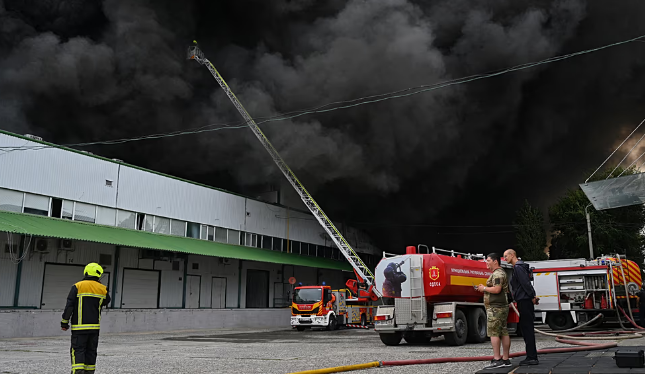
Ukrainian President Volodymyr Zelenskyy said on Saturday that he was willing to attend the G20 summit in Miami and meet Russian President Vladimir Putin on the sidelines, as the two countries continued attacks on each other’s territory and energy infrastructure.
Zelenskyy said direct talks were needed to achieve tangible results in efforts to end the war.
“We have to come. We have to meet, to speak and make decisions,” he said in an interview. “It’s not about words. What I will tell him or what he wants to tell me, it doesn’t matter. Results matter. That’s it.”
The Kremlin rejected the possibility of such a meeting. Kremlin spokesperson Dmitry Peskov described a Putin-Zelenskyy meeting at the G20 as “impossible” and said the Russian president would only meet Zelenskyy in Moscow.
Russian Foreign Minister Sergey Lavrov also said Russia would not halt what Moscow calls its “special military operation” during possible peace talks.
The comments came as Ukraine reported a large overnight Russian drone attack. Ukraine’s Armed Forces said Russia launched 453 drones of various types across the country, with 409 intercepted or neutralised. The military said 13 locations were hit.
Several Russian drones struck the city of Stryi in the western Lviv region, which borders Poland. A multi-storey residential building, an outbuilding near a school and buildings close to a railway station were damaged, according to Ukrainian authorities.
In Izyum, in the Kharkiv region, a 26-year-old woman was killed after an explosive device detonated, according to Oleh Syniehub, head of the Kharkiv Regional Military Administration. Russian attacks also targeted Kharkiv city and 15 settlements in the region, injuring three people, including a 73-year-old woman.
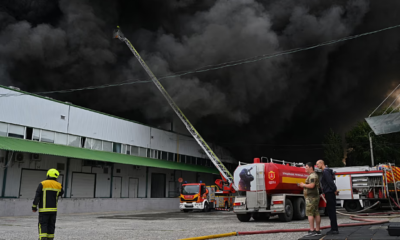
At least five people were injured in Ukraine’s Volyn region after a Russian attack lasting more than four hours, regional Governor Roman Romaniuk said. More than 10 drones were reported in the region’s airspace. In Lutsk, an evacuated train was hit by debris and caught fire, although no injuries were reported.
Ukraine targets Russian oil facilities
Russia also reported casualties following Ukrainian drone attacks. Two people were killed and 12 injured after a strike caused a fire at an industrial facility in Nizhnekamsk in Russia’s Tatarstan region, according to Russian authorities. The figures could not be independently verified.
Ukraine’s Defence Intelligence said it also struck the Slavyansk-ECO oil refinery in Slavyansk-on-Kuban in Russia’s Krasnodar Krai, damaging a key oil-processing unit and the refinery’s tank farm.
Both sides have increasingly targeted energy infrastructure ahead of winter. Russia has concentrated many attacks on Ukraine’s electricity and energy facilities, while Ukraine has focused its strikes on Russia’s oil and gas infrastructure.

Europe Accelerates Approvals for Autonomous Vehicles and Driverless Transport

Philippines Accuses China Coast Guard of Ramming Vessel in South China Sea

Rheinmetall Chief Warns of Low German Missile Stocks as Defence Production Expands

Frankfurt Issues Malaria Warning After Six Cases Reported Since July

European Stocks Rise Despite Wall Street Losses After Fed Rate Hike

Kennedy Center to Close for Repairs After Judge Blocks Trump Naming Plan

Weather Data Could Help Predict Cardiac Arrest Surges Days in Advance, Study Finds

Von der Leyen Says AI Should Support Doctors, Not Replace Them

US Military Faces Weapons Shortages After Iran War, Pentagon Report Says

Trump Dismisses AI Extinction Fears as Global Calls for Guardrails Grow

Meta Acquires Tilda Swinton VR Doc ‘Impulse: Playing With Reality’

China’s Historic Olympic Victory Sparks National Pride Amid Controversy

Saudi Arabia’s Model for Sustainable Aviation Practices

Recent Developments in Small Business Taxes

Effective Drain Cleaning: A Key to a Healthy Plumbing System

Who was Ebrahim Raisi and his status in Iranian Politics?

Keely Hodgkinson Wins Britain’s First Athletics Gold at Paris Olympics in 800m

Carrectly: Revolutionizing Car Care in Chicago

Nobel Laureate Muhammad Yunus Proposed as Head of Bangladesh’s Interim Government Following Hasina’s Resignation

Chinese Hackers Infiltrate Major U.S. Telecom Firms in Possible National Security Breach

Sony WF-10XM4: Headphones Are Our Absolute Favorite

10 Places You Can’t Miss If It’s Your First Time in European

New Census Data Will Shake Up Alabama Politics

16 Top of Our Favorite Outdoor Clothing Brands

Fashionable Summer Accessories to Dress Up Your Travel Look

How Sleeping Less than 7 Hours a Night Can Lead to Weight Gain
-
 Entertainment2 years ago
Meta Acquires Tilda Swinton VR Doc ‘Impulse: Playing With Reality’
-
 Sports2 years ago
China’s Historic Olympic Victory Sparks National Pride Amid Controversy
-
 Business2 years ago
Saudi Arabia’s Model for Sustainable Aviation Practices
-
 Business2 years ago
Recent Developments in Small Business Taxes
-
 Home Improvement2 years ago
Effective Drain Cleaning: A Key to a Healthy Plumbing System
-
 Politics2 years ago
Who was Ebrahim Raisi and his status in Iranian Politics?
-
 Sports2 years ago
Keely Hodgkinson Wins Britain’s First Athletics Gold at Paris Olympics in 800m
-
 Business2 years ago
Carrectly: Revolutionizing Car Care in Chicago