Connect with us

Business

Taiwan Secures US Trade Deal Reducing Tariffs, Drawing Beijing Criticism

Published

on

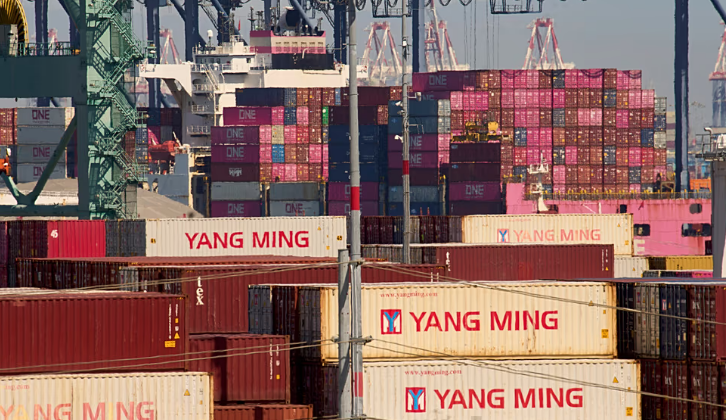
Taiwan’s prime minister on Friday described a new trade agreement with the United States as the “best tariff deal” obtained by countries with trade surpluses with Washington, a move that drew sharp criticism from Beijing.

The deal reduces US tariffs on Taiwanese goods to 15% in exchange for $250 billion (€215.3 billion) in new US technology-industry investments. It follows similar arrangements with the European Union and Japan after US President Donald Trump had threatened broad tariffs on multiple trading partners.

“Taiwan has successfully obtained 15% in tariffs with no added fees,” said Premier Cho Jung-tai. “For the time being, we obtained the best tariff deal enjoyed by the countries with trade surplus with the US. This also shows that the US sees Taiwan as an important strategic partner.”

The agreement covers specific industries, with 15% tariffs applied to automotive and wood furniture products, while some aerospace components will face no tariffs. The deal also provides preferential treatment for Taiwanese semiconductor firms investing in the US, including exemptions from certain tariffs.

China, which considers Taiwan part of its territory, criticized the accord. “China always firmly opposes countries having diplomatic relations with China and China’s Taiwan region signing any agreement that carries sovereign connotations and an official nature with China’s Taiwan region,” said Guo Jiakun, a spokesperson for Beijing’s Foreign Ministry.

The US Department of Commerce described the pact as “historic,” noting it will support the development of world-class US industrial parks aimed at expanding domestic manufacturing and accelerating the reshoring of America’s semiconductor sector.

See also  Eurozone Faces Sharp Stagflation Risk as Iran Conflict Drives Costs Higher

The agreement comes amid a surge in Taiwanese investment in the US. Taiwan Semiconductor Manufacturing Company (TSMC), the world’s largest chipmaker, announced plans to increase capital spending by up to 40% this year, following a 35% jump in net profits for its latest quarter, driven by demand linked to artificial intelligence. TSMC has committed around $165 billion (€142 billion) in US investments and is accelerating construction of new fabrication plants in Arizona to create a cluster of semiconductor facilities.

The trade deal must still be ratified by Taiwan’s parliament, where opposition lawmakers have raised concerns about its impact on the island’s domestic semiconductor industry.

Ryan Majerus, a former US trade official who served under Trump and former President Joe Biden, noted the timing of the agreement. “The Supreme Court has yet to rule on the legality of Trump’s most sweeping tariffs, which he has used to pressure concessions from other US trading partners. The justices could strike down the tariffs as early as this month. But Taipei, facing ongoing threats from Beijing, was eager to reach a deal and strengthen relations with Washington anyway,” he said.

Observers say the deal signals a deepening economic partnership between Washington and Taipei, combining tariff relief with major US-bound investment in technology and semiconductors, while highlighting ongoing geopolitical tensions across the Taiwan Strait.

Business

Investors Face Limited Choices as Robotics Boom Stays Locked in Private Markets

Published

on

Investors looking to profit from the rapid growth of robotics face a major obstacle: many of the companies developing the most advanced robots remain privately owned, leaving ordinary shareholders with only a handful of ways to gain exposure to the sector.

Tesla is one of the most visible options, while industrial groups such as Fanuc, ABB and Siemens provide varying degrees of exposure to automation. A newer alternative is RoboStrategy, a Nasdaq-listed fund that owns stakes in private robotics companies but trades at a substantial premium to the value of its underlying assets.

Tesla offers investors exposure to humanoid robots through its Optimus project, as well as robotaxis. Chief Executive Elon Musk has said around 80 percent of Tesla’s future value could come from Optimus. However, the company remains primarily an electric vehicle manufacturer. Automotive sales accounted for about $20.5 billion of its $28.2 billion in revenue in the second quarter, while Optimus has yet to generate sales.

Musk said in January that Tesla could begin selling humanoid robots to the public by the end of next year. Production has since started at the company’s Fremont facility in California, although Musk has warned that manufacturing will initially be slow because the technology is new.

Dan Coatsworth, head of markets at UK investment platform AJ Bell, said Tesla investors were also buying into Musk’s wider business ambitions, with vehicle sales providing funding for projects such as robotics.

The valuation is a significant consideration. Tesla trades at about 165 times forward earnings, compared with less than 10 times for many European carmakers, Coatsworth said, suggesting investors are already paying heavily for expectations surrounding future technologies.

See also  Global Debate Intensifies Over Banks’ Power to Cut Off Customers

Humanoid robots also represent only a small portion of the wider robotics industry. About 7,000 humanoid robots were sold for industrial and professional use last year, compared with 603,000 industrial robots installed worldwide, according to the International Federation of Robotics.

Major industrial robotics companies offer more established businesses but limited exposure to humanoids. Robots accounted for 44 percent of Fanuc’s sales in the year to March, while robotics contributed between 7 percent and 10 percent of ABB’s revenue in recent years. ABB has agreed to sell its robotics division to SoftBank for $5.4 billion. Siemens focuses heavily on software and controllers used in automated factories rather than producing robots itself.

RoboStrategy, which began trading on Nasdaq in May under the ticker BOT, provides access to private robotics companies. Figure AI, Dyna Robotics and Apptronik each represented close to a fifth of the fund’s net assets in June.

The fund’s shares, however, can trade far above the value of its holdings. Its shares opened at $27.34 on Friday, compared with a net asset value of $11.35 at the end of August. It also charges a 2.5 percent annual management fee, with total yearly expenses approaching 4 percent.

Traditional robotics ETFs offer another route and generally trade closer to their asset values, although they mainly hold publicly listed companies.

Until more leading robotics start-ups enter public markets, investors seeking direct exposure to the sector must weigh high valuations, premiums and considerable risks.

Continue Reading

Business

Uruguay Tops Global Retirement Ranking as Europe Dominates Top 10

Published

on

Uruguay has overtaken Portugal to become the world’s top retirement destination in a new global ranking, although Europe remains the strongest region overall with six countries among the top 10.

The 2026 retirement index by Global Citizen Solutions compares 46 retirement and passive-income residence programmes based on quality of life, travel freedom, access to citizenship, taxation, application procedures and costs.

Uruguay took first place after recording consistently strong results across all five categories, while Mauritius ranked second. Spain was third, followed by Costa Rica and Portugal. Latvia, Andorra, Italy, Greece and Malta completed the top 10.

The ranking found that Europe’s main advantages are its quality of life, strong passports and established routes to citizenship. Higher taxes, however, reduced the scores of several European programmes.

Quality of life carries the greatest weight in the index, followed by mobility and citizenship, taxation, application procedures and costs. The report said the priorities can vary considerably between retirees, and the gap between first and 10th place was less than four points.

Spain was the highest-ranked European destination and placed fifth globally for quality of life. Its retirement programme offers a relatively straightforward application process that can take up to eight months. However, Spain ranked last among the 46 programmes for taxation because of worldwide taxation, regional wealth taxes and the absence of a special tax regime for visa holders.

Portugal ranked second in Europe and fifth worldwide, down from first place in 2025. Its position was affected by changes to citizenship rules that increased the required residence period for most non-EU applicants from five to 10 years.

See also  Prosus Acquires Just Eat Takeaway in €4.1 Billion Deal

Portugal remains one of the more affordable major European options, with an income requirement of €920 a month. It also performs strongly for mobility, although processing can take as long as two years.

Latvia ranked third in Europe, offering processing times of two to four months and relatively low costs. Andorra scored particularly well for safety and environmental standards and ranked third globally for quality of life. Its income tax is capped at 10%, with no wealth or inheritance tax, but applicants must make a local investment of €1 million.

Italy and Greece ranked first and second globally for mobility and citizenship respectively. Greece offers tax options for retirees but requires monthly income of €3,500 under its relevant programme.

Outside Europe, the Americas performed strongly for affordability and taxation, while Mauritius was Africa’s highest-ranked destination. In the Middle East, the UAE ranked 19th overall and first for preferential tax regimes.

Income requirements vary widely. They range from less than €600 a month in Nicaragua to more than €9,000 in Bahrain. Citizenship timelines also differ, with some South American countries offering naturalisation after about two to three years, while Andorra requires 20 years.

The report said 24 programmes allow naturalisation within five years, while 17 offer it within six to 10 years.

Continue Reading

Business

Binance Faces EU Regulatory Scrutiny Over Continued Service to Customers

Published

on

European regulators are examining how Binance continues to serve customers in the European Union after the cryptocurrency exchange failed to obtain a licence under the bloc’s Markets in Crypto-Assets Regulation, according to a Financial Times report.

The scrutiny centres on Binance’s use of the “reverse solicitation” exemption, which allows companies based outside the EU to provide certain services to customers when those customers approach the company entirely on their own initiative.

Binance was expected to take steps to wind down its European operations after failing to secure a MiCA authorisation by the summer deadline. Under the rules, companies without the required licence were expected from July 1 to limit their activities to helping customers transfer or sell their existing crypto holdings.

The European Securities and Markets Authority and regulators in countries including France, Germany and Greece are examining Binance’s use of the exemption, the Financial Times reported, citing people familiar with the matter.

Some regulators have reportedly requested information from Binance and could consider enforcement measures, including fines, if they are not satisfied with the company’s responses. The review also extends to other cryptocurrency businesses using the same exemption.

ESMA told the Financial Times that reverse solicitation is intended to be a limited exception and should not be used to avoid MiCA requirements. The Dutch financial markets regulator AFM similarly said crypto asset service providers must meet specific requirements before relying on the exemption.

Binance’s local licences in countries including France, Spain and Poland lapsed under the new EU framework. Customers in some other EU markets are served through Binance’s Abu Dhabi entity, which has been regulated since December 2025.

See also  Chinese Car Companies Urge Import Taxes on EU Rivals Amid Tariff Threats

The exchange said its European operations remain compliant with applicable rules.

“In Europe, Binance remains committed to operating on a long-term, compliant basis under the EU’s Markets in Crypto-Assets Regulation. We are actively working toward becoming MiCA-authorised,” a Binance spokesperson told Euronews.

ESMA declined to comment on the specific case when contacted by Euronews. It said supervision, investigation and enforcement under MiCA are responsibilities of national authorities, while ESMA’s role includes promoting consistent supervision across EU markets through cooperation, information-sharing and guidance.

Any enforcement action against Binance would therefore need to be taken by the relevant national regulators rather than ESMA itself.

The latest scrutiny adds to Binance’s regulatory challenges in several major markets. In 2023, the company agreed to pay $4.3 billion in penalties in the United States after pleading guilty to criminal charges linked to money laundering and violations of US sanctions.

The outcome of the EU review could affect Binance’s ability to continue serving European customers while it seeks authorisation under MiCA. The exchange has said it intends to obtain the required licence and operate in the bloc on a long-term basis.

Continue Reading

Trending