
News
Eta Aquarid Meteor Shower to Light Up Skies This Week


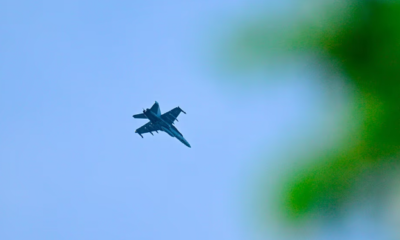




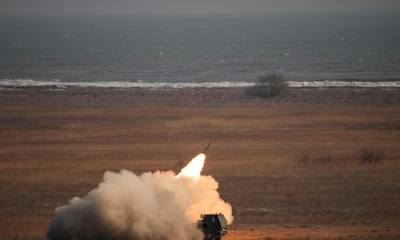

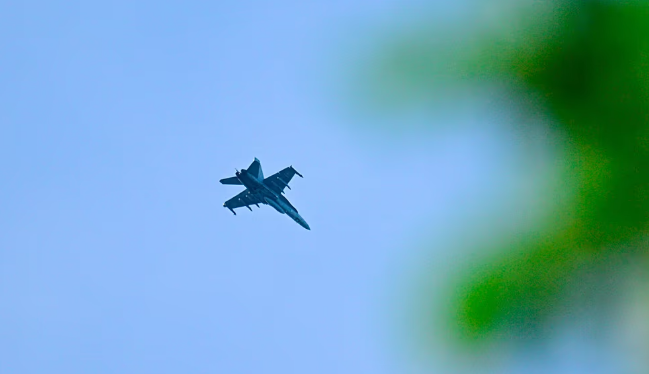
Finnish and Swedish fighter jets were scrambled to identify Russian military aircraft flying over the Gulf of Finland, as European governments increase vigilance over potential Russian military and hybrid activity.
The Finnish Air Force said on Friday that aircraft from both countries took part in the operation on Thursday. The jets identified a Russian group consisting of a Tu-134 transport aircraft, accompanied by MiG-31 and Su-30 fighter jets, while the formation was flying in international airspace over the Gulf of Finland.
The Finnish military described the mission as the first joint operational identification flight conducted by the Finnish and Swedish air forces. The operation formed part of cooperation between the two countries to monitor and protect their airspace.
Swedish Prime Minister Ulf Kristersson commented on the incident on X, saying the Baltic Sea had become more vulnerable but was also better protected.
Tensions around the Baltic Sea have increased since Russia launched its full-scale invasion of Ukraine in 2022. Finland and Sweden subsequently abandoned decades of military non-alignment and joined NATO.
The latest incident came a day after Denmark’s Defence Intelligence Service warned that the risk of Russian military action against NATO countries was growing, although it said an outright invasion remained highly unlikely.
DDIS chief Thomas Ahrenkiel said there was a “low but growing risk” that Russia could launch a limited military attack against one or more NATO countries bordering Russia. He said an invasion remained “highly unlikely”, but could not be ruled out.
The Danish assessment also warned that Russia was expected to intensify hybrid attacks against Western countries in the coming months. Such activity can include sabotage, cyberattacks and other actions designed to disrupt critical infrastructure or weaken support for Ukraine.
According to the Danish assessment, earlier hybrid operations had largely focused on creating fear and weakening public support for assistance to Ukraine. The agency said the activity had increasingly targeted efforts to deliver that support, including defence companies and rail transport carrying military equipment.
DDIS also warned of potentially destructive cyberattacks capable of disrupting critical societal functions. The agency said Russia could seek to increase pressure on NATO and deepen divisions within the alliance.
European governments have stepped up surveillance and air defence measures following a series of incidents involving drones, suspected sabotage and airspace violations. NATO has also increased attention on its eastern flank.
Russia has repeatedly denied accusations that it is responsible for sabotage and other unidentified incidents in Europe.
The Finnish-Swedish air operation highlights the growing military coordination between the two Nordic NATO members as European countries monitor Russian aircraft and assess wider security risks linked to the war in Ukraine.
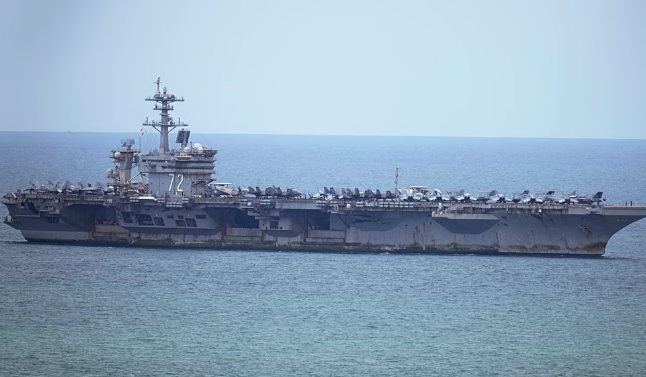
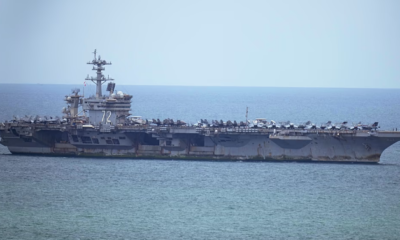
The US Navy has acknowledged eight suicide attempts among service members during the extended deployment of the aircraft carrier USS Abraham Lincoln, according to a letter disclosed by a US senator on Wednesday.
Acting Navy Secretary Hung Cao provided the figure in a response to questions from Democratic Senator Kirsten Gillibrand about conditions aboard the carrier and within its strike group. The letter was seen by AFP.
The disclosure follows months of reports about deteriorating living conditions and mental health concerns among personnel serving aboard the Lincoln. Military families and lawmakers raised concerns in August about reported suicide attempts, other serious mental health problems, food shortages and poor hygiene.
“Since the beginning of Lincoln’s deployment, there have been a total of eight suicide attempts across the strike group,” Cao said in the letter.
The document provided details about some of the incidents. A sailor assigned to an air wing “went overboard from the ship in early August” but was quickly recovered by a search and rescue helicopter. The sailor was subsequently taken off the vessel for follow-up care.
In another incident, a sailor “attempted to go overboard in March and was stopped by his shipmates,” according to the letter. The sailor was later returned to the carrier’s homeport.
The USS Abraham Lincoln left California in November 2025 for an assignment in the South China Sea. It was later redirected toward the Middle East before US and Israeli attacks on Iran began in late February 2026.
The carrier remained at sea for 286 days before making a stop in Thailand in early September, according to the information provided.
The length of the deployment and reports about conditions aboard the vessel prompted concerns from military families and members of Congress. The reported problems included shortages of food and concerns over hygiene, alongside claims that some service members were experiencing significant mental health difficulties.
The allegations drew attention in the United States and criticism of President Donald Trump’s war against Iran.
Trump rejected the claims about conditions aboard the carrier when they emerged in August. Defence Secretary Pete Hegseth also disputed the reports, saying the situation had been “misrepresented.”
The Navy’s disclosure of eight suicide attempts provides additional information about the mental health concerns raised during the deployment, although the letter did not indicate that all of the incidents were connected to the reported living conditions aboard the carrier.
Gillibrand has previously pressed military officials for information about the welfare of service members and the conditions they face during lengthy deployments. The latest disclosure adds to scrutiny of the demands placed on personnel during unusually prolonged periods at sea.

US embassies across the Middle East have issued security alerts urging Americans to remain vigilant following a series of attacks by Yemen’s Iran-aligned Houthi rebels against Saudi Arabia.
Embassies in Bahrain, Israel, Iraq, Jordan, Kuwait, Lebanon, Oman, Qatar, Saudi Arabia and the United Arab Emirates warned that the military conflict could escalate rapidly and described the regional security environment as complex.
The alerts advised US citizens to maintain heightened vigilance and prepare for possible travel disruption. Americans were told to be aware of potential flight cancellations, airspace closures and other interruptions to travel.
The warnings came after the Houthis said on Saturday that they had carried out two military operations against Saudi Arabia using ballistic and cruise missiles and drones. The group said the attacks were conducted in response to Saudi strikes.
According to the Houthis, the first operation targeted what they described as sensitive sites in Riyadh, while the second targeted facilities belonging to Saudi oil giant Aramco in Yanbu.
A spokesperson for the Saudi-led coalition, which was established in 2015 to support Yemen’s internationally recognised government, later said Saudi air defenses had intercepted a ballistic missile launched toward Riyadh.
The spokesperson also said the Houthis had targeted the cities of Baish, Taif, Farasan and Yanbu.
Residents in Riyadh reported seeing flames and smoke near King Khalid International Airport on Saturday. Videos shared on social media appeared to show a large column of smoke rising from the airport.
Flight tracking service Flightradar24 reported that the airport was experiencing major operational problems, although the precise cause of the disruption was not immediately clear.
The latest attacks have added to a broader escalation involving the Houthis, who declared a naval blockade of Saudi Arabia in July and have since increased attacks against Saudi cities and shipping.
Saudi Arabia has responded with airstrikes against the group as fighting has intensified in Yemen. The Houthis have also expanded their control over parts of the country during a rapid offensive.
The United Nations has warned that the escalation is taking a growing toll on civilians.
At a press briefing on Friday, UN Secretary-General spokesperson Stéphane Dujarric said the UN Human Rights Office had documented 110 civilian casualties in 31 incidents since hostilities intensified in August. The figure included 28 deaths and 82 injuries across Taizz, Al Hudaydah and Marib.
Dujarric said insecurity and restrictions on access had made it difficult for the UN to verify the full number of casualties, which he said was likely higher.
“We urge all parties, and those with influence over them, to act immediately to de-escalate, protect civilians and facilitate humanitarian access,” Dujarric said.
The US security alerts come as regional governments and international organisations monitor the expanding conflict and the potential impact on civilian travel and commercial transport.

Chinese Car Brands Gain Ground in Norway Despite Rising Consumer Concerns

Study Finds Modest Exercise Can Provide Significant Relief From Pain

Finland and Sweden Scramble Jets as Europe Raises Alert Over Russian Threats

European Governments Expand Fuel Tax Cuts and Energy Support as Prices Surge

Malta and Cyprus Rank Among Europe’s Most Tax-Friendly Destinations for Relocating Workers

European Stocks Slip as Oil Prices and US Bond Yields Keep Investors Cautious

US Navy Confirms Eight Suicide Attempts During Extended Carrier Deployment

UK Banks Complete First Interbank Transfers Using Tokenised Deposits

Europe Faces Higher Jet Fuel Costs Despite Supply Improving

More Europeans Take Up Sport, but Major Gaps Remain Across Countries

Meta Acquires Tilda Swinton VR Doc ‘Impulse: Playing With Reality’

China’s Historic Olympic Victory Sparks National Pride Amid Controversy

Saudi Arabia’s Model for Sustainable Aviation Practices

Recent Developments in Small Business Taxes

Effective Drain Cleaning: A Key to a Healthy Plumbing System

Who was Ebrahim Raisi and his status in Iranian Politics?

Keely Hodgkinson Wins Britain’s First Athletics Gold at Paris Olympics in 800m

Carrectly: Revolutionizing Car Care in Chicago

Nobel Laureate Muhammad Yunus Proposed as Head of Bangladesh’s Interim Government Following Hasina’s Resignation

Chinese Hackers Infiltrate Major U.S. Telecom Firms in Possible National Security Breach

Sony WF-10XM4: Headphones Are Our Absolute Favorite

10 Places You Can’t Miss If It’s Your First Time in European

New Census Data Will Shake Up Alabama Politics

16 Top of Our Favorite Outdoor Clothing Brands

Fashionable Summer Accessories to Dress Up Your Travel Look

How Sleeping Less than 7 Hours a Night Can Lead to Weight Gain
-
 Entertainment2 years ago
Meta Acquires Tilda Swinton VR Doc ‘Impulse: Playing With Reality’
-
 Sports2 years ago
China’s Historic Olympic Victory Sparks National Pride Amid Controversy
-
 Business2 years ago
Saudi Arabia’s Model for Sustainable Aviation Practices
-
 Business2 years ago
Recent Developments in Small Business Taxes
-
 Home Improvement2 years ago
Effective Drain Cleaning: A Key to a Healthy Plumbing System
-
 Politics2 years ago
Who was Ebrahim Raisi and his status in Iranian Politics?
-
 Sports2 years ago
Keely Hodgkinson Wins Britain’s First Athletics Gold at Paris Olympics in 800m
-
 Business2 years ago
Carrectly: Revolutionizing Car Care in Chicago