
Tech
Denmark Arrests 18-Year-Old Over Data Breach Affecting 11,000 People


Danish authorities have arrested an 18-year-old man suspected of hacking the country’s national civil registration system and accessing the personal identification numbers of 11,000 people, just two months after a separate cyberattack exposed data linked to 8.8 million individuals.
The latest breach was detected on November 23, according to Denmark’s Ministry of Digital Affairs, which confirmed the incident on Thursday. The ministry said unauthorised individuals had gained access to information held in the Civil Registration System, known as CPR.
Authorities said the breach was contained through a new technical monitoring system introduced following a major cyberattack in early October. The system was designed to track access to registry information and identify suspicious activity.
Police said the arrested man had accessed the registration system without authorisation and managed to retrieve 11,000 personal identification numbers. He has been remanded in custody while the investigation continues.
The arrest comes after Danish authorities faced criticism over the security of the national registry following the October incident, when information relating to 8.8 million people was illegally accessed.
Despite efforts to strengthen and modernise the system’s security arrangements after that attack, the latest incident has raised further questions about the protection of sensitive personal information held by government databases.
The perpetrators behind the October cyberattack have not yet been identified. At the time, an unidentified individual contacted Danish newspaper Politiken through an encrypted messaging service and claimed responsibility for the breach.
The individual reportedly told the newspaper that access to the registry had been obtained within hours by using the login credentials of a former employee at a small Danish company. According to the account, the employee’s password was reportedly “123456”.
Authorities have not confirmed whether the latest breach was connected to the earlier attack or whether the same methods were used.
Denmark has been facing growing concerns over cybersecurity. In September, the country’s Civil Security Agency raised the national threat level for cyberattacks to “high”, citing an increase in malicious digital activity targeting critical infrastructure and public services.
Recent incidents have included cyberattacks against supermarket refrigeration systems, highlighting the potential vulnerability of essential commercial operations.
Meanwhile, several European countries have experienced a series of false bomb threats targeting schools and aircraft. Security officials have considered whether some incidents could form part of a wider hybrid warfare campaign intended to disrupt public services and create uncertainty.
However, that possibility has not been confirmed due to insufficient evidence.
The latest breach adds to mounting pressure on Danish authorities to strengthen cybersecurity protections and prevent further unauthorised access to sensitive government records.






Germany and Austria have called for TikTok’s European business and key technology to be placed under European ownership and control, arguing that existing regulations are insufficient to address security concerns surrounding the Chinese-owned social media platform.
German Culture and Media Minister Wolfram Weimer and Austrian Digital State Secretary Alexander Proell announced the proposal on Thursday following a meeting in Vienna, describing TikTok as a significant security risk for Europe.
In a joint statement, the two officials called for a European ownership structure for TikTok’s regional operations, alongside European responsibility for its critical technological infrastructure, including its recommendation algorithm and access to user data.
The initiative aims to reduce concerns about who controls the platform and how its technology and information are managed. Germany and Austria plan to seek support from other European Union member states at the Telecommunications and Energy Council meeting in Brussels on December 2.
The proposal comes amid growing scrutiny of TikTok’s operations across Europe. On November 6, the platform was preliminarily found to have breached the EU’s Digital Services Act (DSA) over the way its recommendation system exposes users to potentially harmful content.
However, Weimer and Proell argued that regulatory oversight alone does not address the fundamental question of platform ownership and control.
Proell said TikTok had become more than an entertainment application, describing it as part of the infrastructure of European democracy. He argued that such an important platform should not remain under the control of a geopolitical rival.
The proposal follows similar developments in the United States, where TikTok’s parent company, ByteDance, transferred control of its American operations in January to a joint venture majority-owned by US investors. The arrangement came after Washington threatened to ban the platform over national security concerns.
Weimer said in May that Europe should consider following the American example and examine changes to TikTok’s ownership structure.
TikTok strongly rejected the latest proposal, describing it as having “zero merit”. The company argued that the initiative overlooked existing European regulations, including the DSA and the General Data Protection Regulation (GDPR).
The platform also pointed to its €12 billion Project Clover programme, which was introduced to strengthen the protection and oversight of European user data.
TikTok said its European operations are managed through companies incorporated in Ireland and Britain and operate under European law. It also maintained that ByteDance is majority-owned by global institutional investors and does not have a Chinese government ownership stake.
The dispute highlights growing tensions between European governments and major technology companies over digital sovereignty, data security and control of online platforms. Germany and Austria’s proposal could now open a wider debate within the EU over whether foreign-owned social media services should be subject to additional ownership requirements.

Belgium has inaugurated what is set to become the European Union’s largest satellite manufacturing facility, marking a major step in Europe’s efforts to strengthen its space industry and reduce reliance on foreign technology.
King Philippe officially opened the facility on Tuesday in Charleroi, southern Belgium. Operated by Belgian space technology company Aerospacelab, the factory is expected to begin producing satellites for the European Union’s Iris2 communications constellation by the end of 2028.
The Iris2 project is designed to provide Europe with an independent satellite communications network and compete with services such as Starlink, owned by Elon Musk’s SpaceX. The initiative is part of broader European efforts to secure communications infrastructure and strengthen the bloc’s strategic autonomy.
The 20,000-square-metre facility has an annual production capacity of approximately 500 satellites. However, the large oval-shaped factory is not yet operational, with staff expected to move into the building in January before manufacturing activities begin.
Aerospacelab chief executive Benoit Deper said the company had expanded far beyond its original expectations since its establishment in 2018.
“We’ve grown even faster than our own ambitions,” Deper said, describing the business’s transformation from a small startup into a major industrial project supporting Europe’s space sovereignty.
The company secured a €2.4 billion contract in September with its partners to manufacture 264 of the 348 satellites planned for the Iris2 constellation. The agreement represents a significant role for the Belgian manufacturer in one of Europe’s most ambitious space infrastructure programmes.
Charleroi, traditionally associated with its low-cost airport and the remains of Belgium’s industrial manufacturing sector, is now positioning itself as an important centre for the country’s growing space industry.
Europe has been increasing investment in satellite technology and space infrastructure as commercial opportunities beyond Earth expand. Governments and businesses are also seeking greater control over critical communications systems, particularly amid concerns about the reliability of dependence on US-based technology providers.
Starlink’s expanding global network has highlighted the strategic importance of satellite communications, providing internet connectivity to consumers, businesses and governments across numerous countries.
Through Iris2, the EU aims to establish a secure communications system serving government institutions and other users while improving Europe’s ability to operate independently in space.
Aerospacelab’s new factory is expected to support these ambitions by providing large-scale manufacturing capacity within Europe. Once operational, it will strengthen the region’s industrial capabilities and help meet rising demand for satellites as competition in the global space sector intensifies.
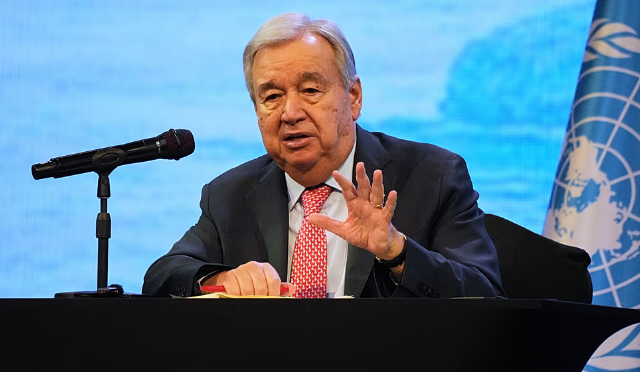
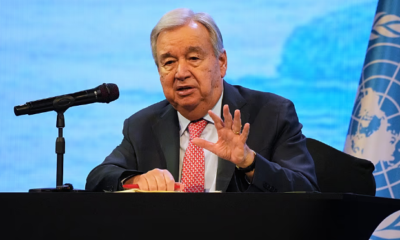
United Nations Secretary-General António Guterres has urged countries to establish a globally inclusive framework for managing artificial intelligence risks within the next year, warning that stronger international cooperation is needed to ensure humanity remains in control of the rapidly advancing technology.
Speaking on Monday at the Bridgetown Special Summit on AI Safety in Barbados, Guterres called on UN member states to coordinate their efforts and agree on common principles for overseeing AI development.
“Today I call for member states to coordinate efforts and to develop within the next year a globally inclusive and principles-based multilateral framework for AI risk management, backed by independent and credible oversight,” he said.
Guterres argued that international cooperation should focus on shared safety standards, testing procedures and independent monitoring to address the potential dangers associated with increasingly powerful AI systems.
His comments come as governments and technology companies remain divided over how quickly artificial intelligence should advance and how much regulation should be introduced. The United States and China, the world’s two leading AI powers, are competing to secure advantages in research, development and commercial applications, making agreement on international rules increasingly difficult.
Debate over AI safety has also divided major technology executives. In September, Anthropic chief executive Dario Amodei, OpenAI chief executive Sam Altman and SpaceX chief executive Elon Musk called for a slowdown in AI development. However, Nvidia chief executive Jensen Huang and Meta chief executive Mark Zuckerberg have supported continued rapid development of the technology.
The United States, where AI development has progressed particularly quickly, has shown limited appetite for strict federal intervention. In September, President Donald Trump hosted a group of American technology executives who agreed to follow a voluntary code of conduct on AI safety.
Guterres said existing international institutions were struggling to reflect the realities of the modern world and needed reforms to address emerging global challenges.
“When one looks at different other institutions of global governance … they correspond to the reality of the world in 1945,” he said.
Responding to a question from AFP, he said the United Nations, international financial institutions and the global trade system all needed to adapt to changing economic and political conditions.
The secretary-general has increasingly highlighted the dangers of artificial intelligence, including the possibility of autonomous weapons and other systems operating beyond meaningful human control.
As his term at the head of the United Nations approaches its end, Guterres said he would advise his successor, who is expected to take office in the new year, to make AI governance a priority.
He stressed that effective international safeguards would be essential for humanity to maintain control over the technology and prevent its development from creating risks that governments cannot manage.

Cocaine Leads Drug-Related Emergency Hospital Visits Across Europe in 2025

Denmark Arrests 18-Year-Old Over Data Breach Affecting 11,000 People

Germany and Austria Call for European Ownership and Control of TikTok Operations

Asian Stocks Rebound as Technology Shares Recover from Heavy Selling

Greece to Open 20 New Day Centres for People with Dementia

UniCredit Secures Final Regulatory Approval for Commerzbank Takeover

BYD in Exclusive Talks to Acquire Ineos Automotive Plant in France

Belgium Opens Europe’s Largest Satellite Factory to Boost Space Independence

UK Households Face £443 Annual Energy Bill Increase as EU Market Talks Continue

Jensen Huang’s Remarkable Rise at Nvidia Overshadowed by Controversial CEO Comeback

China’s Historic Olympic Victory Sparks National Pride Amid Controversy

Meta Acquires Tilda Swinton VR Doc ‘Impulse: Playing With Reality’

Saudi Arabia’s Model for Sustainable Aviation Practices

Recent Developments in Small Business Taxes

Effective Drain Cleaning: A Key to a Healthy Plumbing System

Who was Ebrahim Raisi and his status in Iranian Politics?

Keely Hodgkinson Wins Britain’s First Athletics Gold at Paris Olympics in 800m

Carrectly: Revolutionizing Car Care in Chicago

Nobel Laureate Muhammad Yunus Proposed as Head of Bangladesh’s Interim Government Following Hasina’s Resignation

Chinese Hackers Infiltrate Major U.S. Telecom Firms in Possible National Security Breach

Sony WF-10XM4: Headphones Are Our Absolute Favorite

10 Places You Can’t Miss If It’s Your First Time in European

New Census Data Will Shake Up Alabama Politics

16 Top of Our Favorite Outdoor Clothing Brands

Fashionable Summer Accessories to Dress Up Your Travel Look

How Sleeping Less than 7 Hours a Night Can Lead to Weight Gain
-
 Sports2 years ago
China’s Historic Olympic Victory Sparks National Pride Amid Controversy
-
 Entertainment2 years ago
Meta Acquires Tilda Swinton VR Doc ‘Impulse: Playing With Reality’
-
 Business3 years ago
Saudi Arabia’s Model for Sustainable Aviation Practices
-
 Business3 years ago
Recent Developments in Small Business Taxes
-
 Home Improvement2 years ago
Effective Drain Cleaning: A Key to a Healthy Plumbing System
-
 Politics3 years ago
Who was Ebrahim Raisi and his status in Iranian Politics?
-
 Sports2 years ago
Keely Hodgkinson Wins Britain’s First Athletics Gold at Paris Olympics in 800m
-
 Business2 years ago
Carrectly: Revolutionizing Car Care in Chicago
You must be logged in to post a comment Login