Connect with us

News

Iran Left Isolated as BRICS Allies Withhold Support During Conflict with Israel and U.S.

Published

on

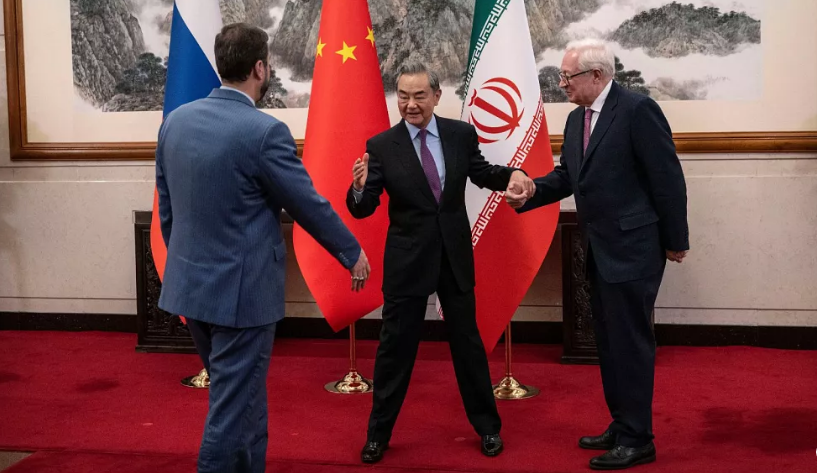
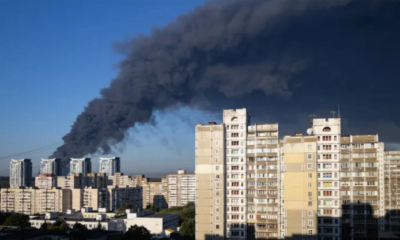
Despite providing military and economic support to its allies in recent years, Iran found itself isolated during its own time of crisis, as key BRICS members failed to offer tangible assistance amid Israeli and U.S. strikes on Iranian targets.

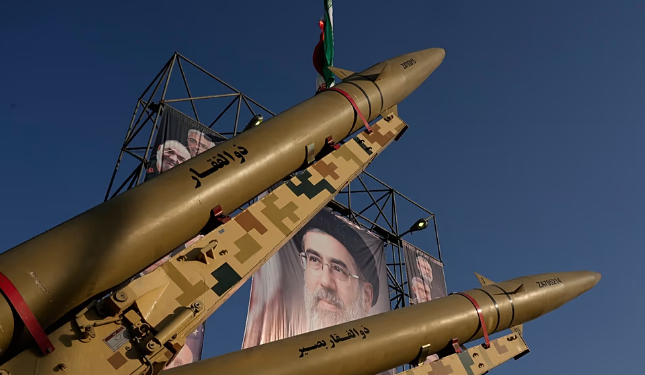
While Iran has supplied Russia with drones and missiles for use in Ukraine, and sold discounted oil to China, both Moscow and Beijing stopped short of aiding Tehran when its nuclear facilities came under attack. Instead, they issued statements of condemnation but offered no military or financial support.

The developments have raised questions about the strength of the informal alliance among Iran, Russia, China, and North Korea. Though often grouped together in opposition to the U.S. and its allies, analysts say the bloc lacks meaningful coordination or a unified strategic doctrine.

“These countries don’t have the same institutional structures or values that bind U.S.-led alliances,” said Alexander Gabuev, director of the Carnegie Russia Eurasia Center. “They are pacifist toward each other’s wars and prioritize national interests.”

Among the group, only Russia and North Korea have a formal mutual defense agreement. Pyongyang has even deployed troops to support Russia’s invasion of Ukraine. In contrast, Iran received little more than words during its confrontation with Israel.

China’s stance, in particular, underscores its desire to maintain neutrality in Middle East conflicts. President Xi Jinping condemned U.S. military actions and called for calm, but refrained from backing Iran. Beijing’s priority appears to be protecting its oil ties with regional powers like Saudi Arabia and the UAE — Iran’s longtime rivals.

See also  Euro’s Safe-Haven Status Grows, But Long-Term Stability Needs Structural Reform: S&P Analyst

This approach mirrors China’s broader diplomatic strategy. In March 2023, it brokered a détente between Iran and Saudi Arabia, positioning itself as a neutral actor in regional affairs. Analysts believe China is carefully watching the evolving balance of power in the Middle East, especially following Iran’s weakened posture and the collapse of its ally, Syrian President Bashar al-Assad.

Russia, too, appears reluctant to jeopardize its relationships with other Middle Eastern countries, including Israel and Arab states. “Putin will sacrifice Iran if it serves his interests,” said Cold War historian Sergey Radchenko. “And Tehran knows it.”

While the shared anti-American stance remains a common thread, the lack of unified military support has exposed the limitations of the so-called BRICS axis. “This is still an alliance, even if it lacks a mutual defense pact,” said Yun Sun, a researcher at the Stimson Center. “But cooperation is strategic, not sacrificial.”

Observers agree that Iran’s theocratic leadership complicates deeper alliances. Both China and Russia, with secular governments, view Islamic fundamentalism with caution. Chinese leaders, in particular, remain wary of Iran’s unpredictability and dependence.

As Tehran reassesses its foreign policy, the recent conflict may serve as a sobering reminder of the limits of its alliances — and the realities of a world increasingly shaped by transactional geopolitics rather than ideological loyalty.

News

European Parliament Set for Fresh Vote on Controversial ‘Chat Control’ Proposal

Published

on

The European Parliament is preparing for another vote this week on controversial legislation that would allow technology companies to continue scanning online communications for child sexual abuse material, with a procedural change expected to improve the proposal’s chances of approval.

The legislation, often referred to by critics as “chat control,” has sparked an ongoing debate between child protection advocates and privacy campaigners over the balance between online safety and the protection of encrypted communications.

The proposal follows the expiration on April 3 of a temporary legal framework that had allowed online platforms such as WhatsApp and Messenger to voluntarily detect, report and remove child sexual abuse material while operating under an exemption from the European Union’s e-privacy rules.

In March, members of the European Parliament rejected an earlier proposal from the European Commission to extend those temporary measures. The motion failed after receiving 311 votes against, 228 in favor and 92 abstentions.

Since then, the European People’s Party (EPP), the Parliament’s largest political group, has revived the proposal using a legislative procedure that is rarely employed in the EU lawmaking process.

According to officials familiar with the discussions, the EPP opposed the earlier version because amendments introduced by Socialist lawmaker Birgit Sippel and other left-leaning members narrowed the scope of communications scanning. The center-right group has instead backed extending the rules without modifications.

EPP leader Manfred Weber has been leading efforts to secure approval of the extension. Sources said the party requested Parliament President Roberta Metsola on June 17 to advance the proposal, and no political group formally objected to the move.

See also  Euro’s Safe-Haven Status Grows, But Long-Term Stability Needs Structural Reform: S&P Analyst

The following day, Metsola urged European Union leaders to move forward with the legislation during an EU summit. Last week, member states agreed to reinstate the temporary measures, allowing online service providers to continue detecting, reporting and removing child sexual abuse material until 2028.

The proposal now returns to the European Parliament, where the voting process differs from the previous attempt.

Under the ordinary legislative procedure being used, legislation is adopted unless an absolute majority of all Members of the European Parliament, at least 361 lawmakers, vote to reject or amend it. Supporters believe this procedural shift significantly improves the likelihood of approval.

Opponents argue the measure threatens digital privacy and encrypted communications. Greens lawmaker Ignazio Marino described the proposal as a form of mass surveillance, saying children are best protected through targeted law enforcement rather than widespread monitoring of private messages.

Another Green lawmaker, Markéta Gregorová, criticized the decision to hold a second vote, arguing the process departs from normal parliamentary practice. She said it raises concerns about democratic procedures and accused the EPP of using an unusual legislative route to advance its priorities.

The European Parliament is expected to decide on Tuesday whether to fast-track the proposal under an urgent procedure requested by the EPP. If approved, lawmakers will hold the decisive vote on Thursday.

The outcome is expected to shape the EU’s approach to online child protection while reigniting debate over privacy rights and the future of end-to-end encrypted communications.

Continue Reading

News

Severe Storms and Flooding Kill at Least 17 in China as Rescue Efforts Intensify

Published

on

At least 17 people have died and hundreds more have been injured after severe storms, heavy rainfall and flooding struck several parts of China, prompting large-scale rescue operations and mass evacuations as authorities respond to the latest wave of extreme weather.

State media reported on Tuesday that thunderstorms, powerful winds and possible tornadoes swept through central China’s Hubei province on Monday, leaving at least 15 people dead and 275 others injured.

The hardest-hit areas included the cities of Huangshi and Huanggang, where intense storms caused widespread destruction. According to state broadcaster CCTV, eight people were killed as violent thunderstorms and strong winds battered the region.

Authorities also reported tornado activity in some locations, while nine people remain missing. In Huanggang’s Huangzhou district alone, 275 people were injured, according to state news agency Xinhua. Officials did not provide details on the severity of the injuries.

Emergency services evacuated 408 residents from affected communities as rescue teams continued searching damaged areas and assisting those displaced by the storms.

“Rescue and relief efforts are underway,” Xinhua reported, as local authorities worked to restore essential services and assess the full extent of the damage.

Meanwhile, southern China faced another weather emergency as Typhoon Maysak brought torrential rainfall and severe flooding to the Guangxi region.

Officials confirmed that at least two people were killed by flooding, while more than 48,000 residents had been evacuated by Monday evening as rising water levels threatened homes and infrastructure.

Authorities in Nanning, the regional capital of Guangxi, raised the flood-control emergency response to its highest level after intense rainfall caused dams to overflow.

See also  Iran Prepares Six-Day State Funeral for Ayatollah Ali Khamenei Amid Delicate US Talks

State television broadcast dramatic footage showing a reservoir wall collapsing as muddy floodwaters surged through the breached structure. Other images showed streets submerged, vehicles partially underwater and homes inundated by floodwaters.

Emergency responders wearing life jackets and protective equipment were seen conducting rescue operations, while inflatable boats were deployed to search flooded neighborhoods for stranded residents.

Chinese President Xi Jinping called for a full-scale emergency response, urging authorities to spare no effort in rescue operations.

According to state broadcaster CCTV, Xi instructed officials to organize comprehensive rescue efforts, provide medical treatment for the injured, relocate affected residents to safety and strengthen disaster prevention and relief measures.

The latest disasters come as scientists continue to warn that climate change is increasing both the frequency and intensity of extreme weather events worldwide. Rising global temperatures linked to greenhouse gas emissions are expected to bring heavier rainfall, stronger storms and more frequent flooding in many regions.

China remains the world’s largest emitter of greenhouse gases, while also leading global investment in renewable energy. Beijing has pledged to achieve carbon neutrality by 2060 as it seeks to reduce emissions while addressing the growing risks posed by climate-related disasters.

Authorities continue to monitor weather conditions as additional rainfall is forecast for several affected provinces in the coming days.

Continue Reading

News

Hong Kong Activist Joshua Wong to Be Sentenced in National Security Case in September

Published

on

Hong Kong pro-democracy activist Joshua Wong is set to be sentenced on September 2 in a national security case that has drawn international attention and renewed criticism of the city’s sweeping security legislation introduced by Beijing in 2020.

According to Hong Kong’s judiciary, Wong will appear in court for a one-day hearing covering both his plea and sentencing. The case stems from allegations that he conspired with overseas activists and foreign entities to endanger China’s national security by encouraging sanctions and other actions against Hong Kong and China.

Wong was arrested in June 2025 on suspicion of conspiracy to collude with foreign forces. Prosecutors allege that between July 1 and November 23, 2020, he worked with fellow activist Nathan Law and others to persuade foreign governments, organizations and individuals outside China to impose sanctions, blockades or other hostile measures against Hong Kong and Beijing.

The offence carries a prison sentence ranging from three to 10 years, although prosecutors may seek a life sentence if the court determines the case is of a particularly serious nature.

This is the second prosecution Wong has faced under Hong Kong’s national security law. In 2024, he pleaded guilty in a separate case connected to an unofficial primary election organized by pro-democracy groups ahead of planned legislative elections. He was sentenced to four years and eight months in prison in that case.

Wong first gained public attention in 2012 while still a secondary school student, leading protests against plans to introduce national education into Hong Kong’s school curriculum. His activism expanded during the 2014 Occupy Movement, when large-scale demonstrations called for greater democratic reforms and universal suffrage in the city.

See also  Iran Prepares Six-Day State Funeral for Ayatollah Ali Khamenei Amid Delicate US Talks

In 2016, Wong co-founded the political party Demosisto alongside several young activists, including Nathan Law. During the 2019 anti-government protests, Wong actively sought international support for the movement, drawing praise from supporters abroad but strong criticism from Beijing, which accused him of encouraging foreign interference and promoting Hong Kong independence.

Following the introduction of the national security law in 2020, Demosisto dissolved, saying the political environment had fundamentally changed. Chinese and Hong Kong authorities have defended the legislation, arguing it restored order after months of unrest and strengthened national security.

Law, who relocated to Britain, remains among several overseas activists wanted by Hong Kong authorities. Officials have offered rewards of one million Hong Kong dollars for information leading to the arrests of Law and other exiled campaigners accused of violating the security law.

The issue has also drawn attention overseas. Last month, a London court sentenced a former UK border official and a retired Hong Kong police officer after they were convicted of spying on dissidents and critics of Beijing living in Britain. Prosecutors said Nathan Law was among those targeted during the surveillance operation.

Wong’s upcoming sentencing is expected to be closely watched by governments, human rights organizations and legal observers as debate continues over the impact of Hong Kong’s national security law on civil liberties and political freedoms.

Continue Reading

Trending