
Business
US Imposes Tariffs of Up to 100% on Drones as Washington Targets Chinese Supply Chains

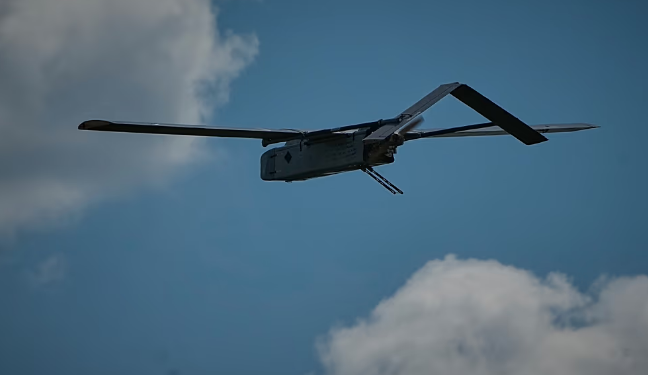
New US tariffs of up to 100% on drones and selected drone components took effect on Thursday as Washington seeks to reduce the country’s dependence on Chinese suppliers in an industry dominated by China.
The duties were introduced under an order signed by US President Donald Trump in August. The White House said the measures were aimed at addressing “the national security threat posed by imports of drones and their components” while strengthening domestic supply chains.
Drones have become increasingly important for military operations, surveillance and critical infrastructure. Their widespread use during the war in Ukraine has highlighted their role in modern warfare and demonstrated how important access to reliable drone technology can be on the battlefield.
US officials have raised concerns about the country’s dependence on Chinese-made drones and components, particularly products manufactured by DJI, the world’s largest commercial drone maker. They argue that reliance on foreign technology could create risks involving disruption, espionage and access to equipment during a conflict.
Under the new tariff structure, drones with a takeoff weight of more than 25 kilograms will face a 100% duty. The same rate applies to drones equipped with thermal imaging capabilities and certain docking stations.
Smaller drones will face a 25% tariff.
Some drone components classified as less sensitive will also be subject to additional duties, although those measures will not take effect until February 9 next year.
The new tariffs are part of a broader effort by the Trump administration to encourage domestic production and reduce exposure to overseas supply chains in sectors considered strategically important.
China has strongly opposed the measures. Beijing called on Washington to withdraw the tariffs shortly after they were announced.
A Chinese commerce ministry spokesman said the duties would “disrupt the global drone supply chain and further undermine a fair and competitive market environment.” He said China firmly opposed the move.
DJI has a particularly strong position in the global drone industry. The company, which was founded in 2006, has accounted for more than two-thirds of the worldwide drone market in recent years, according to several industry studies.
The company has also faced increasing scrutiny from US authorities. Since 2022, DJI has been included on a US government list of Chinese companies considered linked to China’s military, restricting its access to certain US technologies.
DJI has challenged its inclusion on the list and has rejected the allegations surrounding its classification.
The new tariffs could increase costs for US consumers, businesses and organisations that rely on imported drone equipment. At the same time, Washington hopes the measures will encourage manufacturers to establish or expand production inside the United States.
The policy marks another step in the growing technology and trade tensions between Washington and Beijing, with drones emerging as a strategically important industry because of their expanding role in defence, security and commercial operations.







An oil super tanker carrying more than two million barrels of crude caught fire after striking a sea mine in the Strait of Hormuz, Iran’s Islamic Revolutionary Guard Corps (IRGC) said on Saturday, escalating tensions around one of the world’s most important energy shipping routes.
In a statement carried by Iranian state media, the IRGC navy said the vessel hit a mine while attempting to navigate what it described as an unauthorised route through the strait. The impact triggered a massive explosion and a fierce fire, according to the statement.
The exact location of the incident, the identity of the tanker and the extent of any damage or casualties were not immediately clear.
Iran’s Fars news agency published video footage that appeared to show the vessel engulfed in flames. The IRGC navy accused the tanker of switching off its positioning and radar systems in an attempt to avoid detection while passing through the waterway.
“The Strait of Hormuz is closed, and the consequence of defying Iranian regulations in the Strait of Hormuz is burning in the fire of trust in the terrorist US army,” the IRGC navy said in its statement.
The claim could not be independently verified from the information immediately available.
The Strait of Hormuz, located between Iran and Oman, is a vital passage for global energy supplies. Before the current conflict, it carried around a quarter of the world’s seaborne oil trade, alongside substantial volumes of liquefied natural gas.
The waterway has become a major flashpoint since the war involving Iran, the United States and Israel began in late February. Iran effectively restricted passage through the strait following US and Israeli strikes, disrupting shipping and raising concerns about the security of international energy supplies.
Washington subsequently imposed a naval blockade on Iranian ports, adding another layer of pressure to the confrontation between the two countries.
The US military has repeatedly rejected Iranian claims of control over the strait, maintaining that commercial vessels have continued to operate in the area despite what it describes as aggression by the IRGC.
Admiral Brad Cooper, commander of US Central Command (CENTCOM), said on Friday that American forces were coordinating with regional allies and shipping industry partners to help protect vessels travelling through the waterway.
“Let me be clear, the Strait of Hormuz is controlled by the United States and our regional partners, not Iran,” Cooper said. “It remains open for business.”
The reported tanker fire highlights the continuing risks to commercial shipping as Washington and Tehran maintain opposing positions over access to the strait. Any sustained disruption could have significant consequences for oil transport, energy prices and international trade.

Asian stock markets fell sharply on Thursday as concerns over technology valuations and rising US inflation triggered a broad sell-off, with South Korean and Japanese shares recording heavy losses. European markets opened mixed, while US stock futures pointed to further weakness on Wall Street.
South Korea’s benchmark Kospi index dropped 7.7 per cent to 5,548.78, moving further below the record levels reached during the artificial intelligence investment boom. The index had crossed 9,000 in June as enthusiasm for AI-related companies drove markets higher.
Samsung Electronics shares fell 9.5 per cent, while SK Hynix, one of the world’s leading memory chipmakers, plunged 11.4 per cent.
Japan’s Nikkei 225 declined 4.8 per cent to 64,489.06. SoftBank Group, an investor in OpenAI, lost 9.4 per cent, while chip equipment maker Tokyo Electron dropped 7.3 per cent. Memory chipmaker Kioxia Holdings fell 11.2 per cent.
Other Asian markets also traded lower. Taiwan’s Taiex index dropped 3 per cent, while shares in Taiwan Semiconductor Manufacturing Co. (TSMC) fell 2.2 per cent ahead of the company’s earnings report. Hong Kong’s Hang Seng index declined 1 per cent to 24,071.25, and the Shanghai Composite fell 1.4 per cent to 3,713.22.
Australia’s S&P/ASX 200 edged down 0.1 per cent to 8,715.60.
The declines reflected growing caution among investors over the scale of spending on artificial intelligence and the high valuations of technology companies that have benefited from the rapid expansion of the sector.
Wall Street losses weigh on global markets
The Asian sell-off followed a weaker session on Wall Street on Wednesday, when technology shares led the market lower.
The S&P 500 fell 1.1 per cent, while the technology-heavy Nasdaq Composite dropped 1.9 per cent. The Dow Jones Industrial Average slipped 0.1 per cent.
Nvidia shares declined 3.2 per cent, Broadcom lost 3.1 per cent and Advanced Micro Devices fell 5.7 per cent, reflecting renewed pressure on companies closely linked to the AI boom.
Investor sentiment was also affected by US inflation data released on Wednesday. The consumer price index rose 3.7 per cent year-on-year in September, accelerating from 3.4 per cent in August and exceeding economists’ expectations.
The higher inflation reading raised concerns about the outlook for interest rates and the potential impact on corporate earnings and equity valuations.
European markets open unevenly
European shares showed a mixed response at the start of trading on Thursday.
Germany’s DAX fell 0.13 per cent to 25,272.07 points, while France’s CAC 40 rose 0.42 per cent to 7,905.62. The broader Stoxx 600 slipped 0.11 per cent to 637.02, while London’s FTSE 100 advanced 0.42 per cent to 10,769.21.
US equity futures also declined, signalling that investors remained cautious following the previous session’s losses.
The latest market moves highlight the sensitivity of global equities to inflation figures and changing expectations for technology sector growth. After months of strong gains driven by artificial intelligence, investors are increasingly scrutinising company valuations and the sustainability of spending on AI infrastructure.

Eurozone governments are preparing to sell record amounts of government bonds in 2027 as rising borrowing costs and growing debt burdens put increasing pressure on public finances, with the International Monetary Fund (IMF) warning that interest rates on government debt have reached their highest levels in nearly two decades.
The changing cost of borrowing has reshaped the eurozone’s traditional divide between financially stronger northern countries and heavily indebted southern economies. Belgium now pays around 4.29 per cent to borrow for 10 years, compared with 4.35 per cent for Greece. Portugal’s borrowing costs are below Spain’s, while Ireland’s are close to those of the Netherlands. France, once considered part of the eurozone’s financial core, has faced higher borrowing costs than Italy.
The shift reflects contrasting fiscal trends over the past decade. Greece has reduced its debt burden and recorded a budget surplus of 1.7 per cent of gross domestic product (GDP) in 2025. Other former crisis-hit countries have improved tax collection, extended debt maturities and strengthened their public finances.
Belgium has moved in the opposite direction. Its budget deficit reached 5.2 per cent of GDP last year, while public debt exceeded 109 per cent of GDP in the first quarter of 2026.
Ken Egan, head of European sovereign credit at rating agency KBRA, told Euronews that improved fiscal management in southern European countries had helped reduce refinancing risks. In other parts of the eurozone, political uncertainty, rising structural spending and higher refinancing costs have weakened investor confidence.
France faces a record borrowing requirement
France plans to raise €340 billion through medium- and long-term bonds in 2027, according to its Treasury, up from €310 billion this year. The record amount will largely refinance existing debt as bonds issued during the pandemic and energy crisis mature.
The government is also facing a rising interest bill. France paid an average rate of 3.55 per cent on medium- and long-term bonds issued so far this year, compared with 3.14 per cent in 2025. Annual interest payments are forecast to increase from €62.6 billion in 2026 to €72.9 billion in 2027.
Germany is also increasing borrowing, planning to issue a record €512 billion in securities this year to finance defence and infrastructure spending. Italy and Spain are expected to refinance hundreds of billions of euros in debt.
Inflation and fiscal risks weigh on markets
The IMF has warned that government borrowing costs are rising as persistent inflation, higher energy prices and geopolitical tensions complicate economic policy. The European Central Bank’s deposit rate has also increased to 2.50 per cent this year as policymakers seek to contain inflation.
Germany’s 10-year bond yield rose from 2.64 per cent in February to 3.45 per cent, while France’s yield climbed more sharply and briefly reached 5 per cent in early October.
The IMF has highlighted another concern: nearly 30 per cent of public debt in the G7 economies and Spain matures within a year, exposing government budgets more quickly to changes in interest rates.
Higher borrowing costs can create a cycle in which governments spend more on interest, leaving less money for public services and investment. Investors may then demand even higher returns to finance additional debt.
Not yet another eurozone debt crisis
Despite the pressure, some analysts believe the current situation does not yet resemble the sovereign debt crisis of 2012.
Swiss bank Lombard Odier has argued that markets are pricing uncertainty rather than anticipating an immediate debt crisis. France’s interest payments remain slightly above 2 per cent of GDP, while its current account deficit is relatively small.
However, Clara Raposo, vice-governor of the Banco de Portugal, has warned that sovereign bond markets are becoming more sensitive to inflation, fiscal uncertainty and geopolitical developments.
The consequences could extend beyond government finances. Research involving German firms found that concerns about the debt positions of France, Italy and Spain could influence expectations for German inflation, particularly among businesses that distrust the European Central Bank.
As governments prepare for record borrowing in 2027, the challenge will be to finance existing obligations while restoring investor confidence and keeping public debt on a sustainable path.

Iran Says Oil Super Tanker Catches Fire After Hitting Mine in Strait of Hormuz

European Trade Unions Push for Menopause Protections in EU Workplace Law

Ukraine War Strikes Raise Questions Over Security of Europe’s AI Data Centres

Europe Develops 348-Satellite Network to Reduce Dependence on Starlink

US Military Builds Up Forces in Arabian Sea as Iran Warns of Possible War

OpenAI Donates $5 Million to Mathematics Foundation After Research Dispute

AI Speeds Up Ebola Response in Congo, but Experts Warn of Healthcare Risks

Asian Stocks Plunge as Technology Sell-Off Deepens on Inflation Concerns

Eurozone Faces Record Bond Sales in 2027 as Borrowing Costs Reach Two-Decade High

European Household Energy Costs Rise as Gas Prices Near Four-Year High

Meta Acquires Tilda Swinton VR Doc ‘Impulse: Playing With Reality’

China’s Historic Olympic Victory Sparks National Pride Amid Controversy

Saudi Arabia’s Model for Sustainable Aviation Practices

Recent Developments in Small Business Taxes

Effective Drain Cleaning: A Key to a Healthy Plumbing System

Who was Ebrahim Raisi and his status in Iranian Politics?

Keely Hodgkinson Wins Britain’s First Athletics Gold at Paris Olympics in 800m

Carrectly: Revolutionizing Car Care in Chicago

Nobel Laureate Muhammad Yunus Proposed as Head of Bangladesh’s Interim Government Following Hasina’s Resignation

Chinese Hackers Infiltrate Major U.S. Telecom Firms in Possible National Security Breach

Sony WF-10XM4: Headphones Are Our Absolute Favorite

10 Places You Can’t Miss If It’s Your First Time in European

New Census Data Will Shake Up Alabama Politics

16 Top of Our Favorite Outdoor Clothing Brands

Fashionable Summer Accessories to Dress Up Your Travel Look

How Sleeping Less than 7 Hours a Night Can Lead to Weight Gain
-
 Entertainment2 years ago
Meta Acquires Tilda Swinton VR Doc ‘Impulse: Playing With Reality’
-
 Sports2 years ago
China’s Historic Olympic Victory Sparks National Pride Amid Controversy
-
 Business2 years ago
Saudi Arabia’s Model for Sustainable Aviation Practices
-
 Business2 years ago
Recent Developments in Small Business Taxes
-
 Home Improvement2 years ago
Effective Drain Cleaning: A Key to a Healthy Plumbing System
-
 Politics2 years ago
Who was Ebrahim Raisi and his status in Iranian Politics?
-
 Sports2 years ago
Keely Hodgkinson Wins Britain’s First Athletics Gold at Paris Olympics in 800m
-
 Business2 years ago
Carrectly: Revolutionizing Car Care in Chicago