
Health
Tech-Savvy Seniors May Have Lower Dementia Risk, New Global Study Finds








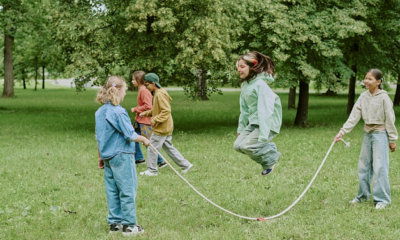



Older adults who experience persistent loneliness may face a significantly higher risk of developing dementia, according to a French study that followed thousands of people over three decades.
Researchers from the University of Bordeaux found that people who were chronically lonely had a 38% greater risk of developing dementia than those who never experienced loneliness. However, occasional feelings of loneliness were not significantly associated with an increased risk.
The findings, published in the journal Aging & Mental Health, highlight the potential long-term consequences of persistent loneliness as populations age and dementia cases continue to rise worldwide.
Dementia affects an estimated 57 million people globally and has no current cure. Several factors, including genetics, physical activity, smoking and alcohol consumption, can influence the likelihood of developing the condition. Social isolation has also been identified as a risk factor by an expert commission convened by The Lancet.
The Bordeaux research team examined data from 3,777 older adults who were followed between 1988 and 2018. Participants were assessed during four research visits over an eight-year period and divided into three categories: those who never felt lonely, those who experienced loneliness occasionally and those who reported persistent loneliness.
Researchers then monitored the participants over the following 20 years to determine how many developed dementia.
The results showed that approximately one in three participants in the never-lonely and occasionally lonely groups developed dementia. The proportion rose to around 49% among people who experienced chronic loneliness.
Karine Pérès, a senior researcher at the Bordeaux Population Health Centre and one of the study’s authors, said the distinction between temporary and persistent loneliness was important.
“While most people experience loneliness at some point in their lives, it is when loneliness becomes chronic and persistent that it may increase the risk of developing dementia,” she said.
The researchers stressed that loneliness and social isolation are not interchangeable. Social isolation refers to a lack of social contact, while loneliness describes a person’s subjective feeling of being disconnected from others. Someone can therefore experience loneliness despite living with family members or regularly meeting other people.
Yvanna Simon, the study’s lead author, said persistent loneliness could also reflect unsatisfactory relationships, the pressures of caring for others or a lack of meaningful activities.
The researchers acknowledged several limitations, including their reliance on a single question to assess loneliness rather than a more detailed evaluation. They also noted that other factors influencing dementia risk may not have been fully accounted for.
Despite these limitations, the findings support previous research linking loneliness in middle age and later life to a greater likelihood of developing dementia.

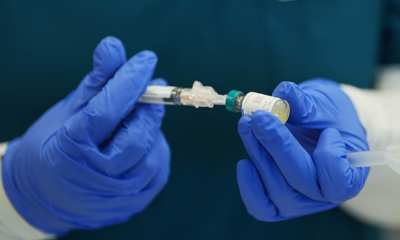
Measles infections across Europe have fallen sharply in 2026 compared with previous years, although outbreaks in countries including Bulgaria and Italy continue to concern public health officials.
Provisional figures from the European Centre for Disease Prevention and Control (ECDC) show that 2,325 cases were reported across the European Economic Area (EEA) in the 12 months to September 2026. This compares with 10,195 infections during the preceding 12-month period.
The data covers European Union member states, Iceland, Liechtenstein and Norway. Although further cases are expected to be reported before the end of the year, the figures suggest that 2026 will be significantly less severe than 2025.
Around 600 infections have been recorded in both Bulgaria and Italy this year. Italy has experienced a gradual decline in cases since April, when 173 infections were reported in a single month.
Bulgaria, which recorded only two cases throughout 2025, has faced a particularly sharp increase. Health officials have raised concerns about falsified vaccination records, suggesting that some children listed as immunised may not have received the vaccine.
In one heavily affected region, around 60% of children recorded as vaccinated had no detectable antibodies against measles, mumps or rubella.
No measles-related deaths had been reported across the EEA by September, according to the ECDC.
Cases have also been reported outside the EEA. England recorded 1,055 confirmed infections by 9 November, while Ukraine reported 653 cases through September.
The decline follows a major resurgence in recent years. The EEA recorded 7,655 cases during 2025, compared with more than 35,000 in 2024. The earlier outbreak led six European countries to lose their measles-free status, including Austria, Spain and the United Kingdom.
Health authorities continue to warn that countries and communities with low vaccination coverage remain vulnerable. Immunisation rates vary considerably across Europe, ranging from 68% in Romania to 99% in Hungary.
Measles is highly contagious, and health experts estimate that at least 95% of a population needs to be vaccinated to prevent sustained transmission. Two doses of the measles vaccine provide up to 97% protection against the disease.
According to the ECDC, most infections over the past year occurred among people who had not been vaccinated, based on cases with known immunisation status. Children under five accounted for around 28% of infections, while people aged 15 and older represented 51%.
The latest figures indicate an improvement in Europe’s measles situation, but uneven vaccination coverage continues to leave some populations exposed to further outbreaks.

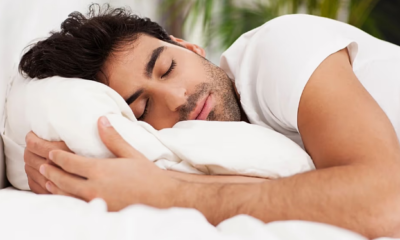
A study by researchers at the University of California, Berkeley, has identified a brain circuit that controls the release of growth hormone during sleep, offering new insight into how the body balances tissue repair, metabolism and wakefulness.
Published in the scientific journal Cell, the research suggests that sleep and growth hormone influence each other in a two-way process. Sleep encourages the release of the hormone, while rising hormone levels help regulate the brain’s transition towards waking.
Growth hormone is best known for supporting height development in children and adolescents. In adults, it also helps maintain muscle tissue, strengthen bones, regulate fat use and control blood sugar levels. Although scientists have long understood that much of the hormone is released during sleep, the neural mechanisms behind this process have remained unclear.
The Berkeley team investigated the activity of nerve cells in the brains of mice rather than relying solely on measurements of hormone levels in the blood. Xinlu Ding, a postdoctoral researcher in neuroscience and the study’s lead author, said this approach allowed the researchers to identify a specific circuit involved in regulating hormone secretion.
The team focused on the hypothalamus, a small region of the brain responsible for several essential functions, including hormone production, body temperature, hunger and the sleep-wake cycle.
Two groups of nerve cells in this region play opposing roles. One produces growth hormone-releasing hormone, known as GHRH, which stimulates growth hormone secretion. The other produces somatostatin, which suppresses it. Together, they regulate the release of growth hormone from the pituitary gland into the bloodstream.
The researchers found that the activity of these cells changes during different stages of sleep.
During non-REM sleep, activity in somatostatin-producing cells falls, reducing their inhibitory effect. At the same time, GHRH-related activity increases, creating conditions for greater growth hormone release.
During REM sleep, activity associated with both chemical messengers rises. The researchers found that their coordinated activity also contributes to increased hormone secretion.
The study identified another part of the process involving the locus coeruleus, a brainstem region associated with alertness, attention and concentration. As growth hormone levels rise during sleep, they stimulate nerve cells in this area, helping prepare the brain for waking.
Co-author Daniel Silverman said the findings point to a closely regulated relationship between sleep, hormone secretion and alertness. The researchers also observed that excessive stimulation of the locus coeruleus could produce drowsiness rather than increased alertness, suggesting that the balance of neural activity is important.
The findings could help explain some links between poor sleep and metabolic conditions such as obesity, diabetes and cardiovascular disease. However, the study does not establish that sleep disruption directly causes these illnesses.
Researchers also believe the circuit could be relevant to neurological conditions, including Parkinson’s and Alzheimer’s disease, and may offer a starting point for future treatments.
The experiments were conducted in mice, so further research is needed to establish whether the same mechanisms operate in humans. The findings do not demonstrate that changing sleeping habits alone can increase muscle growth or promote weight loss, but they provide a clearer picture of how the brain coordinates sleep with essential bodily functions.

Costa Concordia Captain Francesco Schettino Released From Prison on Probation

Chronic Loneliness Linked to 38% Higher Dementia Risk, Study Finds

Denmark Has Europe’s Widest Urban-Rural House Price Gap, OECD Data Shows

Trump Administration Fires US National Cyber Director Sean Cairncross

JPMorgan Chase, Visa and Mastercard Customer Data Exposed in Third-Party Cyberattack

Canada and China Agree to Ease Tariffs on Pork, Seafood and Metals

Germany Ranks Last in Business Start-up Bureaucracy Study, Requiring Nearly 4,000 Hours

UK Inflation Rises to 3.6% in October as Record Diesel Prices Push Up Costs

EU Accuses Temu of Failing to Prevent Illegal Products, Risking Heavy Fine

Measles Cases Decline Across Europe in 2026, but Outbreaks Persist in Several Countries

China’s Historic Olympic Victory Sparks National Pride Amid Controversy

Meta Acquires Tilda Swinton VR Doc ‘Impulse: Playing With Reality’

Saudi Arabia’s Model for Sustainable Aviation Practices

Recent Developments in Small Business Taxes

Effective Drain Cleaning: A Key to a Healthy Plumbing System

Who was Ebrahim Raisi and his status in Iranian Politics?

Keely Hodgkinson Wins Britain’s First Athletics Gold at Paris Olympics in 800m

Carrectly: Revolutionizing Car Care in Chicago

Nobel Laureate Muhammad Yunus Proposed as Head of Bangladesh’s Interim Government Following Hasina’s Resignation

Chinese Hackers Infiltrate Major U.S. Telecom Firms in Possible National Security Breach

Sony WF-10XM4: Headphones Are Our Absolute Favorite

10 Places You Can’t Miss If It’s Your First Time in European

New Census Data Will Shake Up Alabama Politics

16 Top of Our Favorite Outdoor Clothing Brands

Fashionable Summer Accessories to Dress Up Your Travel Look

How Sleeping Less than 7 Hours a Night Can Lead to Weight Gain
-
 Sports2 years ago
China’s Historic Olympic Victory Sparks National Pride Amid Controversy
-
 Entertainment2 years ago
Meta Acquires Tilda Swinton VR Doc ‘Impulse: Playing With Reality’
-
 Business2 years ago
Saudi Arabia’s Model for Sustainable Aviation Practices
-
 Business2 years ago
Recent Developments in Small Business Taxes
-
 Home Improvement2 years ago
Effective Drain Cleaning: A Key to a Healthy Plumbing System
-
 Politics2 years ago
Who was Ebrahim Raisi and his status in Iranian Politics?
-
 Sports2 years ago
Keely Hodgkinson Wins Britain’s First Athletics Gold at Paris Olympics in 800m
-
 Business2 years ago
Carrectly: Revolutionizing Car Care in Chicago