
News
Elon Musk Endorses Donald Trump, Calls 2024 Election Critical for “Preserving Democracy”


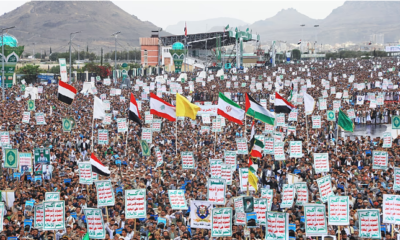






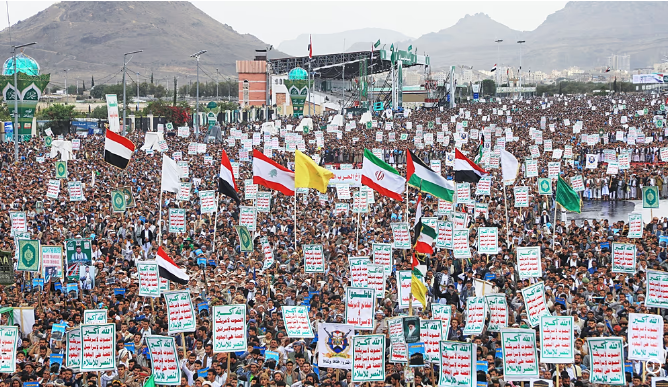
US embassies across the Middle East have issued security alerts urging Americans to remain vigilant following a series of attacks by Yemen’s Iran-aligned Houthi rebels against Saudi Arabia.
Embassies in Bahrain, Israel, Iraq, Jordan, Kuwait, Lebanon, Oman, Qatar, Saudi Arabia and the United Arab Emirates warned that the military conflict could escalate rapidly and described the regional security environment as complex.
The alerts advised US citizens to maintain heightened vigilance and prepare for possible travel disruption. Americans were told to be aware of potential flight cancellations, airspace closures and other interruptions to travel.
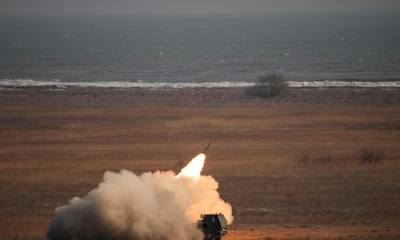
The warnings came after the Houthis said on Saturday that they had carried out two military operations against Saudi Arabia using ballistic and cruise missiles and drones. The group said the attacks were conducted in response to Saudi strikes.
According to the Houthis, the first operation targeted what they described as sensitive sites in Riyadh, while the second targeted facilities belonging to Saudi oil giant Aramco in Yanbu.
A spokesperson for the Saudi-led coalition, which was established in 2015 to support Yemen’s internationally recognised government, later said Saudi air defenses had intercepted a ballistic missile launched toward Riyadh.
The spokesperson also said the Houthis had targeted the cities of Baish, Taif, Farasan and Yanbu.
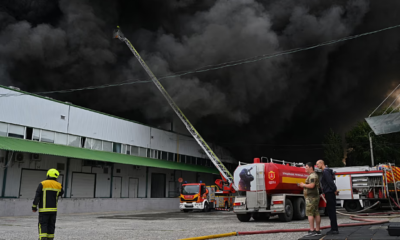
Residents in Riyadh reported seeing flames and smoke near King Khalid International Airport on Saturday. Videos shared on social media appeared to show a large column of smoke rising from the airport.
Flight tracking service Flightradar24 reported that the airport was experiencing major operational problems, although the precise cause of the disruption was not immediately clear.
The latest attacks have added to a broader escalation involving the Houthis, who declared a naval blockade of Saudi Arabia in July and have since increased attacks against Saudi cities and shipping.
Saudi Arabia has responded with airstrikes against the group as fighting has intensified in Yemen. The Houthis have also expanded their control over parts of the country during a rapid offensive.
The United Nations has warned that the escalation is taking a growing toll on civilians.
At a press briefing on Friday, UN Secretary-General spokesperson Stéphane Dujarric said the UN Human Rights Office had documented 110 civilian casualties in 31 incidents since hostilities intensified in August. The figure included 28 deaths and 82 injuries across Taizz, Al Hudaydah and Marib.
Dujarric said insecurity and restrictions on access had made it difficult for the UN to verify the full number of casualties, which he said was likely higher.
“We urge all parties, and those with influence over them, to act immediately to de-escalate, protect civilians and facilitate humanitarian access,” Dujarric said.
The US security alerts come as regional governments and international organisations monitor the expanding conflict and the potential impact on civilian travel and commercial transport.
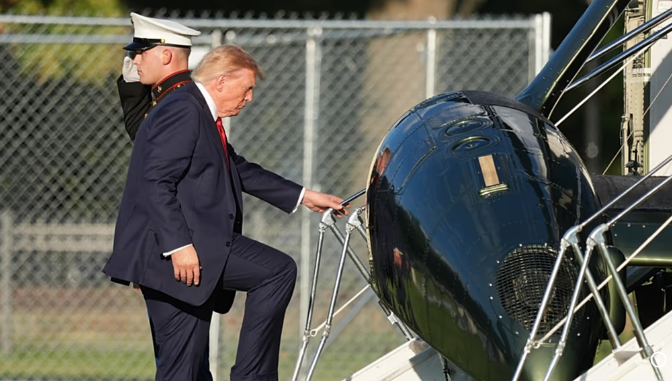
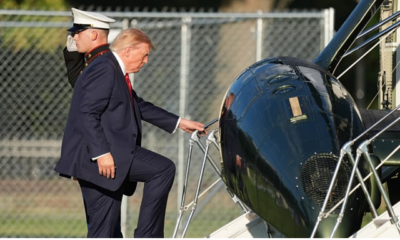
US President Donald Trump has signed into law a sweeping sanctions package targeting Russian officials, banks, energy interests and a network of tankers used to transport Russian oil, in the latest US effort to increase economic pressure on Moscow over the war in Ukraine.
The legislation, now known as the Lindsey O. Graham Sanctioning Russia and Iran Act of 2026, was signed by Trump on Friday after receiving broad bipartisan support in Congress. It passed the Senate by 86 votes to 11 and the House of Representatives by 262 to 159.
The measure is named after the late Republican Senator Lindsey Graham of South Carolina, who worked on the legislation for more than a year before his unexpected death in July. Graham had been a prominent supporter of stronger economic measures against Russia.
The bill targets Russian officials and financial institutions, as well as the country’s so-called shadow fleet of tankers that has been used to move Russian energy despite existing Western restrictions. The legislation is intended to reduce the revenues available to the Kremlin as the war in Ukraine continues.
A major provision gives the US president authority to impose tariffs of up to 100% on goods from countries that are among the largest purchasers of Russian oil or natural gas. The measure also covers countries that help Russia evade sanctions. Certain countries that have significantly reduced their purchases of Russian energy can qualify for an exception under the legislation.
The expanded tariff powers drew criticism from some Democratic lawmakers. They generally supported stronger measures against Russia but raised concerns that the legislation gives Trump broad authority to impose tariffs on countries beyond Russia’s immediate trading partners.
House Minority Leader Hakeem Jeffries questioned why Congress would give the president what he described as broad authority to impose additional tariffs that could affect the US economy.
The legislation also extends US sanctions provisions targeting Iran for another five years. The Iran measure was a key part of negotiations before the final version received Trump’s approval.
Richard Blumenthal, the Democratic senator who co-drafted the bill with Graham, praised its passage after the House vote and paid tribute to his late colleague.
Graham’s sister, Senator Darline Graham, who was appointed to complete his Senate term, also said he would have been proud of the legislation’s passage.
The signing gives the Trump administration new statutory tools to restrict Russian energy revenues and penalise countries that continue major purchases of Russian oil and gas. Analysts and critics have also pointed to the wider trade implications of the new tariff authority, particularly for countries that maintain significant energy ties with Moscow.
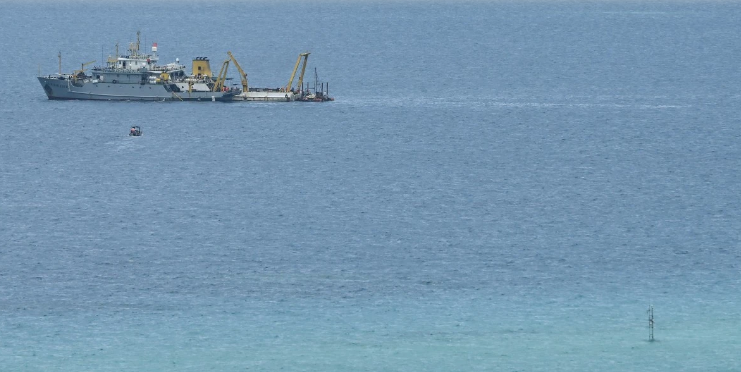
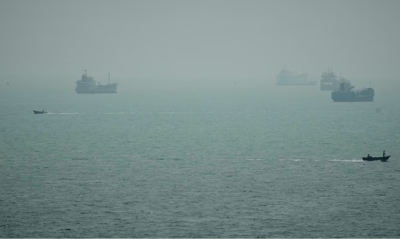
The Philippines has accused a China Coast Guard vessel of ramming a government fisheries boat in disputed waters of the South China Sea, in the latest maritime confrontation between the two countries.
The Philippine Coast Guard said the incident occurred on Friday while the Bureau of Fisheries and Aquatic Resources vessel BRP Datu Magat Salamat was carrying out a patrol and delivering fuel assistance to Filipino fishermen. The vessel was operating about 54 nautical miles from the coast of Palawan.
Philippine Coast Guard spokesman Jay Tarriela said the Chinese vessel, identified as CCG-21585, crossed behind the Philippine boat at about 11:04 a.m., passing within roughly 10 metres.
About nine minutes later, the Chinese vessel repeated the manoeuvre and made contact with the BFAR vessel, according to the Philippine Coast Guard. The collision damaged railings and metal support structures on the Philippine vessel and displaced equipment on its deck. No injuries were reported.
Video released by the Philippine Coast Guard showed the Chinese vessel close to the stern of the Philippine boat, with crew members reacting to the approaching vessel. Photographs released after the incident showed damaged railings and other parts of the deck.
The China Coast Guard disputed Manila’s account and said the Philippine vessel was responsible for the collision. Chinese coast guard spokesman Jiang Lue said the Philippine ship ignored repeated warnings, changed course and accelerated across the path of the Chinese vessel.
He said the actions of the Philippine side had threatened the safety of Chinese personnel and vessels, and called on Manila to stop what Beijing described as provocative activities. China said its vessel had acted professionally during the encounter.
The confrontation occurred near a shoal in the Spratly Islands, an area that has been a recurring source of tension between China and the Philippines. Beijing claims sovereignty over most of the South China Sea, including areas claimed by several Southeast Asian countries.
An international arbitration tribunal ruled in 2016 that China’s expansive claims had no legal basis under international law. China rejected the ruling and has continued to maintain its claims.
Tensions between Manila and Beijing have increased again in recent months following a period of relative calm. In July, the Philippines accused Chinese vessels of using water cannon against government ships near Scarborough Shoal and reported another confrontation involving Philippine personnel near Second Thomas Shoal.
The latest incident adds to a series of encounters involving coast guard and fisheries vessels as both countries continue to assert competing maritime claims in the strategically important South China Sea.

Congenital Infections Linked to Higher Risks of Autism and Intellectual Disability

Spain’s Housing Market Faces Growing Pressure as Big Landlords Expand

Oxfam Calls for Reform of France’s Dutreil Pact to Raise Billions

Volkswagen Removed From Euro Stoxx 50 After Profit Warning

French Diesel Prices Hit Record as Middle East War Drives EU Fuel Costs Higher

Volvo Cars Names Škoda Chief Klaus Zellmer as Next CEO


US Embassies Warn Americans of Rapidly Escalating Middle East Conflict

Baby Essentials Cost Thousands of Euros Across Europe, Study Finds

Global Survey Finds Growing Concern Over AI-Driven Job Losses

Meta Acquires Tilda Swinton VR Doc ‘Impulse: Playing With Reality’

China’s Historic Olympic Victory Sparks National Pride Amid Controversy

Saudi Arabia’s Model for Sustainable Aviation Practices

Recent Developments in Small Business Taxes

Effective Drain Cleaning: A Key to a Healthy Plumbing System

Who was Ebrahim Raisi and his status in Iranian Politics?

Keely Hodgkinson Wins Britain’s First Athletics Gold at Paris Olympics in 800m

Carrectly: Revolutionizing Car Care in Chicago

Nobel Laureate Muhammad Yunus Proposed as Head of Bangladesh’s Interim Government Following Hasina’s Resignation

Chinese Hackers Infiltrate Major U.S. Telecom Firms in Possible National Security Breach

Sony WF-10XM4: Headphones Are Our Absolute Favorite

10 Places You Can’t Miss If It’s Your First Time in European

New Census Data Will Shake Up Alabama Politics

16 Top of Our Favorite Outdoor Clothing Brands

Fashionable Summer Accessories to Dress Up Your Travel Look

How Sleeping Less than 7 Hours a Night Can Lead to Weight Gain
-
 Entertainment2 years ago
Meta Acquires Tilda Swinton VR Doc ‘Impulse: Playing With Reality’
-
 Sports2 years ago
China’s Historic Olympic Victory Sparks National Pride Amid Controversy
-
 Business2 years ago
Saudi Arabia’s Model for Sustainable Aviation Practices
-
 Business2 years ago
Recent Developments in Small Business Taxes
-
 Home Improvement2 years ago
Effective Drain Cleaning: A Key to a Healthy Plumbing System
-
 Politics2 years ago
Who was Ebrahim Raisi and his status in Iranian Politics?
-
 Sports2 years ago
Keely Hodgkinson Wins Britain’s First Athletics Gold at Paris Olympics in 800m
-
 Business2 years ago
Carrectly: Revolutionizing Car Care in Chicago