
Tech
IFA 2026 Showcases AI-Powered Homes Designed to Make Daily Life Easier

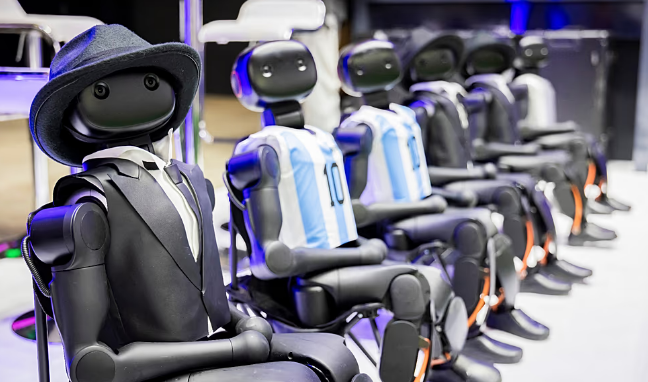
Artificial intelligence is taking a larger role in household technology, with appliances, furniture, entertainment systems and even pet products becoming more connected and capable of responding to users’ needs.
At IFA 2026 in Berlin, more than 1,900 brands from 49 countries are presenting new products under the theme “The Future is Now.” The event, one of the world’s largest consumer electronics and home appliance fairs, highlights a shift from the traditional smart home toward what manufacturers describe as the intelligent home.
The concept goes beyond devices responding to commands. Companies are developing products that can recognise situations, learn preferences and assist with everyday decisions.
Haier, for example, is showcasing a washing machine equipped with a camera and AI technology that can identify clothes inside the drum. The system can warn users if an item such as a red sock has been placed among white clothing.
Haier Europe CEO Neil Tunstall said similar technology is being developed for cooking appliances, which can identify food and adjust settings to make preparing meals easier.
US company Cozyla is also demonstrating how AI could help organise household routines. Its IFA display presents a connected home where digital calendars coordinate family schedules, while recipes can be scanned to assist with meal planning and other household activities.
Technology is also moving into bedrooms. Hong Kong-based BestQi is displaying its AMADA Smart Adaptive Sleeping System, combining an adjustable bed with a mattress that uses sound and vibrations. Each side of the bed can be controlled independently, allowing users to select different positions and settings.
South Korean company Bodyfriend is showcasing advanced relaxation products, including its Quantum Beauty Capsule, which combines a massage chair with LED features for the face and scalp. Its Davinci AI model uses a fingertip sensor to collect biometric measurements such as heart rate and blood oxygen levels.
Home entertainment is another major focus. TCL is presenting connected gaming and display systems while also promoting technology designed to reduce screen distractions. Its NextPaper technology can turn a smartphone into a simplified reading device with fewer notifications and reduced blue light exposure.
The connected home is not limited to people. Singapore-based Petgugu is exhibiting smart pet products, including a self-cleaning cat toilet and a robot designed to collect pet hair and interact with animals while their owners are away.
Robotics is also represented by the MagicDog Y1, a four-legged robot designed for tasks such as following people, carrying equipment, monitoring areas and security work.
The products on display suggest that the future home may depend less on individual smart devices and more on systems that communicate with one another.
IFA 2026 runs until September 8, giving visitors an opportunity to explore developments in home appliances, entertainment, robotics and personal technology. Whether these innovations become everyday household products will ultimately depend on how consumers choose to adopt them.








More than 100 rights groups across 15 European countries are preparing protests against the rapid expansion of energy-intensive data centres, calling for an immediate halt to new large-scale projects until stronger rules are introduced.
The Stop Dirty Data Centres campaign has organised demonstrations and public events for Friday and Saturday, November 6 and 7, with activities planned in Ireland, Poland, Denmark, Finland, Spain, the Netherlands, France and the United Kingdom.
The groups say the expansion of data centres is putting increasing pressure on local communities, public infrastructure, land, water and energy supplies. They have also raised concerns about the potential effects on housing, employment and household costs.
“Today, communities across Europe who have been challenging the imposition of energy, water and land-hungry data centres where they live are arriving on the European political stage,” said Owen Espley, coordinator of StopDirtyDataCentres.eu.
The protests follow this week’s US midterm elections, where opposition to data centre developments and concerns about artificial intelligence infrastructure became prominent campaign issues. Campaigners in Europe say the American debate has highlighted growing public resistance to projects that can place additional demands on local resources.
Residents living near data centres have raised concerns about rising electricity bills and the amount of water required to operate and cool the facilities. Other complaints include air pollution from backup generators, construction traffic, the appearance of large industrial buildings and the constant noise generated by equipment operating around the clock.
Espley said campaign groups were joining forces to challenge the influence of major technology companies and the support they receive from some political decision-makers.
“They are calling on political leaders to implement moratoria on large-scale data centres at European, national and local levels so their concerns can be addressed and the impacts of data centres properly scrutinised,” he said.
Demands grow as European investment accelerates
Environmental organisations, digital rights campaigners and other civil society groups are taking part in the coordinated action. Planned activities include demonstrations, public meetings, petition drives, information stalls, walking tours, cycle rides and poetry readings.
The campaign comes as European governments and technology companies accelerate investment in data centre infrastructure to strengthen the region’s position in artificial intelligence and compete with the United States and China.
According to the PwC Global Data Centre Outlook 2026-2050, annual investment in European data centre projects has increased from €12 billion in 2020 to an estimated €25 billion to €26 billion this year.
Total spending is expected to reach €176 billion between 2026 and 2031, reflecting the scale of planned development.
Campaigners argue that the pace of construction is outstripping the development of rules governing energy and water consumption, environmental effects and community consultation. They want governments to pause major projects while these issues are examined.
The demonstrations are intended to bring local opposition into the wider European policy debate and press authorities to establish clearer safeguards before approving further large-scale developments.

Democratic victories in several major US technology hubs have raised fresh questions about the expansion of artificial intelligence data centres, after candidates who promised tougher restrictions on new projects won key races in Tuesday’s midterm elections.
Texas, Georgia and Ohio, which have attracted major technology companies seeking to build facilities to power AI systems, elected Democratic candidates who have pledged to strengthen oversight of the industry.
The results highlight growing public opposition to data centres, which require large amounts of electricity and land and can generate noise and pollution. According to research project Data Center Watch, at least 45 data centre developments were disrupted by local opposition during the second half of 2026.
A 2025 Pew Research Center survey found that more than half of Americans were more concerned than excited about artificial intelligence. An NBC exit poll also indicated that more than 50% of voters considered AI and data centres a major or crucial factor in their decision at the midterm elections.
US President Donald Trump has supported the rapid expansion of data centre infrastructure. In September, he dismissed criticism of the facilities and concerns about AI safety, describing opposition as a hoax and arguing that data centres generate wealth for companies and states.
Texas has attracted major technology groups, including OpenAI, Anthropic, Oracle, Microsoft, Google, Meta and Amazon, through tax incentives and offers of land and energy supplies.
Republican Governor Greg Abbott had previously sought to establish Texas as a leading AI centre. However, he later paused permits for new data centre projects while an audit was carried out. The decision followed pressure from Democratic candidate Gina Hinojosa, who had promised a temporary halt to construction until stronger legal safeguards were introduced.
The election results also prompted a reaction from billionaire Elon Musk, a major Republican donor who contributed $474 million to Republican efforts during the midterm campaign. Musk, whose xAI company operates the Colossus supercomputer facility in Memphis, wrote on X: “data centres in space looking pretty appealing right now.”
Ohio recorded particularly strong resistance to new developments, with voters in 15 municipalities approving bans or other restrictions on data centre projects.
The state has been a target for major technology investment. Meta has planned to spend $1 billion on a data centre in Ohio, while Amazon Web Services has announced plans for a $2 billion investment.
The debate over data centre construction has intensified as technology companies race to expand computing capacity for artificial intelligence. While developers argue that the facilities support economic growth and technological development, opponents have raised concerns about electricity consumption, environmental effects, local infrastructure and the impact on residential communities.
The Democratic victories could increase pressure on state authorities and technology companies to address those concerns as they seek approval for further projects.
Anthropic reported a 47 per cent increase in third-quarter revenue to $17 billion (€15.1 billion), but returned to an operating loss as spending on computing capacity and long-term infrastructure commitments mounted ahead of its planned Nasdaq listing.
The US company behind the Claude artificial intelligence models recorded revenue 12 times higher than a year earlier, according to an updated prospectus filed with US regulators on Monday. However, it reported an operating loss of $567 million (€506 million), compared with a profit of $974 million (€870 million) in the previous quarter.
Anthropic attributed part of the reversal to $5 billion (€4.46 billion) spent on short-term computing capacity after demand exceeded the company’s existing long-term arrangements. The filing said this capacity currently costs significantly more.
The company also recorded a $2 billion (€1.78 billion) non-cash charge linked to a programme matching employee donations. Adjusted operating income reached $2.5 billion (€2.23 billion), representing a 15 per cent margin, down from 19 per cent in the second quarter.
Anthropic’s net loss widened to $23.3 billion (€20.8 billion), compared with $12.1 billion (€10.8 billion) a year earlier. During the first nine months of the year, it recorded losses of $104 billion (€92.9 billion) against revenue of $33.2 billion (€29.6 billion). The company said $94.3 billion (€84.2 billion) of the losses resulted from non-cash accounting charges as the value of convertible notes increased.
The prospectus also disclosed approximately $895.4 billion (€800 billion) in purchase and lease commitments, largely related to computing infrastructure. The commitments are almost seven times the $131.8 billion (€117 billion) Anthropic held in cash and short-term investments at the end of September.
Around $70 billion (€62.5 billion) is due within 12 months, while approximately $450 billion (€402 billion) falls due by the end of 2030. A further $214 billion (€191 billion) is cancellable or subject to conditions.
The company warned that customers breaching its usage rules or commercial terms accounted for between 5 and 7 per cent of revenue during the first nine months. It said enforcement measures could reduce revenue and future growth.
Anthropic also disclosed potential risks from rapid advances in artificial intelligence, saying it might soon reach its own threshold for dramatically accelerated progress in which AI systems help develop more capable models. The company warned that such developments could pose significant safety concerns, although it has not classified any existing model as having reached that threshold.
The updated filing comes as Anthropic prepares to list on Nasdaq under the ticker ANT. It has not yet announced a share price range, but securities rules require publication of a prospectus at least 15 days before a company begins its investor roadshow.
Anthropic could therefore begin marketing its shares as early as next week, with a listing possible from the week of November 16.
Investor expectations for the company’s valuation have reportedly eased to around $1.5 trillion (€1.33 trillion), down from earlier estimates of approximately $2 trillion (€1.78 trillion), following a technology stock sell-off linked to concerns about AI investment costs. The revised figure would still exceed the $965 billion valuation set during its private funding round in May.

Experts Call for Stricter Fireworks Rules as Injuries Rise Across Europe

European Campaigners Demand Pause on Large Data Centre Projects Amid Growing Local Opposition

One in Four Teenagers Worldwide Does No Weekly Exercise, Study Finds

US Midterm Results Put Data Centre Expansion Under Pressure as Democrats Win Key States

BMW Profits Fall as Chinese Competition Forces Deeper Cost Cuts

Eurozone Opens Race to Replace ECB President Christine Lagarde

Health Groups Urge WHO to Tighten Drinking Water Nitrate Limits Over Cancer Risks

Anthropic Revenue Jumps to $17 Billion as AI Spending Drives Up Costs Ahead of Nasdaq IPO

Argentina’s Milei Courts AI Data Centre Investors With Tax Incentives and Light Regulation

Ryanair First-Half Profit Falls 15% as Higher Fuel Costs and Lower Fares Hit Earnings

Meta Acquires Tilda Swinton VR Doc ‘Impulse: Playing With Reality’

China’s Historic Olympic Victory Sparks National Pride Amid Controversy

Saudi Arabia’s Model for Sustainable Aviation Practices

Recent Developments in Small Business Taxes

Effective Drain Cleaning: A Key to a Healthy Plumbing System

Who was Ebrahim Raisi and his status in Iranian Politics?

Keely Hodgkinson Wins Britain’s First Athletics Gold at Paris Olympics in 800m

Carrectly: Revolutionizing Car Care in Chicago

Nobel Laureate Muhammad Yunus Proposed as Head of Bangladesh’s Interim Government Following Hasina’s Resignation

Chinese Hackers Infiltrate Major U.S. Telecom Firms in Possible National Security Breach

Sony WF-10XM4: Headphones Are Our Absolute Favorite

10 Places You Can’t Miss If It’s Your First Time in European

New Census Data Will Shake Up Alabama Politics

16 Top of Our Favorite Outdoor Clothing Brands

Fashionable Summer Accessories to Dress Up Your Travel Look

How Sleeping Less than 7 Hours a Night Can Lead to Weight Gain
-
 Entertainment2 years ago
Meta Acquires Tilda Swinton VR Doc ‘Impulse: Playing With Reality’
-
 Sports2 years ago
China’s Historic Olympic Victory Sparks National Pride Amid Controversy
-
 Business2 years ago
Saudi Arabia’s Model for Sustainable Aviation Practices
-
 Business2 years ago
Recent Developments in Small Business Taxes
-
 Home Improvement2 years ago
Effective Drain Cleaning: A Key to a Healthy Plumbing System
-
 Politics2 years ago
Who was Ebrahim Raisi and his status in Iranian Politics?
-
 Sports2 years ago
Keely Hodgkinson Wins Britain’s First Athletics Gold at Paris Olympics in 800m
-
 Business2 years ago
Carrectly: Revolutionizing Car Care in Chicago