
Sports
Remco Evenepoel Makes Olympic History with Double Gold in Paris


Belgium’s Remco Evenepoel etched his name into Olympic history on Saturday by becoming the first male cyclist to claim gold in both the road race and time trial at the same Olympic Games. This historic achievement unfolded against the spectacular backdrop of Paris, a city renowned for hosting the grand finale of the Tour de France, and it added a new, unforgettable chapter to the city’s rich cycling legacy.
The 24-year-old cyclist displayed relentless determination in the final stages of the race, particularly during the three climbs of Côte de la Butte Montmartre. His unyielding attacks left his competitors behind and secured his place in the annals of Olympic sport.
“Crossing the finish line, I realized I just became the double Olympic champion in one week, something I could only dream of,” Evenepoel told CNN. “As a small kid, just watching the Olympics every four years, watching Usain Bolt, Michael Phelps, all the big names, seeing them receiving the medals was just crazy and now being there myself with two gold medals is really out of this world. I am just very proud and very happy.”
The race began at the Trocadéro with a record-low field of 90 competitors tackling the event’s longest-ever course, which showcased many of Paris’ historic landmarks. Enormous crowds lined the streets to cheer on the cyclists, and the atmosphere reached a fever pitch as the peloton came alive in the closing stages.
Inside the final 40 kilometers (25 miles), Evenepoel broke away from a group that included top rivals like Mathieu van der Poel of the Netherlands. Catching up to and then overtaking a group of breakaway riders, Evenepoel turned the race into a personal time trial. His lead grew steadily, and with 15 kilometers (9 miles) remaining, he dropped France’s Valentin Madouas, the eventual silver medalist.
However, the race held one final twist. A rear tire puncture in front of the Louvre, less than 4 kilometers (2.5 miles) from the finish, threatened his lead. Despite the setback and a brief panic as a mechanic rushed to provide a spare bike, Evenepoel managed to stay ahead and secure his victory.
“It was a pretty stressful moment because I was not too sure about the time gap. Just before that moment, they showed me a sign that said 25 seconds, which was incorrect of course,” Evenepoel said. “I just wanted a new bike as quickly as possible and to arrive at the finish line. Luckily, everything turned out positively because it would have been a pretty sad moment if it had taken away the victory.”
Crossing the finish line more than a minute ahead of his nearest rival, Evenepoel had time to savor his victory, celebrating with arms outstretched in the shadow of the Eiffel Tower. This iconic image will undoubtedly become one of the defining moments of these Games.
“It’s probably the closest Olympics to my home that I will participate in, so to win both gold medals is pretty special and something I need to cherish for my whole life,” he said.
Born in Aalst, near Brussels, Evenepoel experienced what felt like a home victory, with Belgian flags dotting the entire route. This close proximity made his Olympic gold even more special.
“I think there were more Belgians on the road than French people,” Evenepoel said. “It was a madhouse out there and I think without all the support and the energy boost that it gave, the victory was not going to be possible. I am very happy and a big thank you to all the fans who came out for us.”
One of those fans, Gil de Vis, 37, shared his excitement: “We saw him passing by two times and he was really fast. I think we saw history. A double Olympic champion, it’s just incredible.”
Evenepoel’s triumph in Paris comes just weeks after his first podium finish in the Tour de France, adding another illustrious chapter to his burgeoning career. At just 24, he continues to cement his legacy as one of cycling’s most extraordinary talents, with many more victories likely to come.
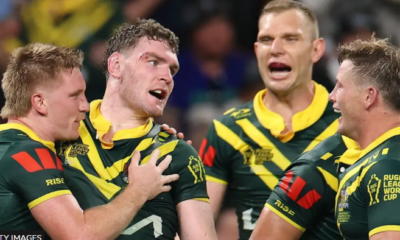







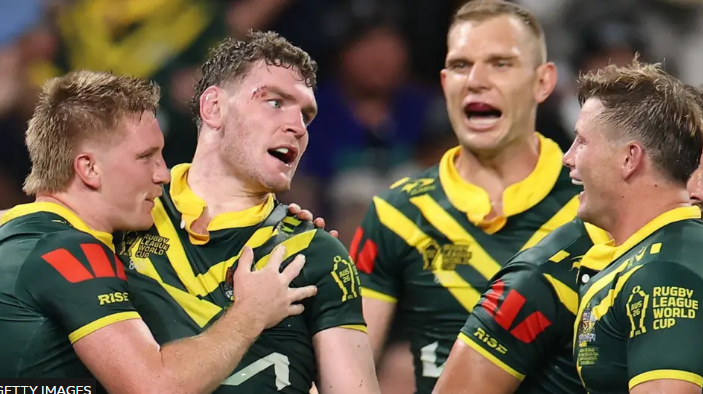
Australia confirmed their status as the leading force in international rugby league with a commanding 32-12 victory over New Zealand in the World Cup final, securing their fourth consecutive title and extending their record to 13 tournament triumphs.
The Kangaroos produced a dominant first-half performance to establish a 24-6 lead and put themselves firmly on course for victory in front of a sell-out crowd of 52,500. The result continued Australia’s remarkable run of 23 consecutive World Cup match wins since their defeat to New Zealand in the 2008 final.
The victory was particularly significant after Australia had struggled to convince earlier in the tournament. They had been pushed hard by New Zealand in their opening meeting on October 15, eventually winning 24-22 despite being outplayed for long periods.
Five weeks later, Kevin Walters’ side delivered a far more convincing performance, showing the strength and experience that have made them the team to beat.
Australia took control almost immediately after New Zealand winger Jamayne Isaako made an error from the opening kick-off. Liam Martin capitalised, powering over for the opening try after just 84 seconds.
New Zealand briefly responded through Casey McLean, the youngest player in the final, who crossed to bring the scores level. However, the Kiwis struggled to maintain possession and repeatedly gave Australia opportunities to attack.
Reece Walsh and Bradman Best combined to create the next opening, allowing winger Jack Bostock to score his eighth try of the tournament. Best then added a try of his own before Martin crossed for his second, giving Australia a commanding advantage at half-time.
New Zealand’s difficulties continued after the break when hooker Erin Clark lost possession in a tackle just 36 seconds into the second half.
Australia quickly turned the mistake into another score. Walsh produced impressive footwork to evade two defenders before releasing an acrobatic pass to Tom Trbojevic, who finished in the right corner.
The contest had been billed partly as a battle between Walsh and New Zealand full-back Kalyn Ponga, who had received the Golden Boot award on Thursday. However, Ponga struggled to influence the match and later sent a pass into touch while his side were in a promising attacking position.
New Zealand continued to compete despite the growing deficit, with Isaiah Papali’i scoring a try that briefly lifted their hopes.
But Australia had the final say. Bostock crossed for his second try, completing another impressive performance from the 23-year-old winger, who had been recovering from knee reconstruction surgery a year earlier.
The final whistle confirmed Australia’s latest championship and extended their record as the most successful nation in Rugby League World Cup history.

Costa Concordia Captain Francesco Schettino Released From Prison on Probation

Chronic Loneliness Linked to 38% Higher Dementia Risk, Study Finds

Denmark Has Europe’s Widest Urban-Rural House Price Gap, OECD Data Shows

Trump Administration Fires US National Cyber Director Sean Cairncross

JPMorgan Chase, Visa and Mastercard Customer Data Exposed in Third-Party Cyberattack

Canada and China Agree to Ease Tariffs on Pork, Seafood and Metals

Germany Ranks Last in Business Start-up Bureaucracy Study, Requiring Nearly 4,000 Hours

UK Inflation Rises to 3.6% in October as Record Diesel Prices Push Up Costs

EU Accuses Temu of Failing to Prevent Illegal Products, Risking Heavy Fine

Measles Cases Decline Across Europe in 2026, but Outbreaks Persist in Several Countries

China’s Historic Olympic Victory Sparks National Pride Amid Controversy

Meta Acquires Tilda Swinton VR Doc ‘Impulse: Playing With Reality’

Saudi Arabia’s Model for Sustainable Aviation Practices

Recent Developments in Small Business Taxes

Effective Drain Cleaning: A Key to a Healthy Plumbing System

Who was Ebrahim Raisi and his status in Iranian Politics?

Keely Hodgkinson Wins Britain’s First Athletics Gold at Paris Olympics in 800m

Carrectly: Revolutionizing Car Care in Chicago

Nobel Laureate Muhammad Yunus Proposed as Head of Bangladesh’s Interim Government Following Hasina’s Resignation

Chinese Hackers Infiltrate Major U.S. Telecom Firms in Possible National Security Breach

Sony WF-10XM4: Headphones Are Our Absolute Favorite

10 Places You Can’t Miss If It’s Your First Time in European

New Census Data Will Shake Up Alabama Politics

16 Top of Our Favorite Outdoor Clothing Brands

Fashionable Summer Accessories to Dress Up Your Travel Look

How Sleeping Less than 7 Hours a Night Can Lead to Weight Gain
-
 Sports2 years ago
China’s Historic Olympic Victory Sparks National Pride Amid Controversy
-
 Entertainment2 years ago
Meta Acquires Tilda Swinton VR Doc ‘Impulse: Playing With Reality’
-
 Business2 years ago
Saudi Arabia’s Model for Sustainable Aviation Practices
-
 Business2 years ago
Recent Developments in Small Business Taxes
-
 Home Improvement2 years ago
Effective Drain Cleaning: A Key to a Healthy Plumbing System
-
 Politics2 years ago
Who was Ebrahim Raisi and his status in Iranian Politics?
-
 Sports2 years ago
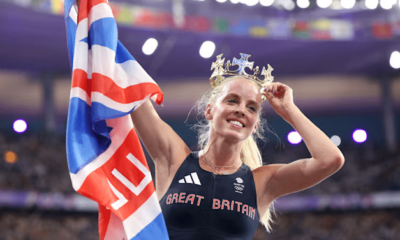
Keely Hodgkinson Wins Britain’s First Athletics Gold at Paris Olympics in 800m
-
 Business2 years ago
Carrectly: Revolutionizing Car Care in Chicago