
News
Seven Family Members Killed in Gaza Airstrike as Blinken Pushes for Ceasefire in Israel

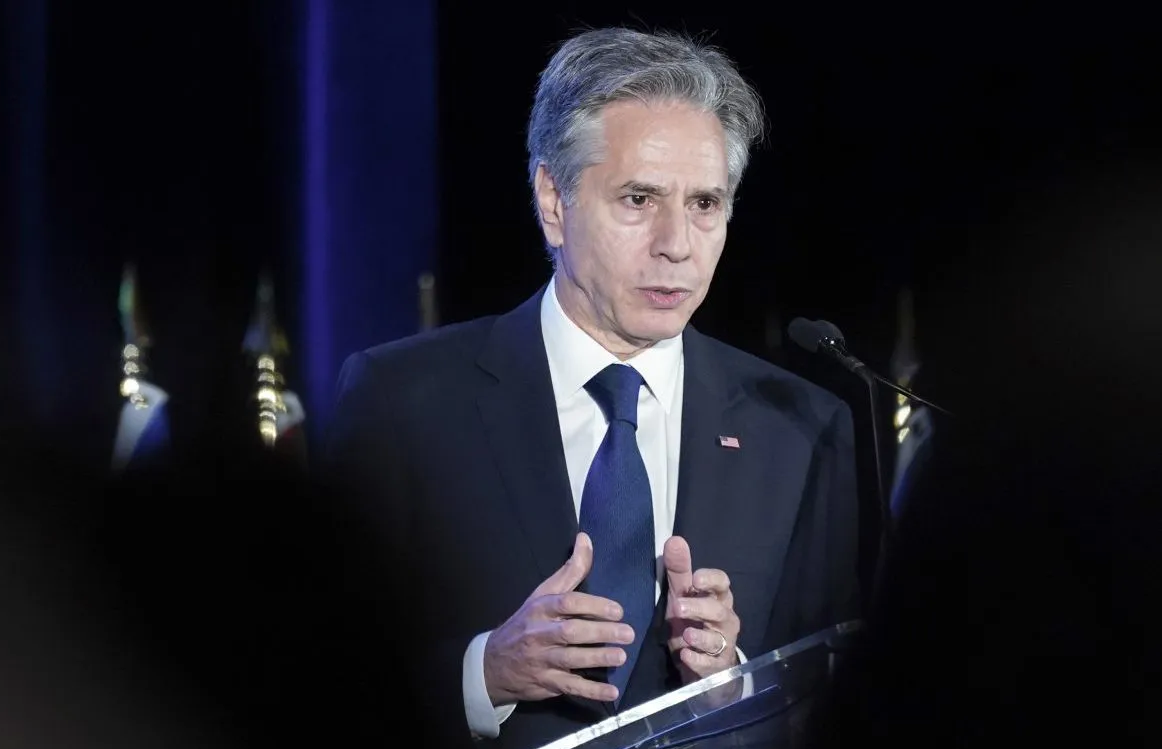
Seven members of the same family, including six children, were killed in an Israeli airstrike in central Gaza on Sunday, according to medical officials. The tragic incident occurred as U.S. Secretary of State Antony Blinken arrived in Israel to push for a ceasefire and a potential hostage deal amid the ongoing conflict.
The airstrike targeted a home in Deir al-Balah, resulting in the deaths of the children and their mother. The children’s father was injured in the attack, according to a spokesperson from Al-Aqsa Hospital. Muhammad Awad Khattab, the children’s grandfather, expressed his devastation, telling CNN, “They were taken by surprise when a missile hit them and completely destroyed their apartment.” He questioned the justification for the attack, asking, “What did they do to deserve this? What resistance did they have?”
This latest strike follows a similar incident just a day earlier, where an Israeli airstrike in the al-Zawayda area of Deir al-Balah killed at least 15 people from the same family, including nine children, according to Gaza Civil Defense.
In a statement on Sunday, the Israeli military confirmed ongoing operations in Khan Yunis and Deir al-Balah, stating that they had struck “targets in the area from which the launches were fired” toward Nirim on Friday, and destroyed launchers in Khan Yunis.
The conflict in Gaza has seen Israel issue numerous evacuation orders, further restricting the humanitarian zone in the region. According to the United Nations, more than 80% of the Gaza Strip has been subjected to these orders since October, severely limiting the local population’s access to essential services and shelter.
Since the escalation of violence following the Hamas attacks on October 7, Israel’s military campaign in Gaza has resulted in the deaths of more than 40,000 people and widespread destruction. The situation has been further exacerbated by the recent detection of the first case of polio in Gaza in 25 years.
Amid these developments, Secretary of State Blinken is engaged in urgent diplomatic efforts to finalize a ceasefire and hostage deal. A new ceasefire plan, drafted by the U.S., Qatar, and Egypt, was presented on Friday following intense negotiations in Doha. Blinken is scheduled to meet with Israeli Prime Minister Benjamin Netanyahu and other senior officials on Monday to push for an agreement.
While U.S. officials, including President Joe Biden, have expressed optimism about the prospects of a ceasefire, Hamas has dismissed the progress, with a senior official from the group telling the BBC that mediators were “selling illusions.”
The Israeli Prime Minister’s Office has indicated cautious optimism about reaching a deal, stating on Saturday that there is “hope that the heavy pressure” on Hamas from the U.S. and other mediators will lead to a breakthrough in negotiations.













Belgium’s Federal Public Service Finance has temporarily taken its online tax portal and several other digital services offline following a cyberattack, as officials work to secure government systems and assess the extent of the disruption.
The agency, known as FOD Financiën, confirmed on Wednesday that the attack had affected its digital services. MyMinfin, the country’s online tax portal, was among the platforms taken offline as a precaution while technical teams investigate the incident.
MyMinfin allows individuals and businesses to manage tax returns, access financial documents and handle other tax-related administrative tasks. The temporary suspension could therefore affect taxpayers who rely on the platform to submit documents or complete pending procedures.
FOD Financiën said it would extend certain upcoming tax filing deadlines affected by the disruption. The revised deadlines will be announced at a later date, giving taxpayers more time to complete their obligations if they are unable to access the relevant online services.
The agency has not yet provided details about the origin of the cyberattack, the systems targeted or how long the affected services are expected to remain unavailable.
Officials said there was currently no indication that personal data had been breached or compromised. However, the investigation remains ongoing, and the possibility of unauthorised access has not been definitively ruled out.
Taking the services offline is intended to give officials time to examine the affected systems and implement measures to protect them. The move also reflects the need to establish whether the attack was limited to service disruption or involved attempts to access sensitive information.
The incident highlights the challenges government agencies face in maintaining essential public services during cyberattacks. Tax portals hold sensitive financial information and are widely used by residents and businesses, making their availability important, particularly around filing deadlines.
For taxpayers, the immediate concern is the temporary loss of access to MyMinfin and other affected platforms. The planned extension of certain deadlines is expected to provide some relief to those whose submissions are delayed by the outage.
FOD Financiën has not announced the full scope of the disruption or confirmed when normal service will resume. The agency is continuing its investigation and security work, while further information about revised filing dates is expected to follow.
Until the investigation establishes the extent of the incident, the status of personal information and the full impact on government services remains uncertain.
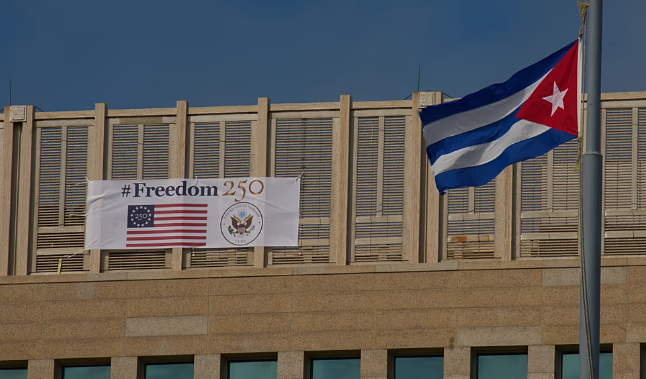
The United Nations General Assembly has renewed its call for the United States to end its economic, trade and financial embargo on Cuba, although support for the resolution fell to its lowest level in more than three decades amid renewed tensions between Washington and Havana.
The resolution, which has been introduced almost every year since 1992, received 130 votes in favour, 17 against and 25 abstentions. The level of support was the lowest since 1995. Last year, more than 160 countries backed the measure.
Germany, Italy and Latvia abstained for the first time in 34 years, while Colombia, Costa Rica, Ecuador, Morocco, Slovenia and Bosnia were among the countries that voted against the resolution, several doing so for the first time.
Although the resolution is not legally binding, it serves as an indication of international opinion on the long-running dispute. The vote comes as the administration of US President Donald Trump intensifies pressure on Cuba through sanctions and restrictions affecting its access to oil supplies.
The US embargo dates to 1960, following Fidel Castro’s revolution and the nationalisation of US-owned property. Washington maintains that Cuba’s economic difficulties stem from its government’s policies, while Havana argues that American restrictions have caused significant damage to the country’s economy.
Speaking shortly before the vote in New York, US Ambassador to the United Nations Mike Waltz rejected the description of the measures as a blockade.
“The plight of the Cuban people is exclusively the fault of this corrupt communist regime,” Waltz said.
Cuba’s government has accused Washington of conducting a diplomatic campaign to persuade countries to withdraw their support for the resolution. Foreign Minister Bruno Rodríguez accused the United States of attempting to “determine the nation’s destiny” and “seize” its wealth.
The debate also featured a heated confrontation between Rodríguez and Waltz. Rodríguez approached the US ambassador and accused him of lying, prompting Waltz to shout for him to back away.
During the session, Waltz accused senior Cuban officials of enjoying luxury lifestyles while ordinary citizens faced shortages. He displayed photographs of Cuban leaders, including President Miguel Díaz-Canel, wearing luxury watches. Members of the Cuban delegation responded by repeatedly banging on their desks.
Díaz-Canel later criticised Washington on the social media platform X, accusing it of “gangster-like coercion”. He said the international community had again opposed the embargo despite what he described as American pressure and blackmail.
In January, Trump threatened to impose tariffs on countries supplying oil to Cuba. The move has sharply reduced fuel deliveries, contributing to widespread power cuts and disruptions to water, internet and telephone services.
Cuba continues to face severe economic hardship, with shortages of fuel and other essential goods affecting daily life. The latest UN vote highlights the continuing international debate over US policy towards the island, even as the level of support for the annual resolution declines.

Elon Musk has said SpaceX restricted Ukraine’s use of its Starlink satellite internet service after accusing the country’s military of breaching its terms by using the civilian network for offensive drone strikes. Ukrainian officials have reported that connectivity has stabilised, with military drones once again reaching the speeds required for operations.
Musk’s comments on Saturday followed more than a week of reported connection problems that Ukraine said had disrupted its defensive operations. The issue emerged amid growing tensions between Washington and Kyiv over Ukrainian attacks on Russian oil infrastructure.
“Using Starlink, a civilian commercial service, for offensive drone strikes to kill people has never been allowed, nor should it be,” Musk wrote on X. He said Ukrainian forces had violated the service’s terms and that SpaceX had closed the loophole the previous week.
Musk also rejected suggestions that SpaceX was responsible for problems affecting Starshield, a separate, military-grade satellite communications system controlled by the US government. He said SpaceX had done more to defend Ukraine than any other private company, while stressing that decisions concerning Starshield rested with Washington.
Ukrainian presidential adviser Serhii Beskrestnov questioned Musk’s account, saying the restrictions on Starlink in Ukraine made the claims difficult to understand. He said drones using the commercial service were limited to speeds of around 70 to 90 kilometres per hour and could not operate on Russian territory.
“Therefore, we physically cannot use commercial Starlink for deep strikes and medium-range strikes,” Beskrestnov wrote on Telegram. Ukraine’s defence ministry had not immediately commented on Musk’s latest statements.
Ukraine uses Starlink to maintain communications between military units, particularly in remote battlefield areas. Starshield provides more specialised capabilities, including support for drone operators who need real-time information about targets.
Ukraine’s Defence Minister Yevhenii Khmara said on Saturday that the military was recording a stable connection. Ukrainian President Volodymyr Zelensky also reported that drone speeds had returned to the required levels. Kyiv had previously said connectivity could fail when drones exceeded 161 kilometres per hour.
US President Donald Trump said he had asked Musk to restore the service, although he has repeatedly denied instructing SpaceX to restrict it. Musk did not explain why the company changed the service’s capabilities after years of Ukraine’s military relying on Starlink.
The disruption coincided with a diplomatic dispute over Ukrainian strikes on Russian oil refineries, which Kyiv says are important sources of revenue for Moscow’s war effort. Trump has criticised the attacks, linking them to pressure on global fuel prices. However, the conflict involving Iran has been a major driver of energy market volatility this year.
Meanwhile, fighting continued across Ukraine. Emergency services reported three people killed and 15 injured in attacks in the Dnipropetrovsk region, including an 11-year-old girl. Six others were injured when a Russian drone struck an apartment building in Vinnytsia.
Russia also reported strikes on Ukrainian logistics facilities, while Ukrainian authorities said their forces had attacked a facility operated by a sanctioned heavy machinery manufacturer in the Russian city of Oryol. Russian authorities said three people were killed there.

One in Four Teenagers Worldwide Does No Weekly Exercise, Study Finds

US Midterm Results Put Data Centre Expansion Under Pressure as Democrats Win Key States

BMW Profits Fall as Chinese Competition Forces Deeper Cost Cuts

Eurozone Opens Race to Replace ECB President Christine Lagarde

Health Groups Urge WHO to Tighten Drinking Water Nitrate Limits Over Cancer Risks

Anthropic Revenue Jumps to $17 Billion as AI Spending Drives Up Costs Ahead of Nasdaq IPO

Argentina’s Milei Courts AI Data Centre Investors With Tax Incentives and Light Regulation

Ryanair First-Half Profit Falls 15% as Higher Fuel Costs and Lower Fares Hit Earnings

Fitch Cuts France’s Debt Outlook to Negative Amid Budget Deadlock and Weak Growth

Breast Cancer Screening Gaps Across Europe Leave Women Facing Unequal Access to Early Diagnosis

Meta Acquires Tilda Swinton VR Doc ‘Impulse: Playing With Reality’

China’s Historic Olympic Victory Sparks National Pride Amid Controversy

Saudi Arabia’s Model for Sustainable Aviation Practices

Recent Developments in Small Business Taxes

Effective Drain Cleaning: A Key to a Healthy Plumbing System

Who was Ebrahim Raisi and his status in Iranian Politics?

Keely Hodgkinson Wins Britain’s First Athletics Gold at Paris Olympics in 800m

Carrectly: Revolutionizing Car Care in Chicago

Nobel Laureate Muhammad Yunus Proposed as Head of Bangladesh’s Interim Government Following Hasina’s Resignation

Chinese Hackers Infiltrate Major U.S. Telecom Firms in Possible National Security Breach

Sony WF-10XM4: Headphones Are Our Absolute Favorite

10 Places You Can’t Miss If It’s Your First Time in European

New Census Data Will Shake Up Alabama Politics

16 Top of Our Favorite Outdoor Clothing Brands

Fashionable Summer Accessories to Dress Up Your Travel Look

How Sleeping Less than 7 Hours a Night Can Lead to Weight Gain
-
 Entertainment2 years ago
Meta Acquires Tilda Swinton VR Doc ‘Impulse: Playing With Reality’
-
 Sports2 years ago
China’s Historic Olympic Victory Sparks National Pride Amid Controversy
-
 Business2 years ago
Saudi Arabia’s Model for Sustainable Aviation Practices
-
 Business2 years ago
Recent Developments in Small Business Taxes
-
 Home Improvement2 years ago
Effective Drain Cleaning: A Key to a Healthy Plumbing System
-
 Politics2 years ago
Who was Ebrahim Raisi and his status in Iranian Politics?
-
 Sports2 years ago
Keely Hodgkinson Wins Britain’s First Athletics Gold at Paris Olympics in 800m
-
 Business2 years ago
Carrectly: Revolutionizing Car Care in Chicago