Connect with us

News

Russian Commander Reportedly Dismissed Over False Claims on Ukraine War Progress

Published

on

Colonel General Gennady Anashkin, commander of Russia’s South Forces Group, has reportedly been removed from his position following allegations of providing misleading information about military progress in eastern Ukraine. The reports, originating from Russian military bloggers and local media outlets, suggest that Anashkin falsely claimed advances near the settlement of Siversk in the Donetsk region.

The dismissal was first reported by military bloggers, including Rybar, a prominent pro-Russian source on Telegram. Rybar criticized the handling of the situation, noting that several settlements near the frontline had become “synonymous with lies and unjustified losses.” The blog added, “It took the system about two months to respond to it properly.”

Russian news outlet RBC also confirmed Anashkin’s removal, citing unnamed sources within the Ministry of Defense. The sources claimed the decision was part of a “planned rotation.” However, no official statement has been made by the Russian government or military, leaving the exact reasons for Anashkin’s dismissal unclear.

A Challenging Frontline for Both Sides

Ukraine’s army chief described the current situation on the frontlines as “one of the most powerful Russian offensives” since the full-scale invasion began in February 2022. However, progress has reportedly been uneven, with heavy resistance from Ukrainian forces in some areas.

The contested Siversk settlement in Donetsk is one of several locations where false claims about Russian advances have reportedly been made. Military bloggers allege that inaccurate reports from multiple commanders have contributed to significant losses among Russian troops.

The Role of Military Bloggers in the Conflict

Military bloggers have become an influential source of information in the ongoing conflict. Many of these bloggers maintain close connections with Russia’s armed forces or pro-Russian separatist groups in eastern Ukraine, offering insights and often blunt criticism of military operations.

See also  US-Iran Ceasefire Eases Tensions as Europe Reacts; US Politics Spill Into Hungary Vote

Rybar and other bloggers have pointed to systemic issues in Russia’s military strategy, including poor communication and the spread of inaccurate battlefield reports. Such criticism underscores a growing tension within Russia’s military apparatus as it faces prolonged resistance from Ukraine.

Context of the Dismissal

While Russia’s Ministry of Defense has yet to comment, Anashkin’s reported dismissal reflects a broader effort to address leadership and operational challenges within the Russian military. The slow progress and setbacks on key fronts have drawn increasing scrutiny, not only from military analysts but also from within pro-Russian circles.

The removal of a high-ranking officer like Anashkin could signal attempts by Moscow to recalibrate its strategy, though the true impact of such leadership changes on the ground remains uncertain.

News

Trump Says Strait of Hormuz Deal May Be Close as Shipping Risks Persist

Published

on

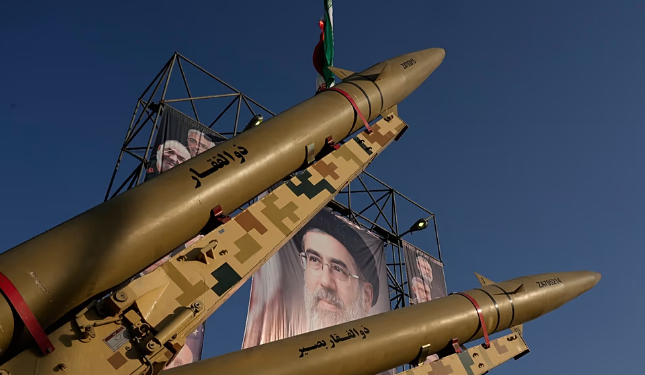
US President Donald Trump has said an agreement to reopen the Strait of Hormuz could be reached within days, while warning Iran of severe consequences if negotiations fail, as tensions continue to disrupt one of the world’s most important maritime trade routes.

Speaking to reporters in California on Tuesday, Trump said negotiators had made significant progress and suggested a breakthrough could come as early as Wednesday.

“We had a very good day,” Trump said, adding that a deal could be reached “tomorrow or the next day.”

Earlier in the day, Trump adopted a tougher tone during an interview with Fox News, saying the strategic waterway would reopen soon or Iran would “get hit very hard.”

The Strait of Hormuz, located between Iran and Oman, is a critical shipping route for global oil and natural gas exports. Since the conflict began on 28 February, Iran has tightened its control over the passage and has sought to regulate vessel movements and introduce transit fees, powers it had not previously exercised.

The issue has become one of the main obstacles in diplomatic efforts to reduce regional tensions following an April ceasefire.

US Treasury Secretary Scott Bessent also expressed cautious optimism, telling CNBC there was a possibility of reaching an agreement by Wednesday or Thursday.

Despite the positive signals from Washington, Iran’s Foreign Ministry denied that direct negotiations with the United States were taking place.

US Secretary of State Marco Rubio confirmed that Washington was participating in discussions involving Oman and Iran aimed at increasing commercial traffic through the Strait of Hormuz.

See also  Ukraine Launches Major Drone Assault on Russian Airfields, Hits Over 40 Strategic Bombers

According to reports from Axios, citing US and regional officials, negotiators are working toward a temporary 60-day agreement that would allow ships to pass safely through the waterway. The proposed arrangement could reportedly be announced this week if talks are successful.

Qatar, which has played a mediating role in regional diplomacy, said efforts to reduce tensions remain active but indicated that no direct talks between the United States and Iran are currently scheduled. Qatar’s Emir, Sheikh Tamim bin Hamad Al-Thani, discussed de-escalation efforts with Trump during a telephone conversation on Tuesday.

While diplomatic efforts continued, security concerns remained high across the region.

Britain’s United Kingdom Maritime Trade Operations (UKMTO) reported that a cargo vessel in the Strait of Hormuz was struck by an unidentified projectile off the coast of Oman on Tuesday, leaving one crew member missing.

Elsewhere, an Indian cargo vessel sank in the Red Sea after coming under attack from unidentified assailants. All crew members were rescued safely.

The ongoing disruptions in Hormuz have increased the importance of alternative shipping routes through the Red Sea. However, those routes also face security challenges following attacks claimed by Yemen’s Iran-aligned Houthi movement, which has declared a maritime blockade targeting vessels linked to Saudi Arabia.

The instability has forced many shipping companies to reassess routes and security measures, while energy markets continue to monitor developments closely. The Strait of Hormuz remains one of the world’s most strategically significant waterways, carrying a substantial share of global oil and liquefied natural gas exports, making any disruption a major concern for international trade and energy supplies.

Continue Reading

News

Netanyahu Rejects US Ceasefire Draft, Insists Hamas Must Disarm Before Israeli Withdrawal

Published

on

Israeli Prime Minister Benjamin Netanyahu has rejected key elements of a United States-backed proposal aimed at advancing a ceasefire in Gaza, insisting that Israeli forces will not withdraw from territory they currently control until Hamas has fully disarmed.

Netanyahu’s comments, made on Tuesday, cast fresh uncertainty over diplomatic efforts to revive negotiations and highlighted a rare public disagreement between Israel and the administration of US President Donald Trump.

The proposed agreement, backed by Washington, sought to build on a ceasefire framework reached last October. Under the draft plan, Hamas would begin a process of disarmament while Israel would halt military strikes and start withdrawing from approximately 60% of Gaza currently under Israeli control. The proposal also envisioned the deployment of an international stabilization force and the establishment of an independent Palestinian administration to oversee governance and reconstruction in the territory.

Speaking in a video posted on social media, Netanyahu said Israel had received a draft proposal from the United States but had not accepted it.

“The Trump administration sent us a draft. We did not agree. It is not our draft. We sent our comments. This is our position,” Netanyahu said.

He added that Israel was examining whether Hamas could genuinely be persuaded to surrender its weapons but stressed that Israeli security interests would remain the government’s priority.

“We stand firm on our interests,” Netanyahu said, adding that Israeli forces would continue to take whatever measures they considered necessary to protect the country, its territory and its citizens.

The Israeli leader reiterated his long-standing position that Hamas must first disarm before any substantial Israeli military withdrawal from Gaza can take place.

See also  Violence Escalates in Jenin Refugee Camp as Palestinian Authority Clashes with Militants

The latest disagreement threatens to complicate international efforts to secure a lasting end to the conflict. The ceasefire reached last October halted large-scale military operations and led to the release of the remaining hostages held in Gaza. However, negotiations over implementing other parts of the agreement have since stalled.

The central dispute remains unchanged. Israel insists that Hamas must surrender its weapons and dismantle its military capabilities before any further concessions are made. Hamas, meanwhile, maintains that Israel must first stop its military operations and begin withdrawing its forces from Gaza before discussions on disarmament can proceed.

Both sides continue to accuse each other of violating the terms of the existing truce, making progress toward a broader agreement increasingly difficult.

Netanyahu’s remarks also come at a politically sensitive time as he prepares for a difficult re-election campaign ahead of Israel’s October elections. His government has consistently argued that eliminating Hamas as a military force remains a central objective of the war.

While the Trump administration continues to promote negotiations as a path toward ending the conflict, Netanyahu’s latest comments indicate that significant differences remain over the sequence of disarmament, military withdrawal and post-war governance, leaving the future of the proposed agreement uncertain.

Continue Reading

News

Flights Disrupted at Leipzig/Halle Airport After Suspicious Object Prompts Security Operation

Published

on

Flight operations at Germany’s Leipzig/Halle Airport were disrupted overnight after reports of a flying object near the airport triggered a security response that led to runway closures and flight diversions.

Police said the incident occurred shortly before midnight when a flying object was reported in the vicinity of the airport. At around the same time, authorities also discovered another unidentified object near the southern runway, prompting an extensive investigation.

Several flights were affected by the disruption, including at least one passenger aircraft that was diverted to another airport while security checks were carried out.

Police spokesperson Olaf Hoppe confirmed that federal police examined the object found near the southern runway but declined to say whether the flying object reported by witnesses was a drone. Authorities have not released details about the nature of either object as investigations continue.

An explosives disposal robot was deployed to inspect the object discovered near the runway. Police have not disclosed what the device found during the operation was or whether it posed any danger.

The airport resumed operations on its northern runway shortly before 2 a.m., allowing some flights to continue. However, the southern runway remained closed on Wednesday morning while investigators completed their work. Hoppe later said the federal police operation was nearing completion.

Leipzig/Halle Airport is one of Europe’s busiest cargo hubs and plays a significant role in international freight transport. The incident occurred close to facilities used by Ukrainian cargo carrier Antonov Airlines, which relocated much of its operations to Leipzig after its home base at Hostomel Airport was destroyed during Russia’s invasion of Ukraine.

See also  Ukraine Claims Missile Strike Sinks Russian Submarine in Sevastopol

Antonov currently operates its fleet of An-124 heavy cargo aircraft from Leipzig and is constructing a new maintenance hangar at the airport, with completion expected in 2027.

The latest security alert is part of a growing number of incidents involving unidentified flying objects near German airports.

Last year, Munich Airport introduced a laser detection system following repeated reports of suspected drones in nearby airspace that temporarily disrupted operations. In November, Berlin Brandenburg Airport suspended flight movements for approximately two hours after a drone was reported near the airport.

Germany’s air navigation service, DFS, has reported a steady rise in unauthorised drone activity. According to the agency, 144 drone overflights were recorded across German airspace last year, with 35 of those incidents occurring around Frankfurt Airport, the country’s busiest aviation hub.

Authorities have increasingly warned that drones and other unidentified flying objects pose safety risks to aircraft, particularly during take-off and landing, often requiring temporary runway closures until security personnel can confirm there is no threat.

Police have not indicated whether the latest incident at Leipzig/Halle Airport is linked to any previous drone sightings, and investigations into both the reported flying object and the device found near the runway remain ongoing.

Continue Reading

Trending