
Health
Study Links Nighttime Light Exposure to Changes in Heart Structure

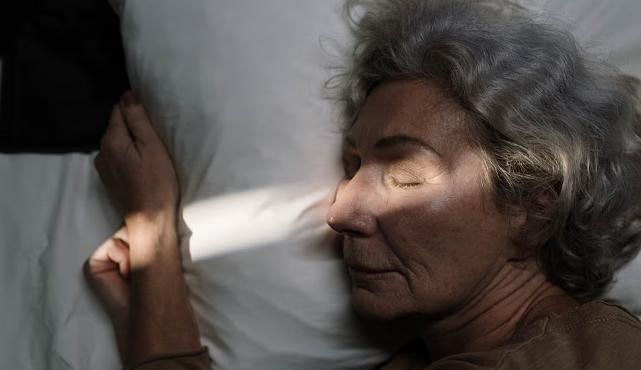
Exposure to light during sleep, including relatively low levels such as light from a phone screen or through a partially open door, has been linked to potentially harmful changes in the structure and function of the heart, according to a new study.
The research, published in the European Heart Journal, examined whether exposure to different levels of light at night was associated with changes in the heart several years later.
The study involved 11,071 people who were exposed to varying levels of nighttime light for one week. The levels ranged from near total darkness to light comparable with a phone screen at low brightness or light entering through a gap in a door.
Three years after the week of monitoring, participants underwent cardiovascular magnetic resonance scans. Researchers used the scans to assess the structure and function of their hearts.
Those exposed to the highest levels of nighttime light were more likely to show thickening of the walls of the heart’s left ventricle. The change reduced the space available inside the chamber. Researchers also identified signs that the heart had become less able to flex during a heartbeat, which can indicate early impairment in cardiac function.
Lu Qi of Tulane University in New Orleans, who led the research, said higher nighttime light exposure was associated with cardiac remodelling.
Cardiac remodelling refers to changes in the structure and function of the heart that can occur in response to prolonged stress or injury. Qi said the process can eventually weaken the heart and contribute to heart failure.
He said keeping bedrooms as dark as possible should be considered as one possible strategy for preventing cardiovascular disease.
The study’s findings were also discussed in an accompanying editorial by Professor Thomas Münzel of University Medical Center Mainz in Germany and colleagues. They argued that darkness should receive greater recognition as an important factor in cardiovascular health.
The researchers urged doctors to ask patients about their sleeping environments, including how dark their bedrooms are, whether they work night shifts and how much they use screens after sunset.
They suggested practical measures such as installing blackout curtains, choosing warmer-coloured bedside lighting and covering small standby lights on household electronics.
The editorial also highlighted the role of local authorities in reducing light pollution. Cities can use shielded lighting fixtures, warmer-spectrum bulbs and streetlights that dim or activate only when needed.
The authors said these measures could reduce unnecessary nighttime light exposure while also saving energy.
The researchers noted that the findings point to an association between nighttime light exposure and changes in heart structure and function, rather than proving that light exposure directly causes heart disease. Further research will be needed to understand the biological mechanisms involved and determine whether reducing nighttime light can lower cardiovascular risk.




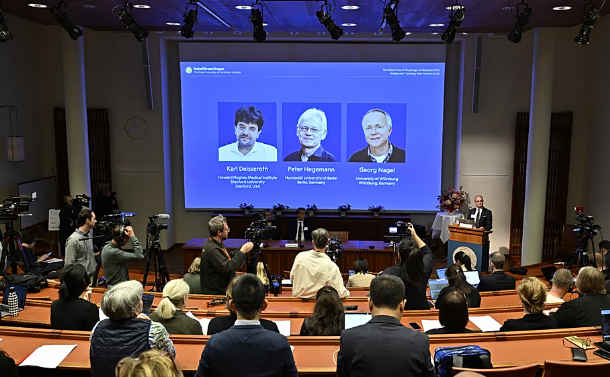
Scientists Karl Deisseroth, Peter Hegemann and Georg Nagel have been awarded the 2026 Nobel Prize in Physiology or Medicine for their work on light-gated ion channels and optogenetics, a technique that has transformed the study of the brain.
The Nobel Assembly at Karolinska Institutet announced the award on Monday, describing the work as laying the foundation for a new era in neuroscience.
Optogenetics allows researchers to control selected cells using light, effectively providing a remote switch that can turn specific cells on or off. The technique has enabled scientists to investigate how individual neurons and neural circuits influence behaviour in living animals.
The origins of the discovery date back to Hegemann’s research more than three decades ago. While studying the single-celled alga Chlamydomonas, which moves towards light, he sought to understand how the organism detects changes in illumination.
Hegemann focused on the alga’s eyespot, a small light-sensing structure on its surface. His research and subsequent experiments identified light-sensitive proteins known as channelrhodopsins.
Hegemann later worked with Nagel at the Max Planck Institute for Biophysics in Frankfurt. The researchers inserted genes from the algae into frog egg cells and human kidney cells, demonstrating that channelrhodopsin functions as a light-controlled ion channel.
When exposed to blue light, the channel can open within about 0.2 milliseconds. Positively charged ions then enter the cell, generating an electrical signal.
Deisseroth later adapted the discovery for neuroscience. He introduced the channelrhodopsin gene into rat nerve cells and showed that blue light could activate the cells and trigger nerve signals.
He subsequently used the technique in the brains of living mice, demonstrating that researchers could control specific groups of neurons with light. Experiments showed that stimulating selected neural circuits could produce physical responses, including movements of a mouse’s whiskers, or cause sleeping animals to wake.
The method was named optogenetics in 2006 and has since become an important research tool in neuroscience.
Researchers now use it to establish direct links between neural activity and behaviour. By activating or silencing particular groups of cells, scientists can study circuits associated with fear, anxiety, reward, pain, thirst, attention and aggression.
The technique has also been used in research into conditions including depression, schizophrenia, anxiety, Alzheimer’s disease, Parkinson’s disease and epilepsy.
Per Svenningsson, chair of the Nobel Committee for Physiology or Medicine, said the discovery provides opportunities to map the brain in ways researchers could previously only imagine.
Optogenetics has also moved beyond laboratory research. Scientists are testing its potential as a treatment for retinitis pigmentosa, a genetic disorder that causes blindness through the loss of light-sensitive retinal cells.
In experimental treatments, researchers introduce genes encoding light-sensitive proteins into surviving retinal cells. In some trials, patients using specialised light-emitting goggles have been able to regain partial vision and detect high-contrast objects.
The Nobel award recognises a discovery that has given researchers an unprecedented way to investigate the relationship between brain cells, neural circuits and behaviour.
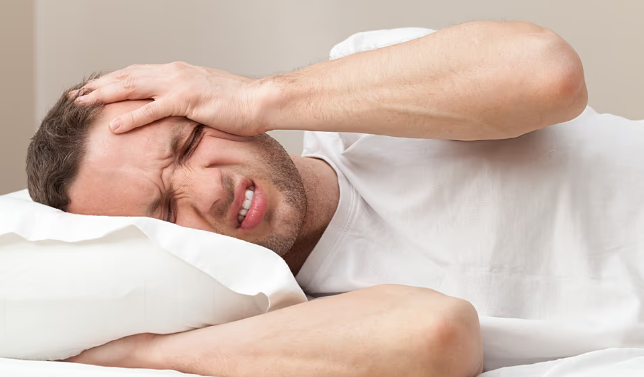
About 1.3 billion people worldwide live with migraine, making it one of the most common neurological disorders and a major cause of disability, while many patients continue to go without a formal diagnosis or adequate medical care.
In Portugal, migraine is estimated to affect around two million people. Research by The Work Foundation, involving researchers from Lancaster University, found that about 24% of women and 13% of men in the country experience migraines.
Women are particularly affected by the condition, which can interfere with work, education and daily activities. A recent study by the European Migraine & Headache Alliance found that 92% of women with migraine in Portugal reported that the condition had prevented them from working, studying or carrying out normal activities for at least one day.
Migraine attacks can involve more than severe headaches. Patients may experience nausea and vomiting, sensitivity to light, sounds and smells, difficulty concentrating and slowed thinking.
Despite the scale of the problem, migraine remains underdiagnosed. A national consensus published in 2025 estimated that about 40% of people experiencing headaches in Portugal do not receive medical follow-up. Among those who do seek care, more than half use private healthcare services.
The same document estimated that about 1.5 million people in Portugal could benefit from medical follow-up for headaches, with around 90% potentially being treated through primary healthcare.
The European Migraine & Headache Alliance study found that 42% of women with symptoms consistent with migraine had never received a medical diagnosis. It also found that 33.6% of people with migraine had never consulted a doctor, while 72.4% relied on self-medication.
“These figures confirm that migraine continues to be underestimated and that access to appropriate treatment is still a challenge for many people in our country,” said Isabel Pireza, chair of the General Assembly of MiGRA Portugal, the Portuguese Association of Migraine and Headache Patients.
The condition can also have significant consequences in the workplace. Research among employees of Portuguese companies found episodes of absenteeism and reduced productivity during attacks. Among workers with headache-related conditions who said they completed less than half of the work planned during an episode, 29% had migraine.
Filipe Palavra, president of the Portuguese Headache Society, said migraine could affect family, social, educational and professional life beyond its most recognised symptom of headache.
He said recognising symptoms and obtaining an accurate diagnosis were important for helping patients receive appropriate treatment and improve their quality of life.
MiGRA Portugal said many people continue to regard persistent migraine pain as something they simply have to endure. The organisation is urging people experiencing recurring symptoms to seek medical advice rather than relying solely on self-medication.
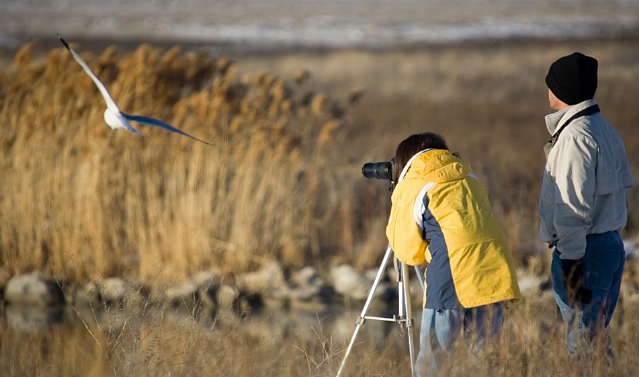
Birdwatching is being explored as a way to help stroke survivors practise communication and rebuild social connections, with researchers at the University of Montana using encounters with birds as part of an intensive aphasia rehabilitation programme.
The approach centres on people living with aphasia, a condition that can affect speaking, understanding speech, reading and writing after a stroke. Researchers say about one-third of stroke survivors develop aphasia, which can make ordinary conversations and social interaction difficult even when a person’s thinking and intellectual abilities remain unchanged.
“Aphasia is an identity theft,” said Catherine Off, a University of Montana researcher and co-director of the university’s Intensive Comprehensive Aphasia Program. She said people with aphasia remain themselves cognitively, but changes in language function can make communication difficult.
The programme typically runs four days a week for four weeks, providing about 80 hours of rehabilitation. Each participant is paired with a trained communication partner, often a graduate student studying speech-language pathology. Avian ecologists guide the bird-related activities and provide information about species and their behaviour.
Rather than keeping communication within a conventional therapy room, the programme uses birdwatching as a reason for participants to interact with others and communicate about something they find interesting.
“Communication function doesn’t improve until you want to communicate about something,” Off said. “We’re out of the therapy room now. We’re saying: Enjoy being with people, enjoy being outside and let the communication come.”
Birdwatching can also allow people to communicate without relying entirely on speech. Participants may point toward birds, draw pictures, look at photographs or use other gestures to share what they see. Researchers say these forms of interaction can help people remain socially involved when verbal communication is limited.
The work was described in a paper published in Frontiers in Bird Science. The researchers stressed that the approach is still at a conceptual stage and that more formal clinical research is needed to determine whether it produces lasting improvements in communication and quality of life.
The researchers said the need for accessible stroke rehabilitation is expected to grow as the number of people affected by stroke increases. Stroke remains a major cause of death and disability worldwide, while more people are surviving strokes and living with long-term effects.
Access to high-quality prevention, emergency treatment and rehabilitation is also uneven, according to the researchers. They suggest birdwatching could offer a relatively flexible activity because participation can take place in different settings and at varying levels of physical ability.
Victoria Dreitz, an avian ecologist in the university’s Wildlife Biology Program, said people can begin simply by observing birds from a window or looking at species in their own gardens.
The researchers see that flexibility as an important part of the activity, allowing stroke survivors to participate according to their abilities while creating opportunities for communication, social interaction and time outdoors.

Investors Face Limited Choices as Robotics Boom Stays Locked in Private Markets

Optogenetics Pioneers Win 2026 Nobel Prize in Medicine

Iran Says Hormuz Can Reopen Within Seven Days as Oil Exports Come Under Pressure

Uruguay Tops Global Retirement Ranking as Europe Dominates Top 10

SpaceX crew reaches International Space Station in record US transit

Guirassy scores as Guinea edge Kenya in AFCON 2027 qualifier

Trump, Vance begin midterm campaign push as Republicans confront economic concerns

Binance Faces EU Regulatory Scrutiny Over Continued Service to Customers

Migraine Affects 1.3 Billion People Worldwide as Portugal Faces Diagnosis Gap

Air France-KLM and Lufthansa Submit Final Bids for TAP Stake

Meta Acquires Tilda Swinton VR Doc ‘Impulse: Playing With Reality’

China’s Historic Olympic Victory Sparks National Pride Amid Controversy

Saudi Arabia’s Model for Sustainable Aviation Practices

Recent Developments in Small Business Taxes

Effective Drain Cleaning: A Key to a Healthy Plumbing System

Who was Ebrahim Raisi and his status in Iranian Politics?

Keely Hodgkinson Wins Britain’s First Athletics Gold at Paris Olympics in 800m

Carrectly: Revolutionizing Car Care in Chicago

Nobel Laureate Muhammad Yunus Proposed as Head of Bangladesh’s Interim Government Following Hasina’s Resignation

Chinese Hackers Infiltrate Major U.S. Telecom Firms in Possible National Security Breach

Sony WF-10XM4: Headphones Are Our Absolute Favorite

10 Places You Can’t Miss If It’s Your First Time in European

New Census Data Will Shake Up Alabama Politics

16 Top of Our Favorite Outdoor Clothing Brands

Fashionable Summer Accessories to Dress Up Your Travel Look

How Sleeping Less than 7 Hours a Night Can Lead to Weight Gain
-
 Entertainment2 years ago
Meta Acquires Tilda Swinton VR Doc ‘Impulse: Playing With Reality’
-
 Sports2 years ago
China’s Historic Olympic Victory Sparks National Pride Amid Controversy
-
 Business2 years ago
Saudi Arabia’s Model for Sustainable Aviation Practices
-
 Business2 years ago
Recent Developments in Small Business Taxes
-
 Home Improvement2 years ago
Effective Drain Cleaning: A Key to a Healthy Plumbing System
-
 Politics2 years ago
Who was Ebrahim Raisi and his status in Iranian Politics?
-
 Sports2 years ago
Keely Hodgkinson Wins Britain’s First Athletics Gold at Paris Olympics in 800m
-
 Business2 years ago
Carrectly: Revolutionizing Car Care in Chicago