
Business
Eurostat Reveals Cost Differences for Hotels and Restaurants Across Europe


Europe offers tourists a wide array of culinary delights, from France’s famous cheese boards to Italy’s pasta dishes. However, the cost of dining and accommodation varies significantly across the continent, and travellers looking for value need to plan carefully.
Eurostat’s latest price level index for restaurants and hotels provides a benchmark for comparing costs across European countries. The EU average is set at 100. A score above 100 indicates a destination is more expensive than the EU average, while a score below 100 shows it is cheaper. The index is a comparative tool and does not represent actual monetary amounts.
According to the data, Switzerland is the most expensive country for hotels and restaurants among 37 European nations. A standard basket of services there costs €171, 71 percent higher than the EU average. In contrast, North Macedonia is the cheapest, with a basket priced at €50, roughly 50 percent below the average.
Within the EU, Denmark ranks as the most expensive country, with prices 48 percent above the benchmark at €148. Bulgaria is the most affordable EU destination, with a standard basket costing €53.
Regional patterns show that Nordic countries and much of Western Europe generally have higher costs. Ireland, the Netherlands, Belgium, Germany, and France all exceed or match the €100 EU benchmark. Eastern Europe and the Balkans are considerably less expensive, while Southern European countries such as Portugal, Spain, and Greece offer lower prices than the EU average. Italy stands out as an exception in the south, with prices closer to the EU benchmark. Croatia is near the €100 mark, while Cyprus and Malta are slightly lower but still more costly than many other Mediterranean destinations.
Kristóf Gyódi, an economist at the University of Warsaw, explained that wage differences play a key role in price disparities. “The hospitality sector is highly labour intensive, so variations in wage levels between countries directly affect service prices,” he said. Other contributing factors include energy costs, taxes such as VAT, and commercial real estate prices.
The European hospitality association, HOTREC, added that regulatory requirements and inflation in food and utilities can also drive costs higher, particularly for small and medium-sized businesses. Countries with strict social contribution systems and high compliance costs tend to have pricier hotels and restaurants.
Eurostat’s index does not account for income levels, meaning affordability may differ for travellers depending on their home country. Tourists from higher-income nations often find cheaper destinations in Eastern and Southern Europe attractive, while price-sensitive travellers may adjust their plans by shortening stays or visiting off-season.
Ultimately, while price differences influence travel decisions, location-specific attractions, ease of travel, and proximity also play a major role in shaping tourism flows across Europe.




A lack of transparency over property ownership is making it difficult to determine how much housing is controlled by large landlords in Spain, even as major investors continue to make significant purchases across the country.
Public data does not provide a complete picture of residential properties owned by companies or individuals with more than 10 homes or 1,500 square metres of residential space. Although the national cadastre holds ownership records, the information is anonymised, limiting efforts to identify the largest landlords and track changes in their portfolios.
Rental-market data can sometimes be obtained through transparency requests to Spain’s autonomous communities, which oversee tenant deposit records. However, such information excludes owner-occupied and vacant properties as well as other categories of housing, making it difficult to establish the full scale of corporate ownership in real time.
Property transactions announced by companies during 2026 nevertheless show continued activity among major investors. The biggest deal so far involved Fidere, a group of listed real estate investment trusts focused on public and rental housing. Canadian investment group Brookfield bought Fidere from Blackstone in March for €1.05 billion, acquiring 47 buildings containing more than 5,000 rental homes.
In May, Azora agreed to acquire 1,200 rental homes in the Barcelona metropolitan area from Patrizia for more than €350 million. Patrizia had purchased the properties from BeCorp in 2022 for about €600 million.
Other deals involve homes that have yet to be completed. Barings is due to acquire 305 affordable homes from Aurora Homes in Madrid’s Los Cerros development for more than €70 million, with completion expected in 2029. It is also buying 188 homes in Valdebebas for more than €56 million from Grupo Ferrocarril.
Public authorities are also granting concessions on public land to private housing companies, sometimes for periods of 45 to 75 years. This is taking place while Spain’s social rental housing stock remains at just 1.72%, compared with an estimated European average of 8% to 9%.
Culmia, controlled by US investment firm Oaktree, has been involved in several such transactions. In 2025, it transferred a Madrid Plan Vive social housing portfolio to German asset manager DWS through a €255 million transaction. MEAG has also acquired a 50% stake from Culmia in a portfolio containing more than 1,700 homes across Madrid and Valencia.
At the same time, Spain’s wider housing market is showing signs of slower sales growth. Cushman & Wakefield reported a 3.51% annual decline in transactions through May 2026, to about 286,000. BBVA Research expects transactions to fall 7.3% this year before rising 0.6% in 2027.
Despite weaker sales, investment in rental housing has surged. Cushman & Wakefield recorded €2.934 billion in transactions involving large landlords and investment funds during the first half of 2026, a 376% increase from a year earlier.
The figures reflect different parts of the market, as a small number of large portfolio purchases can sharply increase investment volumes without indicating an equivalent rise in the number of individual home sales.
Housing has also become Spain’s leading public concern. According to the September CIS barometer, 37.5% of respondents identified housing as the country’s main problem, ahead of economic issues at 21.6% and immigration at 19.7%.
Oxfam France has called for a major reform of the country’s Dutreil tax pact, arguing that changes to the scheme could generate billions of euros for public finances by increasing taxation on the largest business inheritances.
The proposal comes as France begins preparations for its 2027 budget amid mounting pressure to reduce the deficit and contain rising public debt. In a report published on Tuesday, September 22, Oxfam identified large inheritances as a potential source of additional government revenue.
The Dutreil pact, introduced in 2003 under then Trade and Crafts Minister Renaud Dutreil, provides a 75% exemption from gift and inheritance taxes when eligible businesses are transferred to heirs. The scheme was designed to help families pass businesses to the next generation without being forced to sell them to meet tax liabilities.
Beneficiaries must meet conditions including retaining their shares for a specified period and maintaining certain business activities. France’s 2026 finance law tightened some of the rules by extending the required holding period and excluding certain assets that are not directly related to business operations.
Oxfam said transfers made under the Dutreil pact have represented almost €3 billion in annual tax expenditure on average over the past four years, with the figure reaching €5.5 billion in 2024, citing the French Court of Audit.
The organisation estimates that transferring the wealth of French billionaires aged over 70 through the scheme could result in more than €111 billion in lost public revenue over the next 30 years if current rules remain unchanged. Oxfam stressed that this is a projection and not an amount the government would automatically collect if the scheme were abolished.
The group argues that the tax benefit is particularly concentrated among the wealthiest recipients. According to its calculations, the 110 most advantaged beneficiaries, representing about 1% of recipients, saved an average of €30 million each in tax in 2024. Meanwhile, half of the least advantaged beneficiaries saved less than €40,000 on average.
Oxfam proposes limiting the Dutreil exemption to €1 million per beneficiary. It estimates that about 90% of current beneficiaries would remain unaffected by the proposed cap, while the state could raise more than €3 billion annually.
The debate is expected to form part of discussions surrounding France’s 2027 finance bill. Any reform would need to balance additional tax revenue against the original purpose of the Dutreil pact, which is to facilitate the transfer of family businesses.
Layla Abdelke Yakoub, Oxfam France’s Advocacy Manager for Tax Justice and Inequality, said Prime Minister Sébastien Lecornu had indicated that the government would not change the Dutreil pact.
Oxfam said it hoped the government would reconsider its position and called for the largest fortunes to make a greater contribution to France’s fiscal effort.
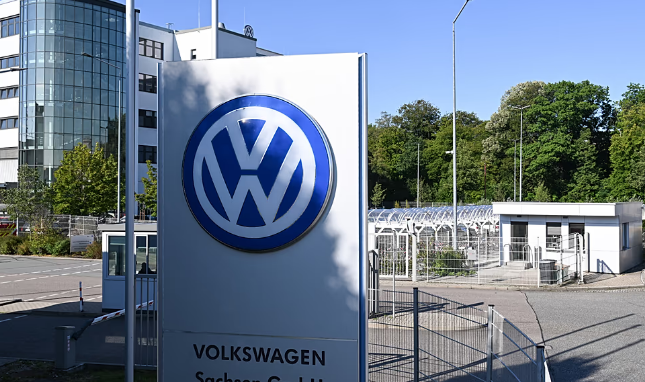
Volkswagen has been removed from the Euro Stoxx 50, the benchmark index of major companies listed in the eurozone, adding pressure on Europe’s biggest carmaker just days after it issued a major profit warning.
The change took effect when European markets opened on Monday following an annual review by index provider Stoxx. Volkswagen was replaced by Finnish telecoms group Nokia, while French utility Engie joined the index. Dutch information services company Wolters Kluwer was also removed.
Volkswagen’s departure from the index was based on its falling free-float market value rather than a specific assessment of its business performance. The Euro Stoxx 50 is weighted according to the market value of shares available for public trading, meaning Volkswagen no longer met the required threshold.
The move could still affect the company’s shares because investment funds that track the index are required to adjust their portfolios. That can result in additional selling pressure on stocks removed from the benchmark.
Volkswagen shares have fallen almost 30% since the beginning of the year and were down more than 6% from last Monday’s opening. The shares were trading at around €76.
The index change came shortly after Volkswagen issued a warning about its financial outlook. On Friday, the company said one-off charges of about €10 billion would significantly reduce its 2026 earnings.
Volkswagen lowered its operating margin forecast to no more than 1%, compared with its previous guidance of between 4% and 5.5%. Analysts had been expecting a margin of about 4.1%.
More than €6 billion of the charges are linked to a writedown at Porsche, in which Volkswagen owns a 75.4% stake. Porsche has faced weaker demand in China and the impact of US tariffs on its business. Its operating margin was only 1.1% last year.
Volkswagen also expects more than €2 billion in charges related to expanded early retirement programmes, impairments in China and the planned sale of its Osnabrück manufacturing subsidiary.
The company cited a worsening market environment, particularly in China, as well as a faster shift in consumer demand toward battery-electric vehicles.
The warning followed a restructuring agreement announced two weeks earlier that would double planned job reductions to 100,000 and reduce Volkswagen’s model range by half.
Volkswagen said its underlying operating margin, excluding the one-off charges, was around 4%. It also maintained its forecasts for cash flow and liquidity.
Deutsche Bank said the headline figures overstated the deterioration in Volkswagen’s underlying business, although it expects the restructuring process to remain costly and complex.
Volkswagen is due to report its third-quarter results on October 29, when investors will receive a fuller picture of the company’s financial performance and restructuring plans.

Congenital Infections Linked to Higher Risks of Autism and Intellectual Disability

Spain’s Housing Market Faces Growing Pressure as Big Landlords Expand

Oxfam Calls for Reform of France’s Dutreil Pact to Raise Billions

Volkswagen Removed From Euro Stoxx 50 After Profit Warning

French Diesel Prices Hit Record as Middle East War Drives EU Fuel Costs Higher

Volvo Cars Names Škoda Chief Klaus Zellmer as Next CEO


US Embassies Warn Americans of Rapidly Escalating Middle East Conflict

Baby Essentials Cost Thousands of Euros Across Europe, Study Finds

Global Survey Finds Growing Concern Over AI-Driven Job Losses

Meta Acquires Tilda Swinton VR Doc ‘Impulse: Playing With Reality’

China’s Historic Olympic Victory Sparks National Pride Amid Controversy

Saudi Arabia’s Model for Sustainable Aviation Practices

Recent Developments in Small Business Taxes

Effective Drain Cleaning: A Key to a Healthy Plumbing System

Who was Ebrahim Raisi and his status in Iranian Politics?

Keely Hodgkinson Wins Britain’s First Athletics Gold at Paris Olympics in 800m

Carrectly: Revolutionizing Car Care in Chicago

Nobel Laureate Muhammad Yunus Proposed as Head of Bangladesh’s Interim Government Following Hasina’s Resignation

Chinese Hackers Infiltrate Major U.S. Telecom Firms in Possible National Security Breach

Sony WF-10XM4: Headphones Are Our Absolute Favorite

10 Places You Can’t Miss If It’s Your First Time in European

New Census Data Will Shake Up Alabama Politics

16 Top of Our Favorite Outdoor Clothing Brands

Fashionable Summer Accessories to Dress Up Your Travel Look

How Sleeping Less than 7 Hours a Night Can Lead to Weight Gain
-
 Entertainment2 years ago
Meta Acquires Tilda Swinton VR Doc ‘Impulse: Playing With Reality’
-
 Sports2 years ago
China’s Historic Olympic Victory Sparks National Pride Amid Controversy
-
 Business2 years ago
Saudi Arabia’s Model for Sustainable Aviation Practices
-
 Business2 years ago
Recent Developments in Small Business Taxes
-
 Home Improvement2 years ago
Effective Drain Cleaning: A Key to a Healthy Plumbing System
-
 Politics2 years ago
Who was Ebrahim Raisi and his status in Iranian Politics?
-
 Sports2 years ago
Keely Hodgkinson Wins Britain’s First Athletics Gold at Paris Olympics in 800m
-
 Business2 years ago
Carrectly: Revolutionizing Car Care in Chicago