
Business
Global Stocks Slide as Nvidia Leadership Uncertainty Puts AI Trade Under Pressure

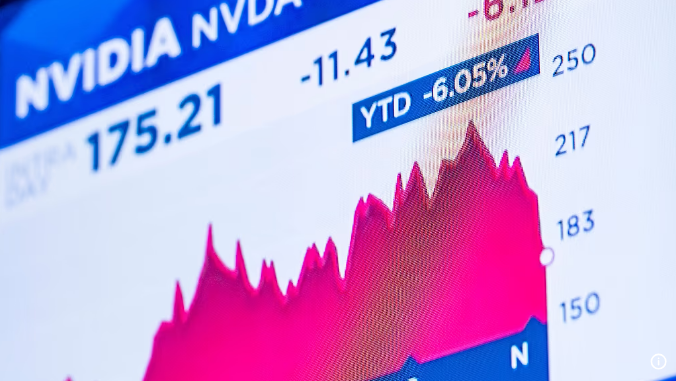
Global stock markets extended their losses on Monday as investors assessed uncertainty surrounding Nvidia and awaited the chipmaker’s latest earnings report, alongside developments ahead of Anthropic’s expected market debut.
European markets opened mixed after Asian shares mostly declined, with technology stocks among the biggest fallers. Investors were also monitoring geopolitical developments, including a planned meeting between Chinese President Xi Jinping, US President Donald Trump and Russian President Vladimir Putin on the sidelines of the APEC summit in southern China.
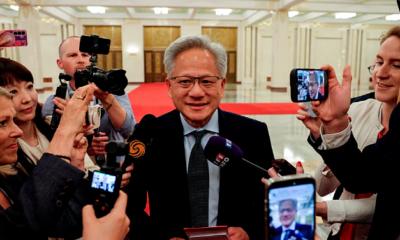
The latest market uncertainty follows reports that Nvidia chief executive Jensen Huang had stepped down on Thursday after allegations concerning his personal relationships, including claims involving a woman suspected of being a Chinese intelligence operative. The allegations have not been independently established in the information provided.
Huang has been a central figure in the global artificial intelligence boom. Nvidia supplies the advanced processors used in many AI systems, making the company a major beneficiary of investment in data centres and computing infrastructure.
His reported departure raised concerns among investors about the company’s leadership and the outlook for an industry that has helped drive major gains in global equity markets.
Hopes of a possible return emerged after the Financial Times reported that Huang was discussing the prospect of resuming his role. More than 158,000 people had also signed an open letter urging Nvidia’s board to bring him back while an independent investigation examined the allegations. Among the signatories were technology entrepreneur Elon Musk and Uber co-founder Travis Kalanick.
The reports did little to support Asian markets. Tokyo, Seoul and Taipei, which are home to several major semiconductor companies, recorded significant declines. Japan’s Kioxia and Tokyo Electron, Taiwan Semiconductor Manufacturing Company (TSMC) and South Korea’s SK Hynix were among the companies facing selling pressure. Markets in Shanghai, Sydney, Singapore, Manila and Jakarta also fell.
Chris Weston of Pepperstone said investors had used the weekend to assess the developments and reconsider their exposure to risk. However, he cautioned that markets remained uncertain about the longer-term outlook.
Weston said a possible return by Huang could ease immediate concerns about Nvidia’s leadership, but governance changes and potential political or regulatory restrictions could continue to weigh on the company.
Investors are now looking to Nvidia’s earnings report, due on Tuesday, for indications of demand for AI chips and the sustainability of spending across the sector. Anthropic’s anticipated listing, meanwhile, is expected to provide another indication of investor appetite for artificial intelligence businesses.
Geopolitical risks will also remain in focus as Xi, Trump and Putin prepare to meet. It is not yet clear whether the wars in Iran and Ukraine will feature in their discussions.
Other important releases this week include US retail sales figures and minutes from the Federal Reserve’s October meeting, which could offer clues about the direction of interest rates.
Oil prices edged lower after the International Energy Agency forecast that global supply would exceed demand in the fourth quarter. However, concerns persisted following Iran’s claim that it had attacked a US military base in Bahrain over the weekend.
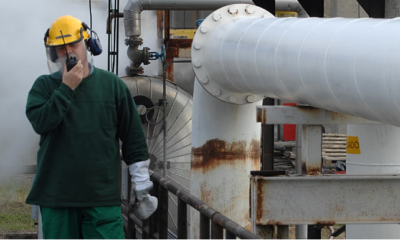






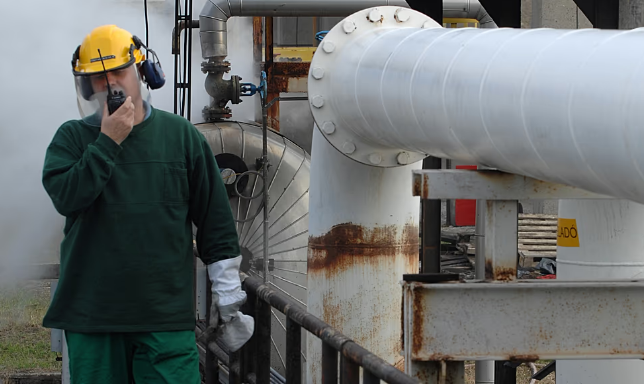
Hungarian oil and gas company MOL says it expects to be technically ready to phase out Russian crude imports by the end of 2027, while urging the European Union to provide funding for alternative supply routes.
MOL Hungary chief executive György Bacsa told Euronews that the transition would require significant investment in energy infrastructure. He warned that reducing dependence on Russian oil could increase energy costs and place additional pressure on households and businesses in Hungary and Slovakia, both of which remain heavily reliant on Russian crude.
Bacsa said higher costs could lead to social unrest and political instability, making financial support from Brussels important to ensure the transition does not create further economic difficulties.
The company is preparing to seek EU funding for energy diversification for the first time, following a change of government in Budapest. The move marks a shift from the approach taken under former prime minister Viktor Orbán, whose government maintained close energy ties with Russia and opted out of some EU initiatives aimed at reducing reliance on Russian supplies.
MOL’s plans depend partly on expanding access to non-Russian crude through alternative pipeline routes. The company is calling for EU support to develop the infrastructure needed to transport oil from other suppliers and strengthen the region’s energy security.
The European Union has maintained its focus on ending imports of Russian energy following Moscow’s invasion of Ukraine. However, the transition has been more complicated for landlocked countries in central Europe, where existing infrastructure and limited access to alternative routes have contributed to continued dependence on Russian supplies.
A 2025 study by the International Monetary Fund estimated that a complete interruption of Russian energy supplies could increase Hungary’s energy spending by around 15% by 2030. Such an increase could put additional pressure on the country’s economy and make the shift to alternative sources more difficult.
For MOL, being technically prepared to stop buying Russian oil by the end of 2027 does not remove the financial and logistical challenges involved. The company says investment in pipelines and other supply infrastructure will be necessary to secure reliable alternatives.
Bacsa’s warning highlights the challenge facing EU policymakers as they seek to reduce Russian energy imports while limiting the economic and political consequences for member states that remain dependent on them.
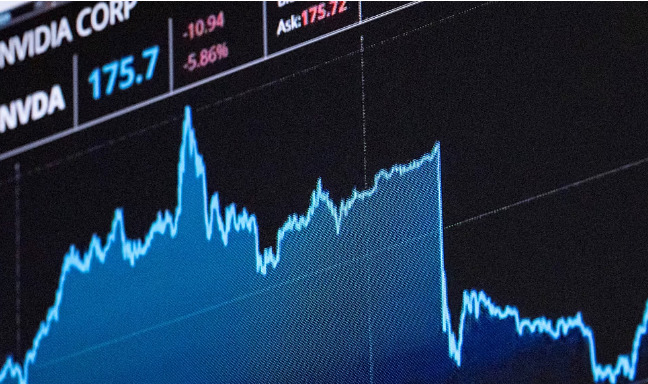
Global stock markets mostly fell on Friday as investors assessed the potential impact of Jensen Huang’s departure from Nvidia on the artificial intelligence industry, while rising oil prices added to concerns over the prolonged conflict involving Iran.
European shares opened lower, with London’s FTSE 100 down 0.2% and benchmark indices in Paris and Frankfurt each losing 0.3%. US stock futures also edged down, including contracts linked to the technology-heavy Nasdaq 100.
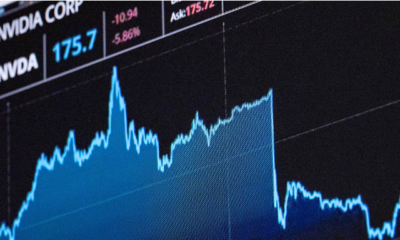
The selling followed losses on Wall Street on Thursday. Nvidia shares fell 4.3%, while the S&P 500, Nasdaq Composite and Dow Jones Industrial Average each declined by around 0.4%. The Dow closed at 52,297.09. Some rival chipmakers moved higher, with Advanced Micro Devices gaining 5.9%.
Nvidia announced that Huang had stepped down immediately as president, chief executive and board member. The company’s long-serving chief financial officer, Colette Kress, took over as interim chief executive.
Huang co-founded Nvidia and became one of the most influential figures in the development of AI technology. His departure has raised questions about the company’s future direction and the wider industry, particularly given Nvidia’s central role in supplying chips and financing AI infrastructure.
The announcement followed reports alleging two affairs, including one involving a woman suspected of spying for China. The reports have raised national security concerns, although the allegations have not been independently established.
Ben Barringer, head of technology research at Quilter Cheviot, said he did not expect an immediate effect on Nvidia if its order book remained strong and it continued meeting performance targets.
However, he warned that Huang’s absence could weaken Nvidia’s influence over longer-term debates about AI regulation and investment, potentially affecting the wider technology sector.
Asian markets were mixed. Japan’s Nikkei 225 gained 0.5% to close at 61,142.35, while South Korea’s Kospi fell 1% to 5,290.53. Shanghai’s Composite declined 0.6% to 3,634.35, and Hong Kong’s Hang Seng was down more than 1.5% at 23,637.60.
Taiwan’s Taiex rose 1.35% to 43,675.12, supported by a 0.43% gain in TSMC. Australia’s S&P/ASX 200 fell 0.7% to 9,082.20. Chip stocks were mixed, with Tokyo Electron rising 1.7%, while Kioxia fell 2.2%. Samsung Electronics lost 1% and SK Hynix declined 3.2%.
Oil prices advanced after US President Donald Trump said Washington did not need an agreement with Iran, despite the continuing conflict in the Middle East.
At around 07:00 GMT, Brent crude rose 0.7% to $96.48 a barrel, while US West Texas Intermediate gained 0.2% to $88.91. Brent had traded near $72 before the war began in late February.
Gold futures for December delivery edged up to $3,899 an ounce. In currency markets, the euro strengthened to $1.1061, while sterling slipped to $1.3229. The dollar eased to 159.79 yen.
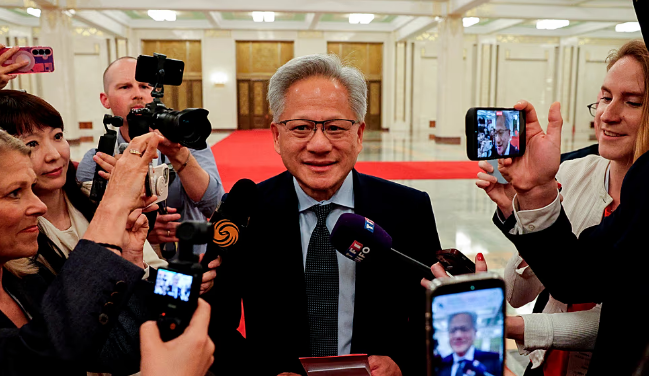
Nvidia chief executive Jensen Huang is facing renewed scrutiny following reports of a second alleged extramarital relationship, as the company’s board prepares to consider allegations involving the technology executive and a woman linked to a suspected Chinese intelligence operation.
The Wall Street Journal, citing people familiar with the matter, reported on Wednesday that Nvidia’s board was preparing to meet to discuss the situation. The report did not establish that the board had decided to remove Huang from his position.
The New York Times separately reported that video evidence showed the 63-year-old executive behaving affectionately with Kimberly Powell, Nvidia’s 48-year-old vice president of healthcare. The newspaper said bystanders had reportedly seen the pair being affectionate at a hotel during a conference in San Jose, California.
Powell has played a prominent role in Nvidia’s efforts to expand the use of its chip technology in higher education and healthcare. The reports have not established whether the alleged relationship has affected her position at the company.
The latest claims follow Huang’s admission that he had a relationship with Alice Huang, a senior executive at Singapore-based data centre company Megaspeed.
The Wall Street Journal reported that Jensen Huang and Alice Huang had been photographed together in Taipei in 2024 and 2025. US intelligence officials reportedly circulated a memo last spring alleging that Alice Huang was an operative for China’s Ministry of State Security. The allegation has not been independently established.
In a message to Nvidia employees on Sunday, the chief executive acknowledged the relationship, writing: “I was unfaithful to my wife.”
On the same day, Nvidia’s board announced that it had launched an independent investigation following reports that its founder and chief executive had been the target of a foreign intelligence effort.
“I support the investigation and will cooperate fully. I love our country and our company,” Huang said in his statement.
Members of Congress have also reportedly asked Huang to provide a closed-door briefing about his interactions with Alice Huang, according to The New York Times.
Political and business scrutiny
The controversy comes as Nvidia remains at the centre of the global artificial intelligence boom, which has driven its shares to record levels and made Huang one of the technology industry’s most influential executives.
He has appeared alongside US President Donald Trump at several White House events and received the National Medal of Science from the president last month.
Huang has also joined other prominent technology leaders, including Elon Musk, Jeff Bezos and Mark Zuckerberg, in supporting industry-led efforts to regulate artificial intelligence.
The debate over AI oversight has intensified as concerns grow about the technology’s potential risks. Trump has opposed calls for greater government intervention and dismissed warnings that artificial intelligence could pose an existential threat.

Global Stocks Slide as Nvidia Leadership Uncertainty Puts AI Trade Under Pressure

Estonia to Close Russian Border Crossings After Foiled Attack on Drone Manufacturer

Berkeley Study Reveals How Sleep and Growth Hormone Work Together to Regulate Waking

Australia Beat New Zealand 32-12 to Win Fourth Consecutive Rugby League World Cup

EU Forces Board Suspected Russian Shadow Fleet Tanker in Mediterranean

Zelenskyy Questions SpaceX Over Starshield Restrictions Affecting Ukraine’s Drone Defences

Turkey and Qatar Sign Mutual Defence Pact as Gulf Security Alliances Shift

Microsoft Outage Renews Calls for Europe to Reduce Reliance on US Cloud Providers

Regular Coffee Consumption Linked to Changes in Gut Activity and Bacterial Diversity

MOL Targets End to Russian Oil Imports by 2027, Seeks EU Funding for Energy Shift

Meta Acquires Tilda Swinton VR Doc ‘Impulse: Playing With Reality’

China’s Historic Olympic Victory Sparks National Pride Amid Controversy

Saudi Arabia’s Model for Sustainable Aviation Practices

Recent Developments in Small Business Taxes

Effective Drain Cleaning: A Key to a Healthy Plumbing System

Who was Ebrahim Raisi and his status in Iranian Politics?

Keely Hodgkinson Wins Britain’s First Athletics Gold at Paris Olympics in 800m

Carrectly: Revolutionizing Car Care in Chicago

Nobel Laureate Muhammad Yunus Proposed as Head of Bangladesh’s Interim Government Following Hasina’s Resignation

Chinese Hackers Infiltrate Major U.S. Telecom Firms in Possible National Security Breach

Sony WF-10XM4: Headphones Are Our Absolute Favorite

10 Places You Can’t Miss If It’s Your First Time in European

New Census Data Will Shake Up Alabama Politics

16 Top of Our Favorite Outdoor Clothing Brands

Fashionable Summer Accessories to Dress Up Your Travel Look

How Sleeping Less than 7 Hours a Night Can Lead to Weight Gain
-
 Entertainment2 years ago
Meta Acquires Tilda Swinton VR Doc ‘Impulse: Playing With Reality’
-
 Sports2 years ago
China’s Historic Olympic Victory Sparks National Pride Amid Controversy
-
 Business2 years ago
Saudi Arabia’s Model for Sustainable Aviation Practices
-
 Business2 years ago
Recent Developments in Small Business Taxes
-
 Home Improvement2 years ago
Effective Drain Cleaning: A Key to a Healthy Plumbing System
-
 Politics2 years ago
Who was Ebrahim Raisi and his status in Iranian Politics?
-
 Sports2 years ago
Keely Hodgkinson Wins Britain’s First Athletics Gold at Paris Olympics in 800m
-
 Business2 years ago
Carrectly: Revolutionizing Car Care in Chicago
You must be logged in to post a comment Login