Connect with us

News

Conflicting Claims Over Deadly Attack on Russian Boarding School

Published

on

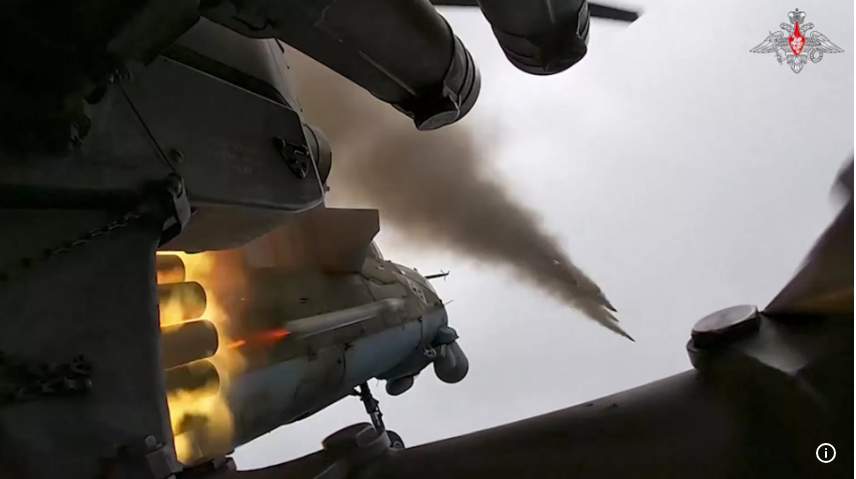
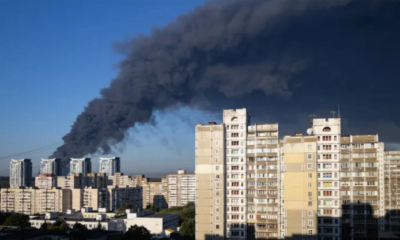
Competing narratives have emerged regarding a deadly strike on a boarding school in Sudzha, a city in Russia’s Kursk region, which Ukraine has controlled for the past five months.

According to Ukraine’s General Staff, the attack, which occurred on Saturday night, killed four people and left four others seriously wounded. Ukrainian forces reportedly rescued 84 people from the rubble, while those in critical condition were transferred to medical facilities in Ukraine. Ukrainian President Volodymyr Zelenskyy accused Moscow of targeting the school, which he said was sheltering civilians who were preparing to evacuate.

However, Russia’s Ministry of Defence countered this claim, stating that Ukrainian forces were responsible for the strike. According to Moscow, missiles were launched from Ukraine’s Sumy region, targeting the school in Sudzha. The conflicting accounts have further escalated tensions as both sides continue to trade blame over attacks on civilian infrastructure.

Rising Casualties in Ukraine

Meanwhile, in Ukraine, the death toll from a Russian missile strike on an apartment building in Poltava rose to 12, including two children. The Ukrainian State Emergency Service confirmed on Sunday that 17 others were injured in the attack on the five-story residential building.

Additionally, Russia launched a massive drone assault on Ukraine overnight into Sunday, with Ukrainian officials reporting that 55 drones were sent across the country. Ukraine’s Air Force claimed to have destroyed 40 of them, while 13 others were likely jammed electronically. Two civilians were wounded in a drone strike in the Kharkiv region, according to regional governor Oleh Syniehubov.

Drone Strikes Hit Russia

Russia also reported overnight drone attacks, with its Defence Ministry stating that five Ukrainian drones were intercepted in five western regions. Three drones were shot down over the Kursk region, while one each was destroyed over the Belgorod and Bryansk regions.

See also  US Conducts Strike on Alleged Drug-Smuggling Facility, Marks Escalation in Operations

In Belgorod, a man was killed in a drone strike, regional governor Vyacheslav Gladkov confirmed. The escalating drone warfare has added another layer of intensity to the ongoing conflict, with both sides increasingly relying on aerial assaults to strike targets beyond the immediate frontlines.

As hostilities continue, the competing claims over the Sudzha boarding school attack highlight the fog of war that continues to obscure the realities of the battlefield, leaving civilians trapped in the crossfire of an unrelenting conflict.

News

Knicks End 53-Year Drought as New York Celebrates Emotional Championship Parade

Published

on

New York City was swept into celebration on Saturday as the New York Knicks ended a 53-year championship drought, defeating the San Antonio Spurs in Texas to secure the NBA Finals title and sparking jubilant scenes across Manhattan.

Thousands of fans had already begun gathering earlier in the week, with a major victory parade held through the streets of lower Manhattan on Thursday. The city turned into a wave of blue and orange as supporters packed the streets to honour the team’s long-awaited triumph.

Chants of “Let’s go Knicks” echoed through dense crowds, many of whom had waited hours—some even paying for professional line sitters—to secure prime viewing spots along the parade route.

For longtime supporters, the victory marked more than a sporting achievement. “The Knicks unite the city unlike any other team. We were starved for so long,” said 29-year-old retail worker Anthony Martorelli, reflecting on decades of frustration finally lifted.

Security was heightened across the city, with around 10,000 New York Police Department officers deployed for the parade, marking the largest planned security operation in the department’s history. Viewing areas filled hours before the procession began, forcing late arrivals to search for alternative vantage points.

In one instance, fans climbed onto a city dump truck positioned as part of the security setup to get a better view of the players and the championship trophy. Amid the celebrations, a couple in wedding attire moved through the crowds, planning to hold their ceremony later in the day.

The parade route stretched from Bowling Green to City Hall along the famed “Canyon of Heroes,” where the team was showered with 1.1 tonnes of recycled confetti as part of New York’s historic ticker-tape tradition dating back to the late 1800s.

See also  EU Holds Steady on €650 Billion Defence Spending Estimate Amid Mixed Member State Response

At City Hall, the Knicks were formally honoured as city officials presented them with the symbolic key to New York. Grammy-winning artist Alicia Keys performed “Empire State of Mind,” adding to the celebratory atmosphere.

Mayor Zohran Mamdani praised the moment as a rare display of unity in the city. “What a gift it is to be brought together by pure, unfiltered joy,” he said, noting how the victory had brought residents together in shared celebration.

Knicks star Jalen Brunson, named Most Valuable Player of the 2026 NBA Finals, thanked fans for their unwavering support throughout the championship run. “Somehow, some way, I knew we were going to find a way to get this done,” he said.

For many residents, the victory carried deep personal meaning. Some recalled the team’s last championship in 1973, while others reflected on decades of loyalty through losing seasons.

“I was nine when they last won,” said retiree James Smallwood. “I remember the excitement. I’m a five-time cancer survivor, so seeing this means everything.”

Despite traffic disruptions and street closures across Manhattan, many fans said the celebrations were worth the inconvenience, calling the victory a historic moment in the city’s sporting history.

Continue Reading

News

Macron Calls G7 Summit in Évian “Objectively Successful” as Transatlantic Coordination Strengthens

Published

on

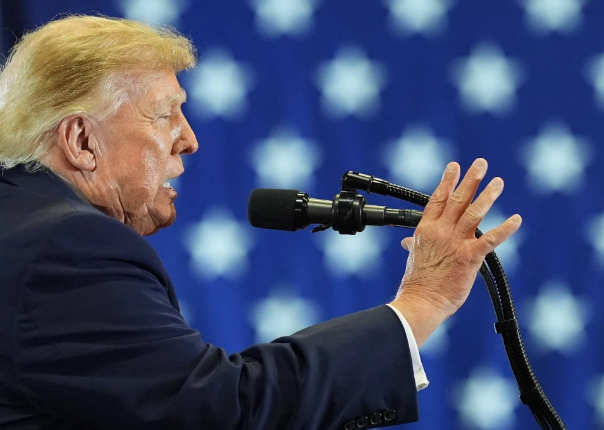
French President Emmanuel Macron declared the G7 summit in Évian-les-Bains an “objectively successful” gathering on Wednesday, highlighting rare unity among major economies on Ukraine, Iran and critical minerals, even as questions persist over the durability of transatlantic alignment under US President Donald Trump.

Speaking at the close of the three-day summit, Macron said leaders had reached a joint declaration backed by all members, including Washington, marking what he described as a turning point in cooperation after months of uncertainty over US engagement in multilateral diplomacy.

In the lead-up to the meeting, European officials had feared a repeat of last year’s fractured summit in Canada, where disagreements over trade, security and Middle East conflicts left allies divided. This time, however, diplomats pointed to coordinated language on Ukraine and renewed commitments to pressure Russia as evidence of improved alignment.

The G7 statement reaffirmed “unwavering support” for Ukraine’s sovereignty and territorial integrity while also committing to stronger sanctions on Russian energy exports. European officials described the agreement as a significant step toward closing gaps with Washington on strategy toward Moscow.

Macron said the summit reflected “a very profound shift” in US-European relations, noting that G7 members now appeared more willing to coordinate closely on security challenges. He added that Western capitals had reached similar conclusions regarding Russia’s lack of readiness for meaningful peace negotiations with Kyiv.

European sources said Trump’s administration had shown openness to reconsidering tougher measures on Russian energy exports, though no timetable was set. Ukrainian President Volodymyr Zelenskyy attended parts of the summit but did not secure a bilateral meeting with Trump, speaking only briefly on the sidelines of group discussions.

See also  China Launches First Next-Generation Amphibious Assault Ship, Advancing Naval Capabilities

Alongside Ukraine, leaders also welcomed progress on a US-Iran framework agreement aimed at ending the conflict and stabilising global energy flows. European officials said the deal could ease pressure on markets while reducing regional escalation risks, though concerns remain over Iran’s nuclear ambitions.

Behind the scenes, EU officials said limited diplomatic contacts were being explored with Moscow through indirect channels, although Brussels stressed it does not view itself as a mediator in the conflict.

Despite signs of coordination, uncertainty remains over the future of transatlantic diplomacy. Trump’s bilateral and often unpredictable approach to foreign policy continues to create concern among European allies, even as cooperation at the summit appeared to improve.

Macron nevertheless emphasised that Europe had secured a stronger position in shaping discussions, saying the bloc had “found its place at the table” through a combination of diplomacy and strategic engagement.

As leaders departed Évian, European diplomats described the outcome as pragmatic rather than transformative — a workable consensus shaped by shared interests rather than full alignment.

The summit concluded with Trump attending a state dinner at Versailles marking 250 years of Franco-American relations, underscoring both the symbolism and the continuing complexity of the partnership between Washington and Europe.

Continue Reading

News

EU Green Investment Fund Faces Scrutiny Over Potential Reliance on Chinese Clean Technology

Published

on

The European Union has launched a €15–20 billion Global Green Bond Initiative aimed at financing sustainable infrastructure projects in partner countries, but concerns are mounting in Brussels that a significant portion of the funding could end up supporting Chinese clean technology suppliers.

The programme, one of the EU’s largest external climate financing tools, is intended to mobilise investment for renewable energy, water treatment and transport projects across developing regions. Planned projects include solar farms in Algeria, wastewater systems in India and light rail infrastructure in the Dominican Republic, with the European Investment Bank (EIB) acting as a key anchor investor alongside other European development institutions.

However, EU officials warn that the structure of the initiative could unintentionally strengthen Chinese dominance in the global renewable technology market. A Commission official familiar with the matter said most of the allocated funds are likely to flow toward Chinese manufacturers, particularly in sectors such as solar energy components.

Of particular concern are high-risk power inverters used in solar installations. These devices, many of which are produced by Chinese companies including Huawei-linked suppliers, are increasingly being scrutinised by Brussels due to potential cybersecurity vulnerabilities. Officials fear they could allow remote interference with energy systems, posing risks to grid stability in third countries connected to European energy networks.

The European Commission recently issued guidance calling for the gradual removal of such high-risk inverters from EU-funded renewable projects. However, the directive applies primarily to projects outside the EU from 2027 onwards, leaving a gap between policy ambition and current investment frameworks.

The Green Bond Initiative, approved before the cybersecurity guidance was finalised, contains no requirement for partner countries to avoid Chinese suppliers. This absence of procurement conditions has raised concerns that EU-backed financing may indirectly reinforce dependency on Chinese technology at a time when Brussels is trying to diversify critical supply chains.

See also  US Conducts Strike on Alleged Drug-Smuggling Facility, Marks Escalation in Operations

A second EU official said projects funded under the scheme risk increasing exposure to Chinese influence in regions such as North Africa, which is expected to receive a large share of early investments. The Mediterranean is considered strategically sensitive due to its proximity to European energy infrastructure.

Efforts by the Commission to push European development banks, including the EIB, to apply stricter exclusion rules have met resistance. Financial institutions argue that project viability and cost efficiency must remain central, while Brussels insists that geopolitical risk and cybersecurity concerns can no longer be ignored.

The debate has also exposed a broader policy gap between the EU’s economic security strategy and its external investment tools, many of which were designed before recent shifts in global trade and technology competition.

The Commission is expected to press fund managers, including Amundi, to reassess procurement frameworks. However, officials acknowledge that many projects were already structured without restrictions on suppliers, limiting room for immediate changes.

With no formal exclusion mechanism in place, disagreements between EU institutions are likely to continue as the initiative moves into implementation, highlighting the tension between climate investment goals and efforts to reduce strategic dependence on China.

Continue Reading

Trending