Connect with us

News

Belgium Cruise Into Knockout Stage as Iran Wait on World Cup Fate

Published

on

Belgium booked their place in the FIFA World Cup round of 32 with an emphatic 5-1 victory over New Zealand on Friday, while Iran were left anxiously waiting to learn whether they would also progress after finishing their group campaign with a 1-1 draw against Egypt.

The convincing win in Vancouver secured Belgium top spot in Group G after a slow start to the tournament. The Red Devils had opened their campaign with a 1-1 draw against Egypt before playing out a goalless stalemate with Iran, leaving qualification in the balance heading into the final round of group matches.

Arsenal forward Leandro Trossard led Belgium’s charge with two goals. He opened the scoring in the 28th minute, reacting quickest after a corner to give his side the breakthrough. The winger struck again early in the second half with a well-taken volley to double Belgium’s advantage.

Captain Kevin De Bruyne extended the lead with a powerful left-footed effort from outside the penalty area before Romelu Lukaku headed home Belgium’s fourth goal. Alexis Saelemaekers completed the scoring late in the match as Belgium sealed one of the tournament’s most dominant victories.

The result sent Belgium into the knockout rounds as Group G winners. They are scheduled to face one of the tournament’s best third-placed teams from Groups A, E, H, I or J in Seattle next week.

Egypt also secured qualification after finishing second in the group and will face Australia in Dallas in the round of 32.

Iran, however, must now wait for the remaining group-stage matches in Groups J, K and L to determine whether their record will be enough to earn one of the places reserved for the best third-placed teams. Their campaign ended with a hard-fought 1-1 draw against Egypt, leaving qualification dependent on results elsewhere.

See also  Romanian Parliamentary Election Amid Political Turmoil and Far-Right Rise

New Zealand’s hopes ended with the heavy defeat to Belgium. The All Whites finished the group stage with just one point and exited the competition without recording a victory.

Elsewhere, Spain advanced as Group H winners after defeating Uruguay 1-0 in Guadalajara. Álex Baena scored the only goal of the match, ensuring Spain avoided a potential meeting with Argentina in the next round. Spain will now face the runners-up from Group J, with either Austria or Algeria expected to provide the opposition in Los Angeles.

France also maintained their perfect record by defeating Norway 4-1 to finish top of Group I. The victory ensured France progressed with maximum points, while Norway and Senegal also advanced from the group.

France are set to meet Sweden in the round of 32 at MetLife Stadium, while Norway will take on Ivory Coast as the knockout stage begins to take shape. The remaining fixtures over the weekend will determine the final qualification places and complete the round of 32 lineup.

News

EU Proposes Carbon Charges for More International Flights Under ETS Overhaul

Published

on

The European Commission has proposed expanding the European Union’s carbon market to cover more international flights arriving in Europe, bringing thousands of routes under emissions trading from 2029 as part of a wider overhaul of the bloc’s Emissions Trading System (ETS).

Under the proposal announced on Friday, flights arriving in Europe from destinations within 5,000 kilometres would be required to pay for their carbon dioxide emissions. Routes such as Frankfurt to Dubai and Frankfurt to Istanbul would fall under the scheme, while longer journeys including Frankfurt to Tokyo would remain outside its scope. Flights arriving from the United States and China would also be exempt.

The proposal keeps existing exemptions for domestic flights serving the EU’s outermost regions, including connections between mainland Spain and the Canary Islands, until the end of 2035.

European officials said the changes are intended to create fairer competition for EU airlines, arguing that some non-EU carriers, particularly those operating through Gulf hubs, currently benefit from an uneven regulatory environment.

Climate Commissioner Wopke Hoekstra said aviation remains the only major sector where emissions continue to increase. He added that extending the ETS would help address competitive concerns while supporting the EU’s climate objectives. Hoekstra also confirmed that private jets departing from and arriving in Europe would be covered under the revised rules.

The Commission is legally required to assess whether international aviation should face broader carbon pricing beyond flights operating within the European Economic Area. The current ETS has covered intra-European flights since 2012, while most international aviation emissions are managed through the International Civil Aviation Organization’s Carbon Offsetting and Reduction Scheme for International Aviation (CORSIA).

See also  Germany Blames Russia for Signal Phishing Campaign Targeting Lawmakers

EU officials said that if international efforts fail to deliver sufficient emissions reductions by 2032, Brussels may be required to propose extending the ETS to all departing international flights from Europe, although they acknowledged such a move would be politically challenging.

The revised package also proposes significant changes for industrial companies receiving free carbon allowances. Under the plan, firms would receive 80% of their free allocations after publishing board-approved decarbonisation investment plans, while the remaining 20% would only be released after those investments and emissions reductions have been completed.

Commission officials said the approach is designed to encourage investment in cleaner technologies while maintaining Europe’s industrial competitiveness. They also want at least half of national ETS revenues to be reinvested in sectors covered by the carbon market, including aviation, maritime transport and energy-intensive industries.

The proposal has drawn mixed reactions. German lawmaker Peter Liese called for additional free allowances tied to investments within Europe to protect jobs during the transition. Meanwhile, environmental group Transport & Environment warned against weakening the ETS, arguing that the carbon market has already helped cut emissions substantially since 2005 and remains essential for financing future clean technologies.

The proposal will now move to the European Parliament and EU member states, with negotiations expected to begin after the summer break.

Continue Reading

News

Iran Claims Strikes on US Bases as Hormuz Tensions Escalate

Published

on

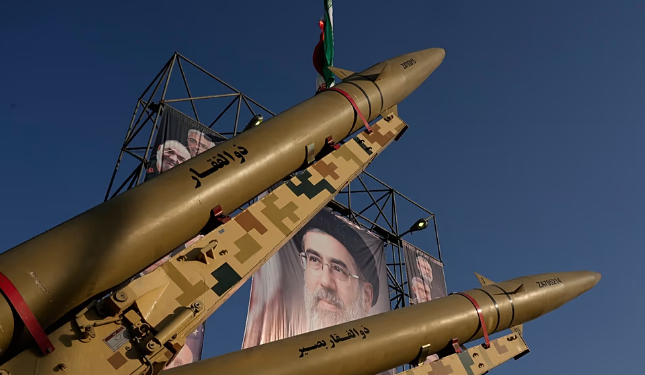
Iran’s Revolutionary Guards Corps (IRGC) said early Wednesday it had launched attacks against US military facilities in Bahrain and Kuwait, marking another escalation in the conflict as the United States continued military operations against Iran and renewed restrictions on Iranian shipping in the Strait of Hormuz.

The IRGC said it targeted the US Fifth Fleet’s command-and-control facilities, logistical centres, petroleum installations and military equipment in Bahrain, along with a US base in Kuwait. Iranian state media described the strikes as retaliation for recent American military operations and efforts to control maritime traffic through the Strait of Hormuz.

In a statement carried by local media, the IRGC warned that if Washington continued trying to restrict regional oil and gas exports by controlling key shipping routes, Iran would seek to disrupt other energy corridors serving US and allied interests. The statement declared that regional energy exports would be “for everyone or for no one,” although it did not specify which routes could be targeted.

Missile warning systems were activated in Bahrain and Kuwait as Iranian projectiles approached. Jordanian authorities said their air defence systems intercepted three incoming Iranian missiles, while Kuwait’s military reported repelling Iranian drone attacks. Iran also claimed it had targeted US military facilities at Jordan’s Azraq Air Base for a second time.

US Navy Admiral Brad Cooper, commander of US Central Command, confirmed that Iran had launched dozens of missiles and drones toward neighbouring Gulf countries.

The latest exchange came after the US military carried out a fourth consecutive night of operations against Iranian targets. According to US Central Command, fighter aircraft, drones and naval vessels conducted a seven-hour mission targeting Iranian missile and drone sites, naval assets and coastal defence systems.

See also  Russian Strikes on Ukrainian Hospital and Residential Areas Result in Multiple Casualties

CENTCOM said the strikes were intended to reduce Iran’s ability to threaten commercial shipping and civilian vessels operating in and around the Strait of Hormuz, a waterway that normally handles around one-fifth of the world’s oil and liquefied natural gas trade.

President Donald Trump also renewed warnings that the United States could expand its campaign if diplomatic efforts fail. In a televised interview with Fox News on Tuesday night, Trump said Washington would eventually target Iran’s energy infrastructure unless Tehran agreed to return to negotiations.

“We’re going to knock out all their power plants. We’re gonna knock out their bridges unless they get to the table and negotiate,” Trump said, adding that energy facilities remained potential targets.

The latest hostilities have cast further doubt over a temporary agreement reached in June after the United States lifted an earlier blockade of Iranian shipping to allow negotiations over Tehran’s nuclear programme. Talks have since stalled as military confrontations around the Strait of Hormuz intensified, raising concerns about regional security and the stability of global energy supplies.

Continue Reading

News

Cuba Suffers Third Nationwide Blackout in Two Weeks as Fuel Shortages Deepen Energy Crisis

Published

on

Cuba was plunged into another nationwide power outage on Tuesday after a failure at a generating unit triggered the collapse of the National Electric System (SEN), marking the third island-wide blackout in less than two weeks as the country struggles with worsening fuel shortages and an ongoing economic crisis.

State-owned Electric Union said the outage began around midday after a malfunction at a power plant in the eastern province of Holguín caused a sudden change in grid frequency, forcing the national electricity network offline.

Officials from the Ministry of Energy and Mines said emergency restoration procedures were activated immediately. The process involves creating isolated “micro-islands” of electricity before reconnecting them to rebuild the national grid. Priority has been given to hospitals, food processing facilities and other essential services.

By Tuesday afternoon, electricity had been restored to parts of Havana, with authorities reporting that about 4 percent of the capital had regained power. Provincial officials in Guantánamo, Cienfuegos and Matanzas also confirmed that electricity had returned to hospitals and selected urban areas, including Matanzas’ historic city centre.

The latest outage follows nationwide blackouts last Monday and Friday that left more than 9 million people without electricity. Cuba also experienced two major nationwide outages in March, along with several regional disruptions during the year.

The repeated failures have disrupted daily life across the island. Public transportation has been severely affected, work schedules have been shortened, flights have faced cancellations and hospitals have struggled to maintain normal operations. Residents have also experienced interruptions to cooking, water supplies, internet access and telephone services.

See also  Mariano Rajoy Faces Backlash Over Remarks About France's World Cup Team

Fuel shortages have intensified since January, when US President Donald Trump threatened tariffs on countries supplying or selling oil to Cuba. The measures have added pressure to an economy already facing years of financial hardship.

Cuba currently produces only about 40 percent of the fuel it requires, leaving it heavily dependent on imports. Officials have acknowledged that no immediate solution has emerged to secure additional fuel supplies, leaving the country’s ageing electricity infrastructure under continued strain.

Washington’s energy restrictions followed the capture of Venezuela’s then-President Nicolás Maduro and expanded existing sanctions already affecting Cuba’s economy. Authorities say the latest measures have compounded challenges created by previous sanctions and domestic economic reforms, including monetary unification.

The situation has also drawn political attention in the United States. Four Democratic members of Congress who visited Cuba over the weekend described the energy embargo imposed by the Trump administration as turning the island into a “silent Gaza,” highlighting the humanitarian impact of prolonged power shortages.

With fuel supplies remaining scarce and no immediate relief in sight, Cuba’s electricity system continues to face significant pressure, raising concerns that further nationwide outages could occur in the weeks ahead.

Continue Reading

Trending