
News
Wildfires Force Mass Evacuations in France and Spain as Southern Europe Battles Record Heat


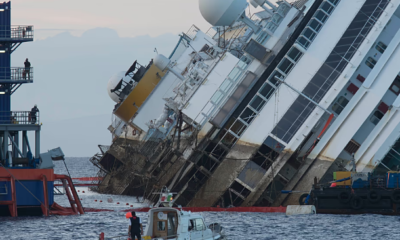






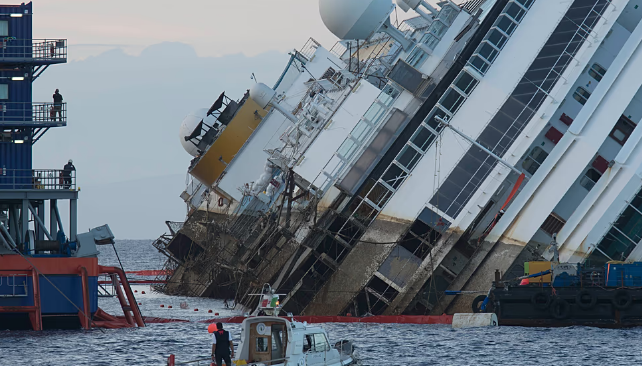
Francesco Schettino, the former captain of the Costa Concordia cruise ship, has been released from Rome’s Rebibbia prison after spending more than nine years behind bars for his role in the 2012 maritime disaster that killed 32 people.
Schettino left the prison on Friday evening after the Rome Supervisory Court approved his release under probation, according to Italian newspaper Quotidiano Nazionale (QN).
The court’s decision followed an assessment of his behaviour in prison and his progress through a rehabilitation programme. Authorities reportedly considered his conduct and participation in activities designed to support his reintegration into society before approving the alternative measure.
His lawyer, Francesca Carnicelli, welcomed the ruling, saying prison staff had provided an extremely positive assessment of his rehabilitation efforts.
“In our view, all the conditions were in place for this alternative measure to be granted, as it represents the correct continuation of the process after the conviction,” Carnicelli said.
Schettino was sentenced to 16 years in prison over the sinking of the Costa Concordia, which struck rocks off the coast of Isola del Giglio in Italy’s Tyrrhenian Sea on 13 January 2012.
The cruise ship, operated by Costa Crociere, suffered extensive damage when it hit rocks, tearing a hole approximately 35.59 metres long in the port side of its hull. The vessel began listing heavily before running aground near Punta Gabbianara, where it partially sank.
The disaster claimed 32 lives among passengers and crew members and triggered one of Italy’s most closely followed maritime investigations.
Prosecutors accused Schettino of causing the accident through serious navigational errors and abandoning the vessel before all passengers and crew had been evacuated. His conduct during the emergency became a central issue in the subsequent criminal proceedings.
In February 2015, he received a 16-year prison sentence. The Florence Court of Appeals upheld the conviction on 31 May 2016 and confirmed a five-year prohibition on working in the maritime industry.
The appeals court also increased provisional compensation for survivors who had joined the proceedings as civil claimants, setting payments between €40,000 and €65,000 each.
Italy’s highest court, the Court of Cassation, upheld the conviction on 12 May 2017, bringing the main legal proceedings to an end.
Schettino’s release under probation follows his lengthy period in custody and the court’s assessment of his rehabilitation. The decision does not overturn his conviction or the original prison sentence, but allows him to serve the remaining period under an alternative arrangement rather than continuing his imprisonment.
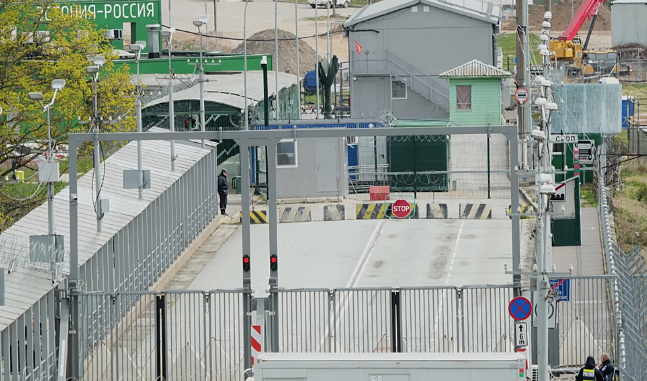
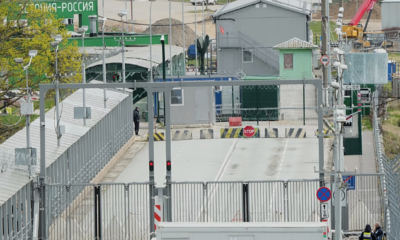
Estonia will close all its border crossing points with Russia from December 1 after authorities foiled an alleged arson attack on a defence company that manufactures military drones, the government announced on Sunday.
Prime Minister Kristen Michal said Russia’s military intelligence agency, the GRU, had ordered an attempted sabotage operation targeting Threod Systems, an Estonian drone manufacturer, on Saturday night. The incident took place in Viimsi, north of the capital Tallinn.
Michal said extensive damage had been prevented by heightened security measures and a rapid response from law enforcement. The attackers had been detained, he added.
Foreign Minister Margus Tsahkna subsequently announced the border closure, citing what he described as clear evidence linking the GRU to the attempted attack.
“Russia must understand that hostile actions against Estonia come with consequences,” Tsahkna wrote on X. He said attempts to intimidate or undermine the country’s security would not go unanswered.
Tsahkna also said he had informed the foreign ministers of Finland, Latvia and Lithuania about the decision.
Chief prosecutor Astrid Asi told journalists that security forces had arrested eight people who live in Latvia. Authorities have not provided further details about the suspects or the alleged operation.
Michal described the incident as part of what he called Russia’s wider hybrid campaign against European countries, aimed at weakening support for Ukraine and increasing pressure on Moscow.
Russia rejected the allegations. Foreign Ministry spokeswoman Maria Zakharova told state news agency TASS that Moscow would check whether Estonia intended to close all crossing points.
“If these are their real plans, then it will be seen as yet another bout of aggressive and unbridled Russophobia,” she said.
Threod Systems manufactures reconnaissance and attack drones for defence and security purposes. The attempted attack follows a similar incident in August, when Tallinn-based defence subcontractor Milrem Robotics was targeted in an attempted arson attack. Latvian nationals were arrested in connection with that case.
Estonia, a member of both the European Union and NATO, currently operates three border crossings with Russia: Narva in the north, and Luhamaa and Koidula in the south. The crossings allow people and goods to move between the two countries and are among the few remaining operational land links between Russia and the EU.
Vehicle traffic through Narva was suspended by Russia in February 2024, although pedestrians have continued to cross.
The planned closure marks a further deterioration in relations between Tallinn and Moscow, which have been strained since Russia launched its full-scale invasion of Ukraine in February 2022.
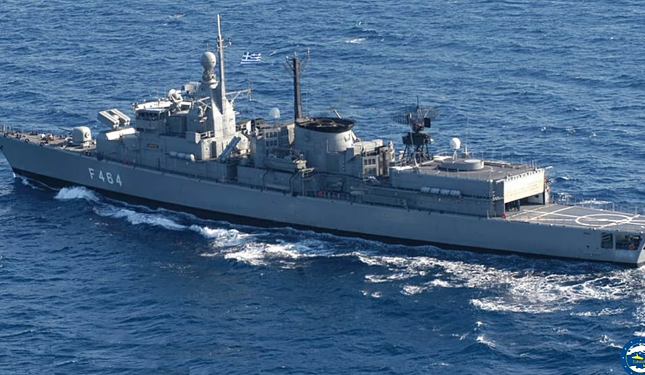
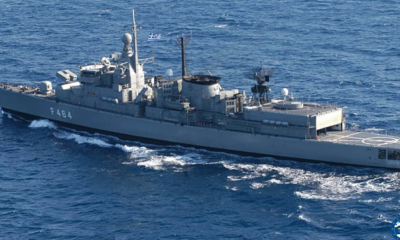
European Union naval forces have boarded a suspected Russian shadow fleet tanker in the Mediterranean Sea and confirmed that it was sailing under a false flag, the bloc’s foreign policy chief Kaja Kallas said on Sunday.
Troops operating under the EU’s Operation Irini boarded the MV Midag on Friday to verify its registration and flag status. Kallas shared images of the operation on social media, saying the EU would continue targeting vessels used by Russia to circumvent Western sanctions.
“The EU will keep disrupting Russia’s shadow fleet at sea and through diplomatic means,” she wrote.
Kallas also said EU foreign ministers were expected to approve additional sanctions against Russia on Monday. The proposed measures would target banks, oil buyers and companies accused of supporting the shadow fleet.
Russia relies on a network of tankers commonly described as its shadow fleet to continue exporting oil despite restrictions imposed by Western governments following its invasion of Ukraine. The vessels often operate through complicated ownership arrangements, use flags of convenience and change registration details to make it harder to identify their links to Russia and establish the origin of their cargoes.
The latest boarding follows similar operations by Operation Irini in recent months. In August, EU forces carried out a flag verification inspection of the oil tanker MV Sun. Another operation earlier that month targeted the MV Toa Payoh.
Operation Irini expands its role
Operation Irini was established in March 2020 to enforce a United Nations arms embargo on Libya during the country’s civil conflict.
Its original responsibilities included monitoring and disrupting illegal arms trafficking, collecting information about oil smuggling networks, helping combat human trafficking and supporting the training of Libyan law enforcement and search-and-rescue institutions.
The mission’s mandate was renewed in October and will now run until March 31, 2029. Its responsibilities have been expanded to include protecting EU interests in the Mediterranean, supporting peace and stability in Libya and helping restrict Russia’s shadow fleet activities.
The EU has identified the Mediterranean as an important transit and transfer route for the vessels, which can move between shipping areas to transfer oil and conceal the origin of cargoes.
The expanded mandate reflects growing European efforts to enforce sanctions beyond financial restrictions and target the maritime networks that help Russia maintain its oil trade.
Kallas’s announcement signals that the bloc intends to continue using inspections, diplomatic pressure and additional sanctions to disrupt those operations. The planned measures against financial institutions, buyers and supporting companies would extend pressure beyond the vessels themselves to businesses involved in moving and purchasing Russian oil.

BYD in Exclusive Talks to Acquire Ineos Automotive Plant in France

Belgium Opens Europe’s Largest Satellite Factory to Boost Space Independence

UK Households Face £443 Annual Energy Bill Increase as EU Market Talks Continue

Jensen Huang’s Remarkable Rise at Nvidia Overshadowed by Controversial CEO Comeback

Guterres Urges Nations to Agree Global AI Safety Framework Within a Year

Hungary Records 31 Foetal and Newborn Deaths as Syphilis Cases Surge

Trump Calls on Nvidia Board to Reinstate Jensen Huang as CEO

CrowdStrike to Acquire Zscaler in Record $43.9 Billion Cybersecurity Deal

South Korea and China Near Deal to Ease Restrictions on Entertainment Industry

Costa Concordia Captain Francesco Schettino Released From Prison on Probation

China’s Historic Olympic Victory Sparks National Pride Amid Controversy

Meta Acquires Tilda Swinton VR Doc ‘Impulse: Playing With Reality’

Saudi Arabia’s Model for Sustainable Aviation Practices

Recent Developments in Small Business Taxes

Effective Drain Cleaning: A Key to a Healthy Plumbing System

Who was Ebrahim Raisi and his status in Iranian Politics?

Keely Hodgkinson Wins Britain’s First Athletics Gold at Paris Olympics in 800m

Carrectly: Revolutionizing Car Care in Chicago

Nobel Laureate Muhammad Yunus Proposed as Head of Bangladesh’s Interim Government Following Hasina’s Resignation

Chinese Hackers Infiltrate Major U.S. Telecom Firms in Possible National Security Breach

Sony WF-10XM4: Headphones Are Our Absolute Favorite

10 Places You Can’t Miss If It’s Your First Time in European

New Census Data Will Shake Up Alabama Politics

16 Top of Our Favorite Outdoor Clothing Brands

Fashionable Summer Accessories to Dress Up Your Travel Look

How Sleeping Less than 7 Hours a Night Can Lead to Weight Gain
-
 Sports2 years ago
China’s Historic Olympic Victory Sparks National Pride Amid Controversy
-
 Entertainment2 years ago
Meta Acquires Tilda Swinton VR Doc ‘Impulse: Playing With Reality’
-
 Business3 years ago
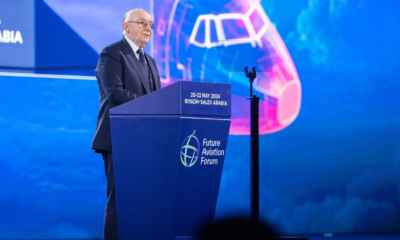
Saudi Arabia’s Model for Sustainable Aviation Practices
-
 Business3 years ago
Recent Developments in Small Business Taxes
-
 Home Improvement2 years ago
Effective Drain Cleaning: A Key to a Healthy Plumbing System
-
 Politics3 years ago
Who was Ebrahim Raisi and his status in Iranian Politics?
-
 Sports2 years ago
Keely Hodgkinson Wins Britain’s First Athletics Gold at Paris Olympics in 800m
-
 Business2 years ago
Carrectly: Revolutionizing Car Care in Chicago